Selling a rental property in Canada can produce three tax results at once: a capital gain on the land and building, a recapture of capital cost allowance (CCA) you claimed on the building, or a terminal loss if the building sold for less than its undepreciated cost (CRA Guide T4036). The capital gain goes on Schedule 3; recapture and terminal loss go on Form T776 with your rental income.
Most landlords think about the sale only as a capital gain. The CCA side is where surprises come from, because depreciation claimed over many years can come back into income in a single year. This guide follows the CRA's Guide T4036, Rental Income and its page on calculating and reporting capital gains.
Selling a Rental Property in Canada: Landlord Checklist
A one-page checklist for Canadian landlords selling a rental: splitting land and building, CCA recapture, terminal loss, the capital gain and the records to keep.
Get Free PDF →How is the sale of a rental property taxed in Canada?
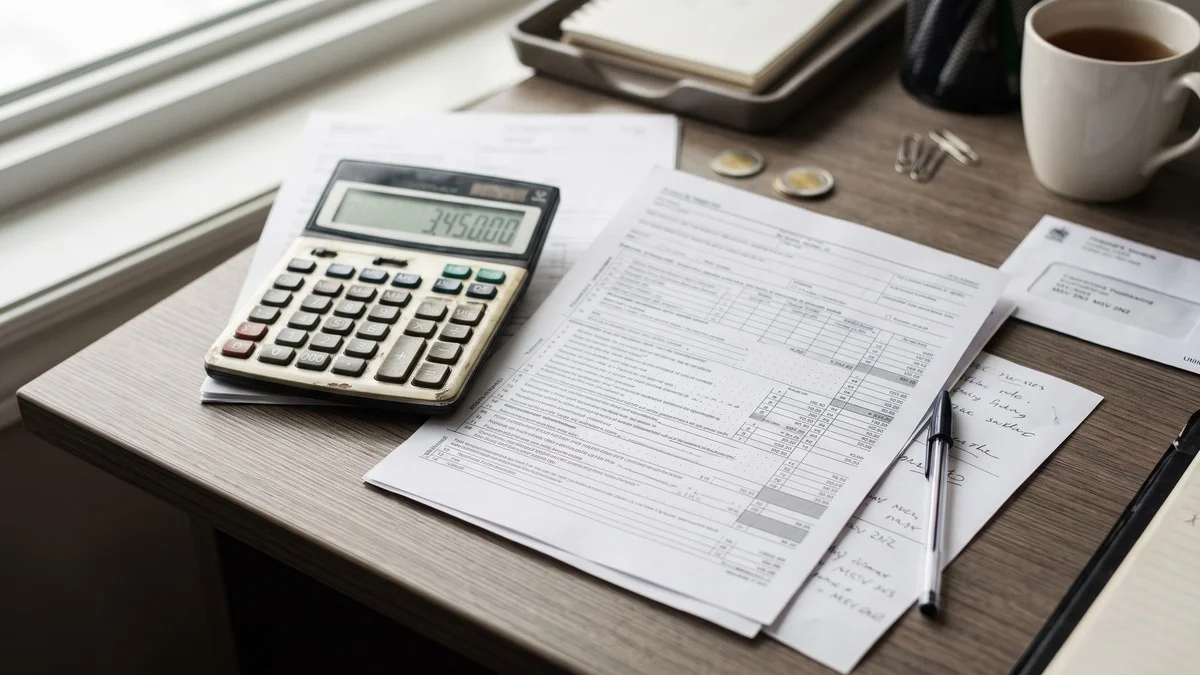
When a Canadian landlord sells a rental, the selling price is split between land and building, because land is not depreciable and the building is (T4036). The land produces only a capital gain or loss. The building can produce a capital gain, a recapture of CCA, or a terminal loss, depending on the price compared with its original capital cost and its undepreciated balance.
| Result | When it arises | Where it is reported | How it is taxed |
|---|---|---|---|
| Capital gain | Proceeds exceed adjusted cost base plus selling costs | Schedule 3 | Taxable capital gain (CRA's example taxes one half) |
| Recapture of CCA | Building proceeds (up to its capital cost) exceed its undepreciated capital cost | Form T776, line 9947 | Fully included with rental income |
| Terminal loss | No property left in the class but an undepreciated amount remains | Form T776, line 9948 | Usually deductible against rental income; can create a rental loss |
| Capital loss on the building | Never | n/a | T4036: you cannot have a capital loss on depreciable property |
What is CCA recapture on a rental property?

CCA recapture happens when the building's proceeds, limited to its original capital cost, are more than the undepreciated capital cost (UCC) left in its class; the difference is recapture, reported on line 9947 of Form T776 (Guide T4036). It reverses depreciation you claimed that turned out not to reflect a real loss in value.
T4036's calculation enters, for the property sold, the lesser of the proceeds minus related selling expenses and the property's capital cost. Subtract that from the class's balance; if the result is negative, it is recapture. Because each rental property costing $50,000 or more is placed in a separate CCA class (T4036), selling one building usually empties its class, and the recapture or terminal loss is worked out for that building alone. Buildings acquired after 1987 are generally Class 1, at a 4% rate.
When do you get a terminal loss instead?
You get a terminal loss in Canada when no property is left in the class at the end of the fiscal period but the class still has an undeducted balance; you can usually deduct it from rental income in the year of the sale, and if it is larger than that income it can create a rental loss (Guide T4036, line 9948).
This is the building's version of a loss. T4036 is clear that you cannot have a capital loss when you sell depreciable property, so a building that sold below its UCC produces a terminal loss rather than a capital loss. T4036 also has special rules when a building sells for less than both its cost amount and its capital cost and you, or someone you do not deal with at arm's length, owned the land: in that case the proceeds are reallocated between land and building using the guide's calculations.
How is the capital gain calculated?
A Canadian landlord's capital gain is the proceeds of disposition minus the adjusted cost base (ACB) and the outlays and expenses of selling, such as real estate commissions and legal fees (CRA, calculating and reporting capital gains). It is calculated separately for the land and the building and reported on Schedule 3.
T4036 notes that legal fees and real estate commissions paid on the sale are deducted from the proceeds, which reduces the gain. On the building, only the part of the price above its original capital cost is a capital gain; the part between UCC and capital cost is recapture, not gain. Line 19900 of Schedule 3 shows whether you have a taxable capital gain or a net capital loss, and a positive amount goes on line 12700 of your return. In the CRA's own example, fifty percent of the capital gain is taxable.
A worked example
The figures below are illustrative. A landlord bought a rental for $500,000, with $200,000 allocated to land and $300,000 to the building. Over the years they claimed $60,000 of CCA, leaving a UCC of $240,000. They sell for $650,000, allocating $250,000 to land and $400,000 to the building, and pay $20,000 in commissions and legal fees, split pro rata.
| Step | Land | Building |
|---|---|---|
| Proceeds | $250,000 | $400,000 |
| Selling costs (pro rata) | $7,692 | $12,308 |
| Amount used for CCA class (lesser of net proceeds and capital cost) | n/a | $300,000 |
| Recapture (amount used minus UCC of $240,000) | n/a | $60,000 |
| Capital gain (proceeds minus cost minus selling costs) | $42,308 | $87,692 |
The $60,000 recapture is added in full on Form T776. The $130,000 of total capital gain goes on Schedule 3, and on the CRA example's one-half rate, $65,000 would be the taxable capital gain. Your own figures depend on your records, any additions, and the allocations you can support.
What records should a landlord keep for the sale?
Keep the purchase documents showing the land and building split, every T776 with its CCA schedule, receipts for capital improvements added to the building's cost, and the sale's statement of adjustments, commission and legal invoices. Our guides to CCA for landlords, the T776 form and staying audit-ready cover each piece, and the Canadian Landlord Resource Center collects the rest.
If the property was once your home, the principal residence exemption may shelter part of the gain for the years it qualified, and you must report the sale and designation on Schedule 3 and Form T2091(IND). If a 45(2) election was in force, no CCA should have been claimed on it.
Frequently asked questions
Is CCA recapture taxed as a capital gain?
No. Recapture is reported on line 9947 of Form T776 with your rental income, not on Schedule 3 (Guide T4036). Only the part of the building's price above its original capital cost is a capital gain.
Can I claim a capital loss on a rental building?
No. T4036 says you cannot have a capital loss on depreciable property. A loss on the building shows up as a terminal loss on line 9948 instead. Land, which is not depreciable, can produce a capital loss.
Do selling costs reduce the tax?
Yes. Real estate commissions and legal fees on the sale are deducted from the proceeds, which reduces the capital gain (T4036; CRA capital gains page).
Why does each rental building have its own CCA class?
T4036 requires each rental property acquired after 1971 with a capital cost of $50,000 or more to be placed in a separate class, so recapture or a terminal loss is calculated when that building is sold.
Can I claim CCA in the year I sell?
Not on a class that ends the year with recapture, or with a terminal loss and no property left in it (T4036).
Selling a Rental Property in Canada: Landlord Checklist
A one-page checklist for Canadian landlords selling a rental: splitting land and building, CCA recapture, terminal loss, the capital gain and the records to keep.
Get Free PDF →Selling with tenants in place?
Find the landlord notices and forms you may need, free.
Free • No signup required