In Alberta, a landlord may change the locks on a rental only if a new key is made available to the tenant as soon as the change is made, and a tenant may change or add a lock only with the landlord's consent and must then give the landlord a key (Residential Tenancies Act s.24). Changing the locks to keep a tenant out is not allowed.
Section 24 of the Residential Tenancies Act (RTA) is short, and the Government of Alberta's RTA Handbook fills in how it works in practice. This FAQ covers the questions landlords and tenants ask most about changing the locks.
Can an Alberta landlord change the locks?
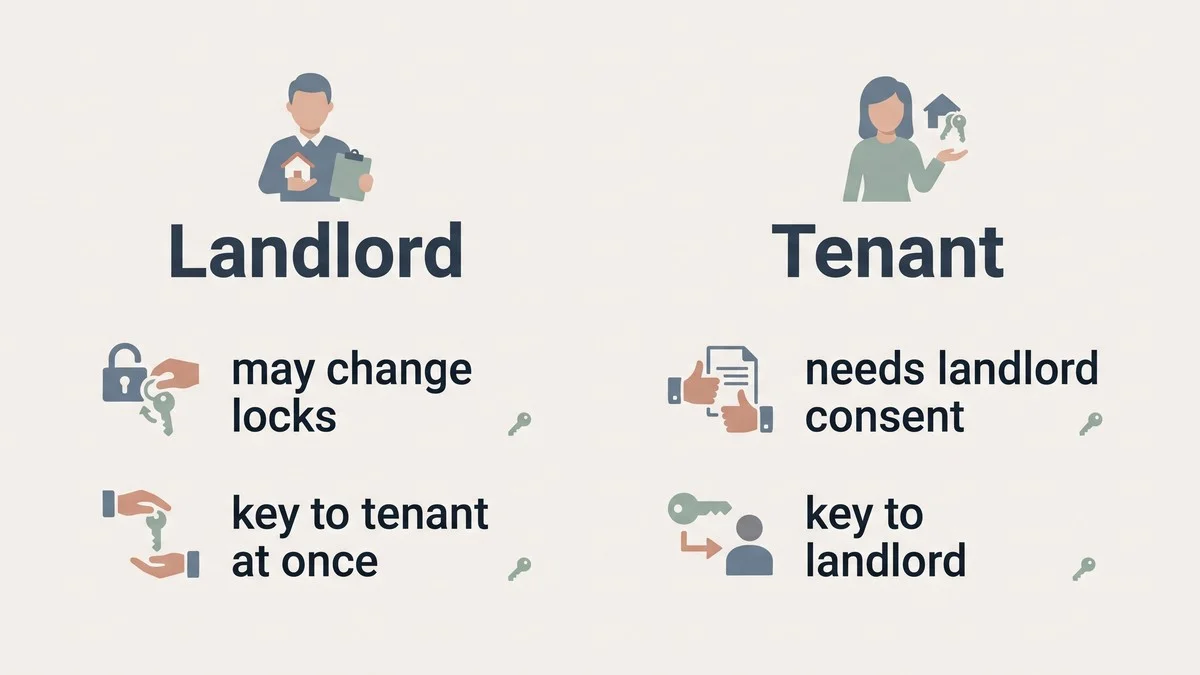
Yes, but only if a key is made available to the tenant as soon as the change is made (s.24(2)). The rule covers doors giving access to the unit and to the property it is part of, such as a building's main door (s.24(1)). The Handbook adds that at the start of a tenancy the landlord must give keys for the unit, main doors, mailbox and any common areas the tenant may use.
Can an Alberta tenant change the locks?
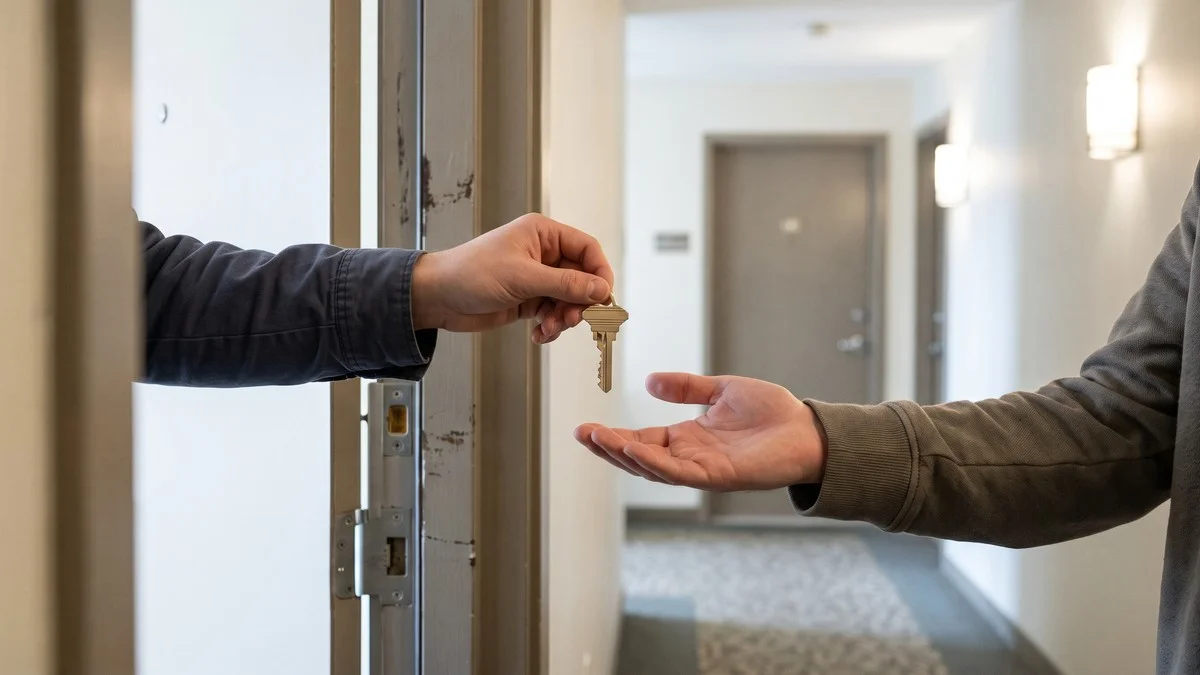
Only with the landlord's consent, and the tenant must make a key available to the landlord as soon as the change is made (s.24(1), (4)). The Handbook says consent can be verbal or written, and explains why the landlord needs a key: the landlord must be able to get in at all times in case of an emergency such as a fire.
| Who changes the lock | Consent needed? | Key duty |
|---|---|---|
| Landlord | No, if the key is provided at once | Key to the tenant as soon as the change is made (s.24(2)) |
| Tenant (lock on an access door) | Yes, the landlord's | Key to the landlord as soon as the change is made (s.24(4)) |
| Tenant (inside-only device, such as a chain) | No | None, if it works only while someone is inside and meets the removal rule (s.24(3)) |
Can a tenant add a chain lock or deadbolt without asking?
A tenant may install a security device without consent if it can be engaged only while someone is inside, and it can be installed and removed without damage or stays behind as the landlord's property when the tenancy ends (s.24(3)). Alberta's During a tenancy page gives chain locks as the example and warns that tenants may not use them to keep out a landlord who has given proper entry notice (see Alberta's entry notice rules). If the device left holes in the door or frame, the tenant either leaves it in place or repairs the damage on removal.
Can a landlord change the locks to evict a tenant in Alberta?
No. Alberta's guidance is that neither landlord nor tenant can be locked out of the rental. The Handbook says that when a tenancy has ended but the tenant has not moved out, the landlord cannot change the locks to keep the tenant from coming back: the landlord must get an order for recovery of possession from the court or the Residential Tenancy Dispute Resolution Service (RTDRS), and only a civil enforcement agency can then remove the tenant, under that order (s.34.1). See ending a tenancy in Alberta for the notice rules.
What if the tenant has abandoned the unit?
If the landlord determines the tenant has abandoned the premises, the landlord may change the locks to keep the unit and any belongings secure, the Handbook says. A tenant who has only left temporarily has not abandoned the unit. Goods left behind follow their own rules: see tenant belongings left behind in Alberta.
Frequently asked questions
Can a landlord charge a key fee?
Key fees are not against the law, the Handbook says, but a refundable key fee counts as part of the security deposit, and all refundable charges together cannot exceed one month's rent. A non-refundable fee is a contractual charge the Handbook treats as rent, so agree it in the lease.
Does the tenant get to keep copies of keys they had cut?
No. The Handbook says the tenant must return all keys at the end of the tenancy, including extra keys the tenant had cut at their own expense.
My landlord changed the locks and did not give me a key. What can I do?
That breaks s.24(2) and the landlord's promise not to disturb your possession (s.16(b)). You can apply to the RTDRS or court for remedies under s.37, and the Handbook says a written complaint to Service Alberta and Red Tape Reduction is needed before the province can take action on the offence.
Can a landlord enter if I changed the lock and kept the key?
In an emergency, the Handbook says emergency personnel can remove the lock or the door, and that the tenant has breached the Act by not giving the landlord a new key.
Does the lock rule still protect a tenant who stayed past the end of the tenancy?
Yes. The Handbook says landlord obligations, including the rules on entry and changing locks, still apply to an overholding tenant until civil enforcement removes them under an order.
Alberta landlord and tenant forms
Free Alberta residential tenancy forms for landlords and tenants, from the lease to termination notices. Fill them out online with no account.
Free • No signup required