CANADA, Oct. 25, 2026: The Government of Canada's new National Heat Pump Rebate will pay eligible households $2,000, or up to $10,000 for households below the median income, toward an electric cold-climate air source heat pump. The Prime Minister announced the $2 billion, eight-year program on Oct. 8, 2026. Applications open through an online portal in early 2027, and heat pumps installed from Nov. 1, 2026 can count.
For rentals, the federal text published so far calls applicants homeowners and gives one landlord example. It does not say whether a tenant can apply, whether an owner must live in the home, or how the rebate works in a multi-unit building. Ottawa says the full eligibility criteria will be available as of Nov. 1, 2026.
What is the National Heat Pump Rebate?
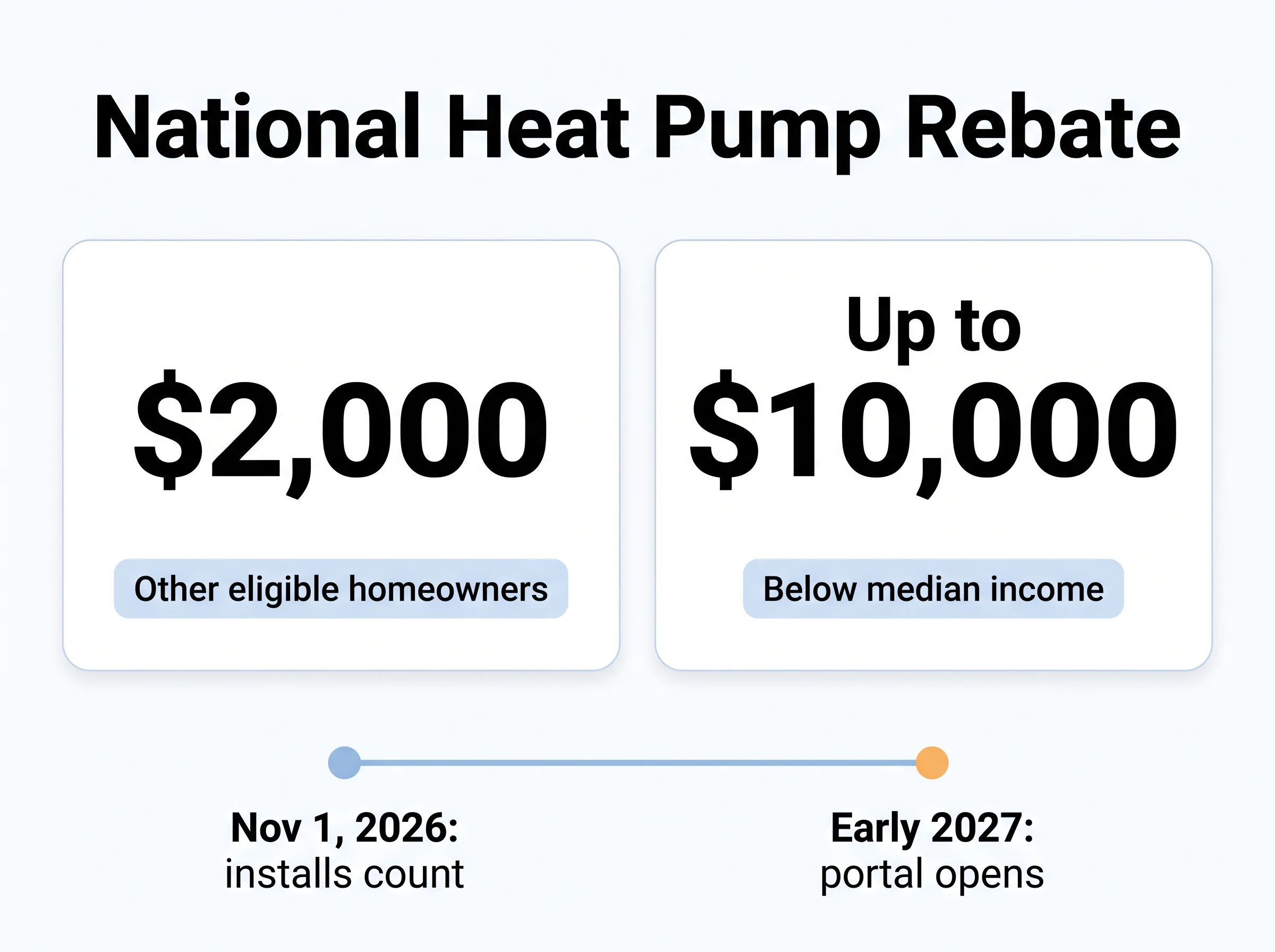
The National Heat Pump Rebate is a federal grant toward an electric heat pump. The Oct. 8 backgrounder and the program page (last modified Oct. 23, 2026) set out what is known so far:
- Funding: $2 billion over eight years, for up to 820,000 homeowners.
- Amounts: households below the median income can receive up to $10,000; other eligible homeowners can receive $2,000. The income thresholds have not been published.
- Equipment: electric cold-climate air source heat pumps on the program's "Eligible Products List", which the backgrounder says has over 100,000 options.
- Process: an online application asking for basic personal information and the heat pump's details, approval within 24 hours, then receipts uploaded after installation and payment approved within five days. No energy audit is required before or after.
- Timing: applicants can apply when a system breaks down or as it nears the end of its life. Heat pumps installed from Nov. 1, 2026 that meet the criteria can be claimed once the portal opens in early 2027.
- Stacking: the Prime Minister's news release says both amounts can be combined with existing provincial programs.
The earlier federal Oil to Heat Pump Affordability program stopped taking applications on July 31, 2026, according to Natural Resources Canada.
What it means for landlords
A landlord appears able to claim the rebate for a rental, but only once per person. The backgrounder's one example of the per-person limit is a landlord: "Only one Rebate per person will be issued, e.g., if a landlord elects to install a heat pump in an owned property, that person cannot also receive the Rebate for a heat pump installed in their own residence."
The program has not said whether an owner must live in the home. Neither federal page names a primary-residence condition, and the full criteria are still to come. The closed Oil to Heat Pump Affordability program did have one: its applicant had to be "a primary resident and owner of your home".
Apartment and multi-unit buildings get their own measures rather than the rebate, according to the backgrounder:
- CMHC: its Multi-Unit Mortgage Loan Insurance product will help rental housing providers get private financing for energy retrofits in existing rental buildings, in up to 250,000 rental units over eight years.
- Canada Infrastructure Bank: its Building Retrofit Initiative targets up to 30,000 more units in multi-unit residential buildings.
- Deep Retrofit Accelerator Initiative: nearly $110 million over three years from 2027-28 for accelerators that guide building owners through complex retrofits.
The rebate text itself does not say whether one owner can claim for separate units in a building.
What it means for tenants
The federal text does not say whether a tenant can apply. The backgrounder says "eligible homeowners" apply and that the form asks for personal information "from the homeowner". The program page speaks only of "households" and "Canadians". Neither page mentions renters or tenants as applicants.
The program is also silent on who gets the savings in a rental. Ottawa puts average savings at more than $1,400 a year for households heating with oil, propane or electric resistance, with nothing on how that splits between landlord and tenant. Who pays the heating bill is decided by the tenancy agreement and provincial law, not by the rebate. See utilities in a BC tenancy, vital services in Ontario and Alberta's minimum heat rules.
What to do now
- Watch for the criteria due as of Nov. 1, 2026. The program page says rebate amounts, eligibility, eligible heat pumps and how to apply will be published then, and it has a sign-up form for updates.
- Check the product before you buy. Only heat pumps on the Eligible Products List qualify.
- Keep the paperwork. Payment depends on receipts uploaded after installation.
- Look at provincial programs too. They have their own rules.
- Put rental changes in writing. If a heat pump changes who pays for heat or cooling, record it in the tenancy agreement and follow your province's notice rules for entering a unit.
More guides are in the Canadian Landlord Resource Center and the Canadian Tenant Resource Center.
Put heating and utilities terms in the lease
Tenon10 creates leases, including the BC tenancy agreement and Alberta leases, and fills the Ontario N-forms.
Free • No signup required