Who pays BC rental utilities is decided by the tenancy agreement, not by a default rule. Section 13(2)(f)(vi) of British Columbia's Residential Tenancy Act (RTA) requires every agreement to say which services and facilities are included in the rent, and once a utility is included, the landlord can't take it away or charge extra for it without following section 27.
This guide is for landlords setting up a tenancy, or a house with more than one suite, where electricity, gas, water or internet has to be paid by someone. It covers what to write, how to split a shared bill, and what to do when utility charges go unpaid. The utility checkboxes are in section 3 of the BC tenancy agreement.
At a glance
- The agreement decides. It must list the services and facilities included in the rent (RTA s.13(2)(f)(vi)).
- Utilities are a "service or facility" under RTA s.1, so section 27 protects them once included.
- No taking away or charging extra for an included service without a section 27(2) rent reduction (standard term 5(2)).
- Don't make one tenant carry the bill for premises they don't occupy: that term is likely unconscionable (Policy Guideline 1, section X).
- Unpaid utility charges owed to the landlord can be treated as rent 30 days after a written demand (RTA s.46(6)).
BC Utilities Checklist
Set out who pays for each utility in a BC tenancy, split shared bills cleanly and handle changes and arrears within the RTA.
Get Free PDF →Who pays utilities in a BC rental?
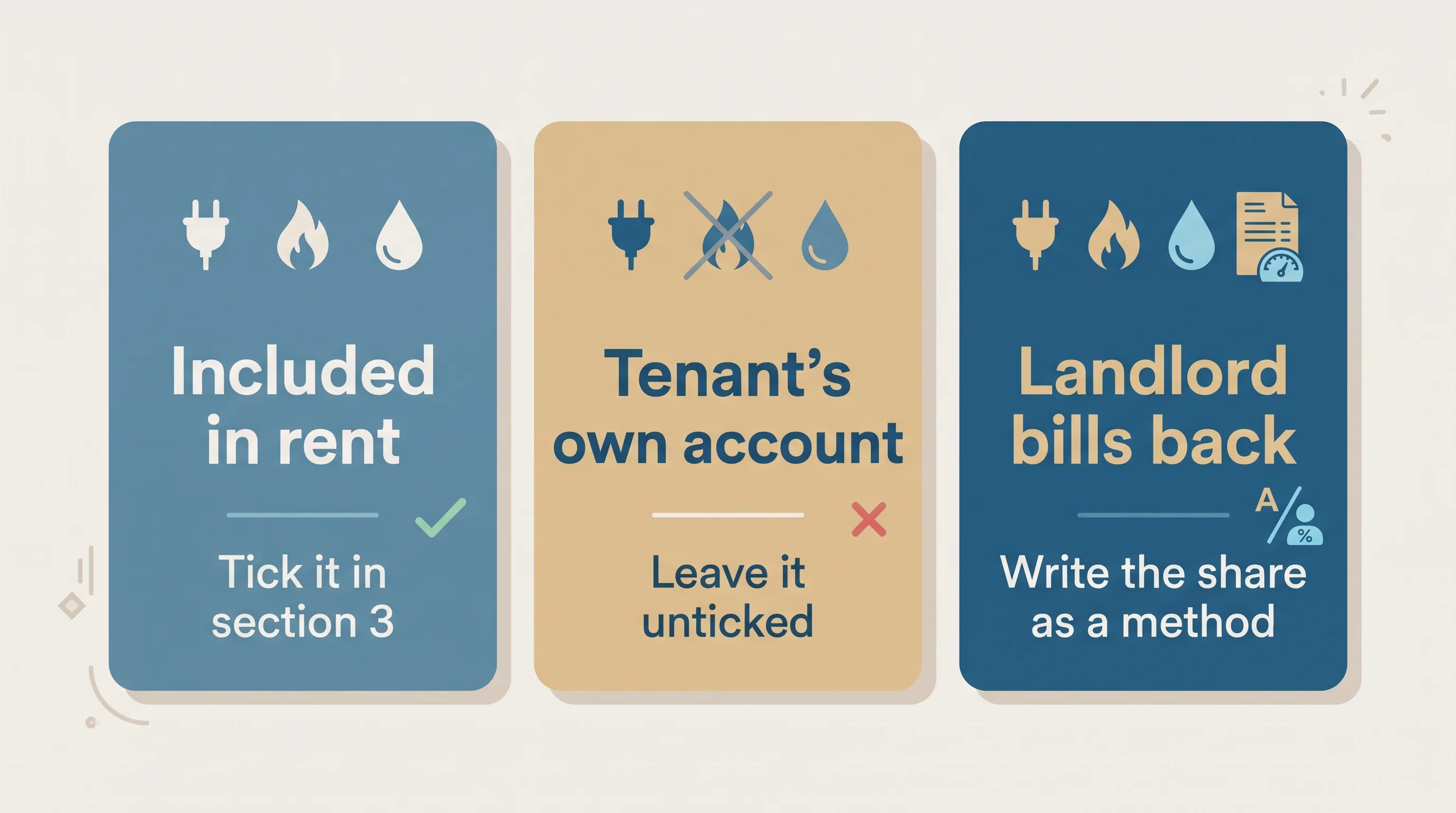
Whoever the tenancy agreement says pays. BC has no default rule that a landlord or a tenant pays heat, hydro or water, so the agreement must state which services and facilities are included in the rent (RTA s.13(2)(f)(vi)). The RTB's paying-rent page puts it simply: the agreement should clearly say how utilities will be paid and who will pay them.
The RTB's standard tenancy agreement (RTB-1) has a checklist for this in section 3. The utilities and related services on it include water, natural gas, electricity, heat, garbage, recycling, kitchen scrap collection, sewage disposal, cablevision and internet. Anything not ticked is not included in the rent, so the tenant arranges and pays for it.
| Arrangement | How it works | What to write down |
|---|---|---|
| Included in rent | Landlord keeps the account and pays it; the rent covers it | Tick the item in section 3 of the agreement |
| Tenant's own account | Tenant opens the account with the provider in their own name | Leave it unticked; say the tenant arranges it |
| Landlord bills the tenant back | Landlord keeps the account and charges the tenant a share | An added term stating the share, how it's worked out, and when it's due |
Why the bill-back option needs the most care
A bill-back term is an added term, so it must be clear and not unconscionable to be enforced (RTA s.6(3)), and any later change must be in writing and initialled by both of you (standard term 1(2)). Our guide to what you can and can't add to a BC tenancy agreement covers how added terms are tested.
How do you split utilities between suites or tenants in BC?
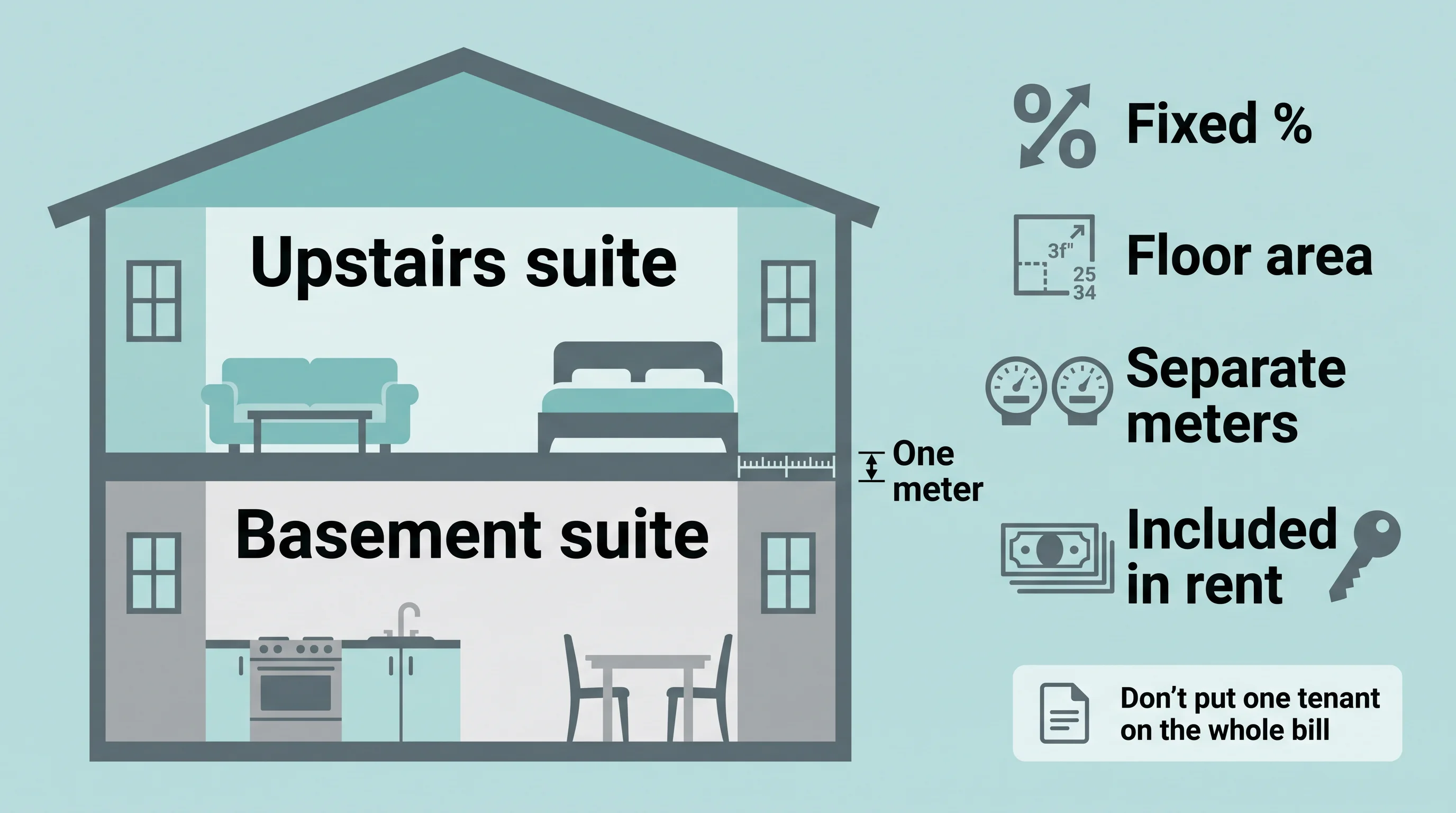
The RTA does not set a formula, so the split is whatever the agreement clearly says. What the law does control is who can be made to carry the account: RTB Policy Guideline 1 (section X) says a term requiring a tenant to put the electricity, gas or other utility billing in their name for premises they don't occupy is likely to be found unconscionable.
That matters most in a house with an upstairs and a basement suite on one meter. If the agreement makes one tenant hold the account and the other tenancy doesn't pay its share, Guideline 1 says the tenant whose name is on the bill may claim the other tenants' share from the landlord. In practice, the landlord carries the risk of the split either way.
Common, clearly written ways to split a shared bill include:
- A fixed percentage per suite, set in each agreement.
- A share by floor area or by number of bedrooms, with the figures written in.
- Separate meters or sub-meters, so each suite pays for what it uses.
- Utilities included in each suite's rent, which avoids the split altogether.
Co-tenants on one agreement
Roommates who signed the same agreement are co-tenants, and RTB Policy Guideline 13 says a landlord can recover the full amount of rent, utilities or damages owing from all or any one of them. How they divide it among themselves is their own arrangement; the RTB's paying-rent page suggests a roommate agreement. If a tenant shares a kitchen or bathroom with the owner, the RTA may not apply at all; see Shared Accommodation in BC: When the RTA Doesn't Apply.
Can a BC landlord stop including a utility or start charging for it?
Only within section 27 of the RTA. A landlord must not terminate or restrict a service or facility that is essential to using the unit as living accommodation, or whose provision is a material term of the agreement (s.27(1)). For any other service or facility, the landlord must give 30 days' written notice in the approved form and reduce the rent by the drop in the tenancy's value (s.27(2)).
RTB Policy Guideline 22 says an essential service is one that is necessary, indispensable or fundamental, and that an arbitrator will ask whether the tenant can get a reasonable substitute. Standard term 5(2) adds that the landlord must not take away, or make the tenant pay extra for, a service or facility already included in the rent unless a section 27(2) reduction is made. The RTB says it plainly: landlords must reduce rent if a tenant starts to pay for utilities that were originally included.
Guideline 22's own example of an essential service is an elevator in a multi-storey building. Heat is at least as fundamental to living in a unit, so the safe course is to treat included heat as essential and keep providing it for the life of the tenancy. A rent increase is a separate process with its own notice and limits.
What can a landlord do about unpaid utility charges in BC?
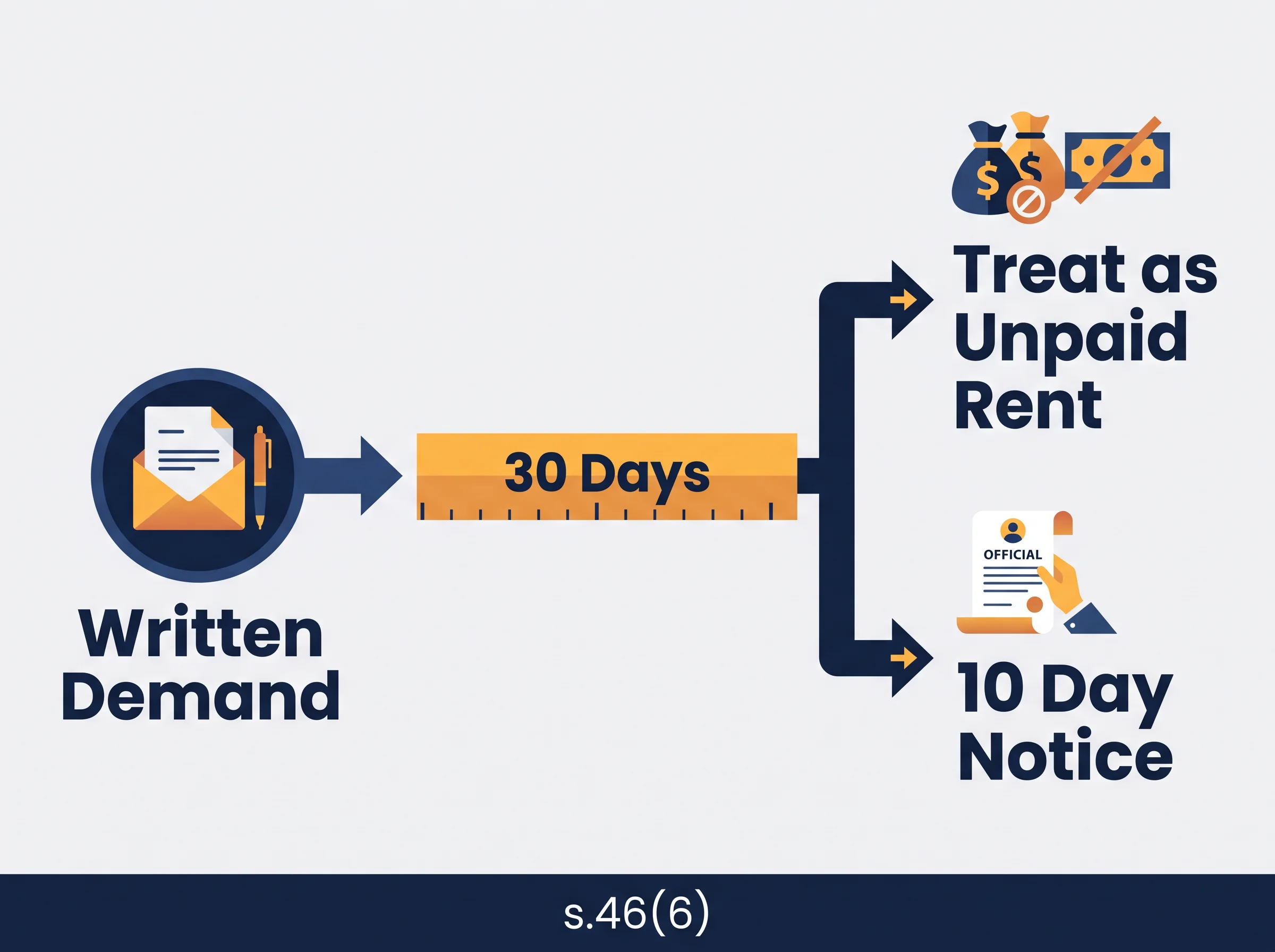
If the tenancy agreement requires the tenant to pay utility charges to the landlord, and the charges are unpaid more than 30 days after the tenant is given a written demand, the landlord may treat them as unpaid rent and give a 10 Day Notice (RTA s.46(6)). The RTB suggests talking with the tenant first and documenting the outcome.
Three conditions all have to be met: the agreement requires the tenant to pay the charges to the landlord, there was a written demand, and more than 30 days have passed since the tenant received it. A utility the tenant owes to the provider on their own account is between the tenant and the provider. Our step-by-step guide covers how to give a 10 Day Notice for unpaid rent or utilities (RTB-30).
Frequently asked questions
Does a BC landlord have to include heat or hydro in the rent?
No. The RTA doesn't require any utility to be included; the agreement decides. But once a utility is included, section 27 and standard term 5(2) stop the landlord removing it or charging extra without the proper notice and a rent reduction.
Can my landlord raise my share of the utility bill?
Only as the agreement allows. If the term sets a percentage of the actual bill, the dollar amount moves with the bill. Changing the percentage itself is a change to the agreement, which must be in writing and initialled by both parties (standard term 1(2)).
Can a landlord make one tenant put the whole house's utilities in their name?
RTB Policy Guideline 1 says a term requiring a tenant to put utility billing in their name for premises they don't occupy is likely unconscionable. If one tenant is on the bill and the other tenancy doesn't pay, that tenant may claim the shortfall from the landlord.
Can unpaid utilities lead to eviction in BC?
Yes, if the agreement requires the tenant to pay the utility charges to the landlord and they remain unpaid more than 30 days after a written demand. The landlord may then treat them as unpaid rent and give a 10 Day Notice (RTA s.46(6)).
Is internet a utility under the RTA?
The RTA defines "service or facility" to include utilities and related services, and cablevision facilities (s.1). Internet is one of the checkboxes in section 3 of the RTB-1, so if it is ticked, treat it as included in the rent and protected by section 27.
BC Utilities Checklist
Set out who pays for each utility in a BC tenancy, split shared bills cleanly and handle changes and arrears within the RTA.
Get Free PDF →Conclusion
Utility disputes in BC usually start with an agreement that didn't say enough. Tick what's included, write any bill-back as a clear method, keep the account in your own name when suites share a meter, and remember that an included utility stays included unless section 27 allows otherwise.
Set out utilities clearly from day one
Tenon10 creates the BC tenancy agreement and sends rent reminders, so who pays what is written down before the first bill arrives.
Free BC form • Built for Canadian landlords