To rent out property in Vancouver, a landlord needs a City of Vancouver long-term rental business licence for any rental of 90 days or more, follows BC's Residential Tenancy Act like every BC landlord, and declares the home every year for both the City's Empty Homes Tax and the provincial speculation and vacancy tax. This Vancouver landlord guide covers each step.
At a glance
- Licence: a long-term rental business licence for rentals of 90 days or more, even if a property manager runs it.
- Tenancy law: the provincial Residential Tenancy Act, the same as anywhere in BC.
- Two declarations a year: the City's Empty Homes Tax and the Province's speculation and vacancy tax.
- Cooling: since a June 3, 2026 by-law change, a landlord with no central cooling must not stop tenants using a portable air conditioner.
- Rents: CMHC's October 2025 survey put the average two-bedroom in the City of Vancouver at $2,647.
Vancouver Landlord Checklist
What a Vancouver landlord does beyond BC's Residential Tenancy Act: the City licence, two yearly vacancy-tax declarations and the City's renter rules.
Get Free PDF →Do you need a business licence to rent out property in Vancouver?
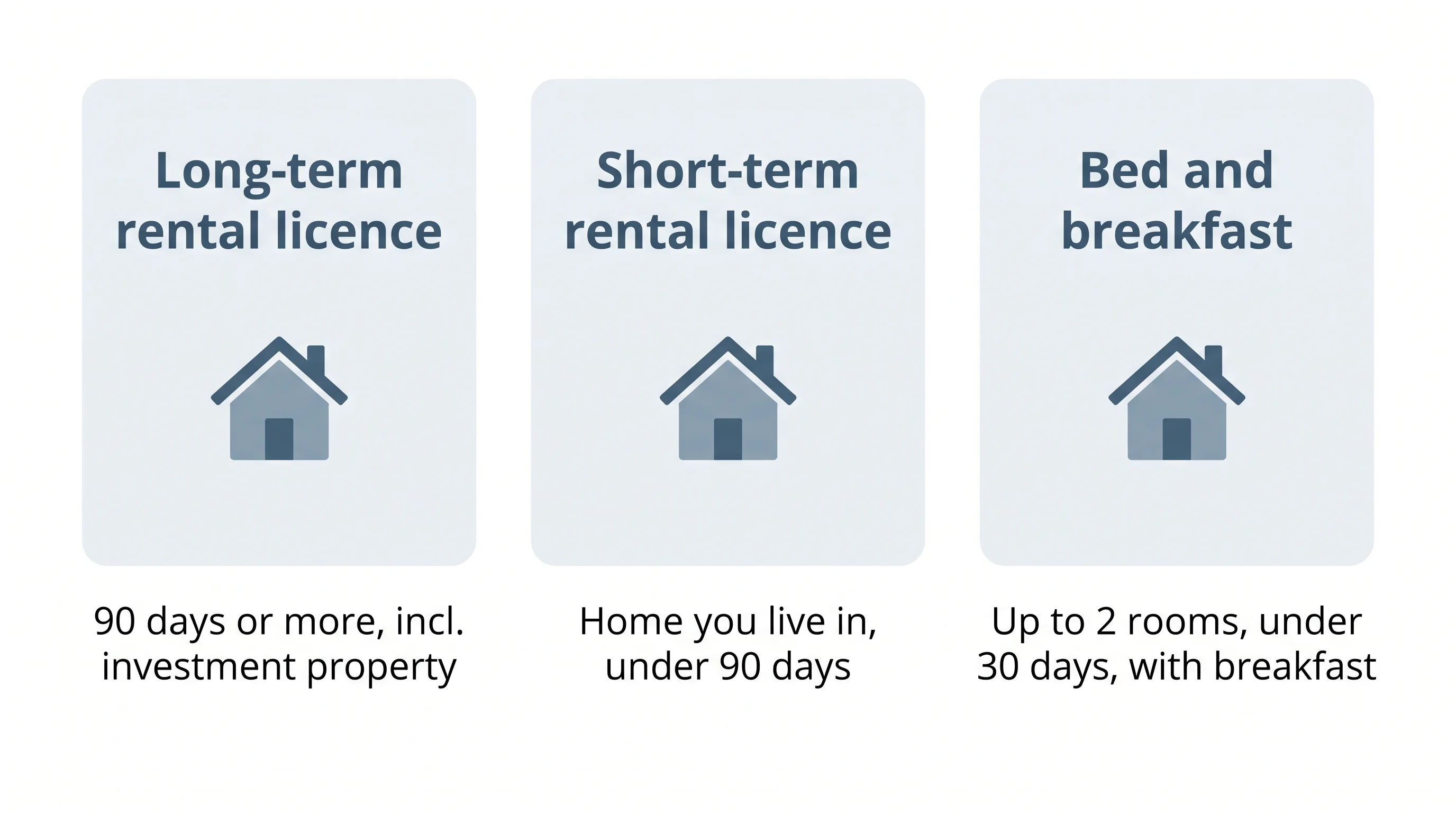
Yes. The City of Vancouver says that to rent your residential property you need a rental property business licence, even if you hire a property manager. It offers three, chosen by how long you rent and whether you live there, on its residential rental property licences page:
| Licence | What it covers |
|---|---|
| Long-term rental business licence | Renting a residential property you own, including an investment property, for 90 days or more at a time |
| Short-term rental business licence | Renting the home you live in for less than 90 days at a time |
| Bed and breakfast licence | Up to two rooms in the home you live in, for less than 30 days at a time, with breakfast |
The long-term rental licence page lists the property types you can rent, including single detached houses, laneway houses, secondary suites, duplexes and apartment houses. It also says an owner may have a maximum of two tenants living with them in their principal residence without a business licence.
The same page reminds landlords to comply with the Residential Tenancy Branch's rules and to give tenants an emergency contact. That matches section 33(2) of the Residential Tenancy Act, which requires the landlord to post or give in writing the name and phone number of the person to call for emergency repairs.
Which tenancy rules apply to a Vancouver rental?
A Vancouver rental follows the same provincial law as the rest of BC: the Residential Tenancy Act sets the tenancy agreement, deposits, rent increases, entry, repairs and how a tenancy ends. The City does not run its own tenancy tribunal; disputes go to the Residential Tenancy Branch.
Start with our guides to the BC tenancy agreement, security and pet damage deposits and the 2027 rent increase limit. Section 32 of the Act requires the landlord to keep the property in a state of decoration and repair that meets the health, safety and housing standards required by law, which in Vancouver includes the City's own by-laws, such as its Standards of Maintenance By-law.
What changed for cooling in 2026?
On June 3, 2026, Vancouver City Council amended the Licence By-law to prohibit landlords from preventing tenants from using portable air conditioners when no centralized cooling is provided, according to the City's renter supports page. Landlords do not have to provide or install air conditioners. The City sets a $1,000 fine per offence for landlords who do not comply.
What if you plan to redevelop?
The City applies its Tenant Relocation and Protection Policy to renters during rezoning and development, and the Broadway Plan area has enhanced protections on top of it. If redevelopment is in your plans, read those policies before you apply, and our guide to renovictions in BC for the provincial side.
Which taxes does a Vancouver landlord declare?
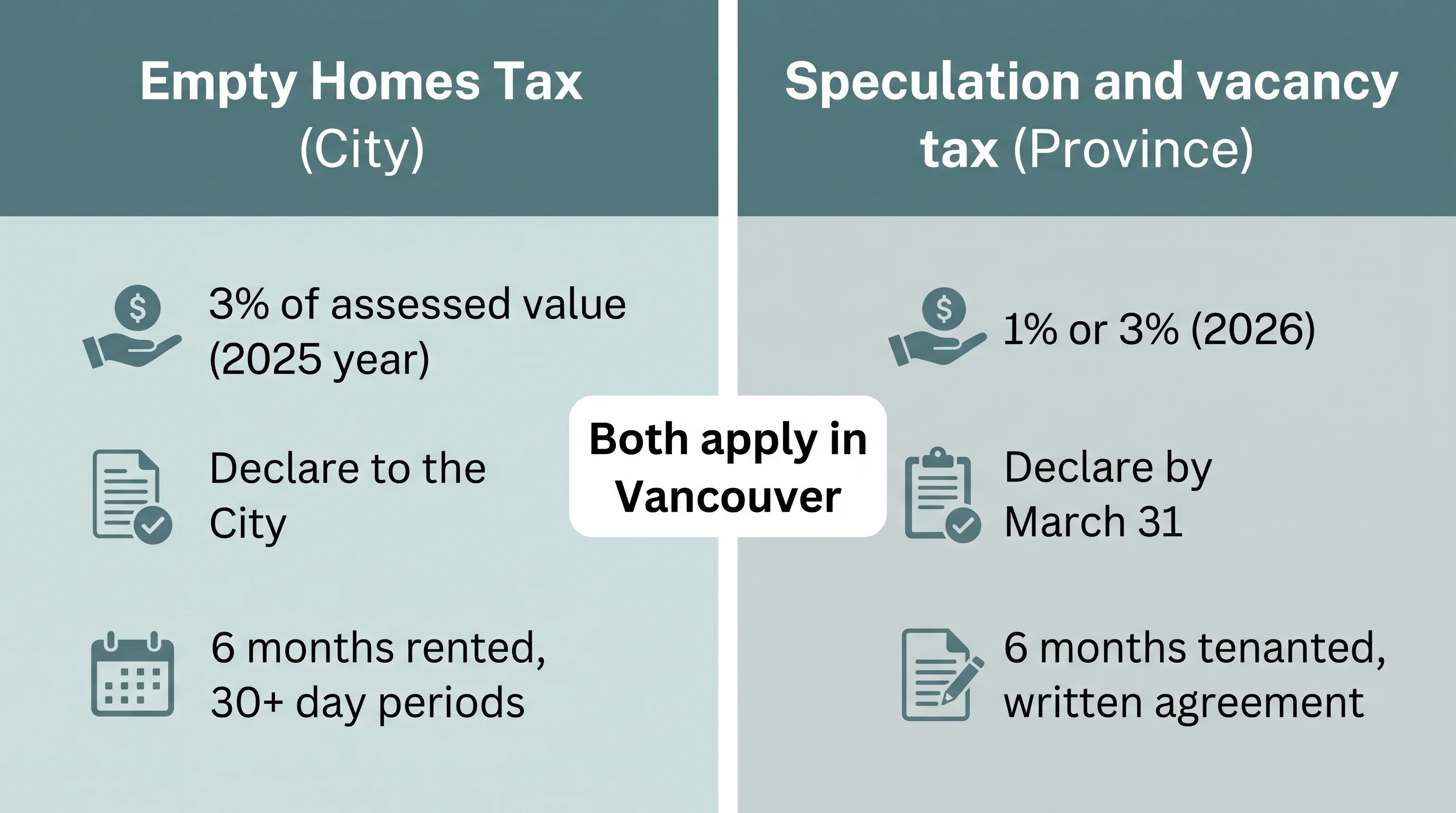
A Vancouver home faces two vacancy taxes, and each needs its own declaration every year. The City of Vancouver says the Province's speculation and vacancy tax is in addition to its Empty Homes Tax.
| Empty Homes Tax (City) | Speculation and vacancy tax (Province) | |
|---|---|---|
| Rate | 3% of assessed taxable value (2025 reference year) | 1% or 3% for the 2026 tax year, depending on the owner |
| Declaration | To the City; the 2025 year was due February 3, 2026 | To the Province, by March 31 |
| Rental exemption | Rented to an arm's-length tenant at least 6 months, in periods of 30+ consecutive days | Tenanted at least 6 months, written RTA agreement, one-month increments |
If you miss the City deadline, the City says the property is deemed vacant, taxed at 3% and given a $250 by-law ticket. Our guide to Form T776 explains how the rent itself is reported for income tax, which is separate again.
What do Vancouver rentals rent for?
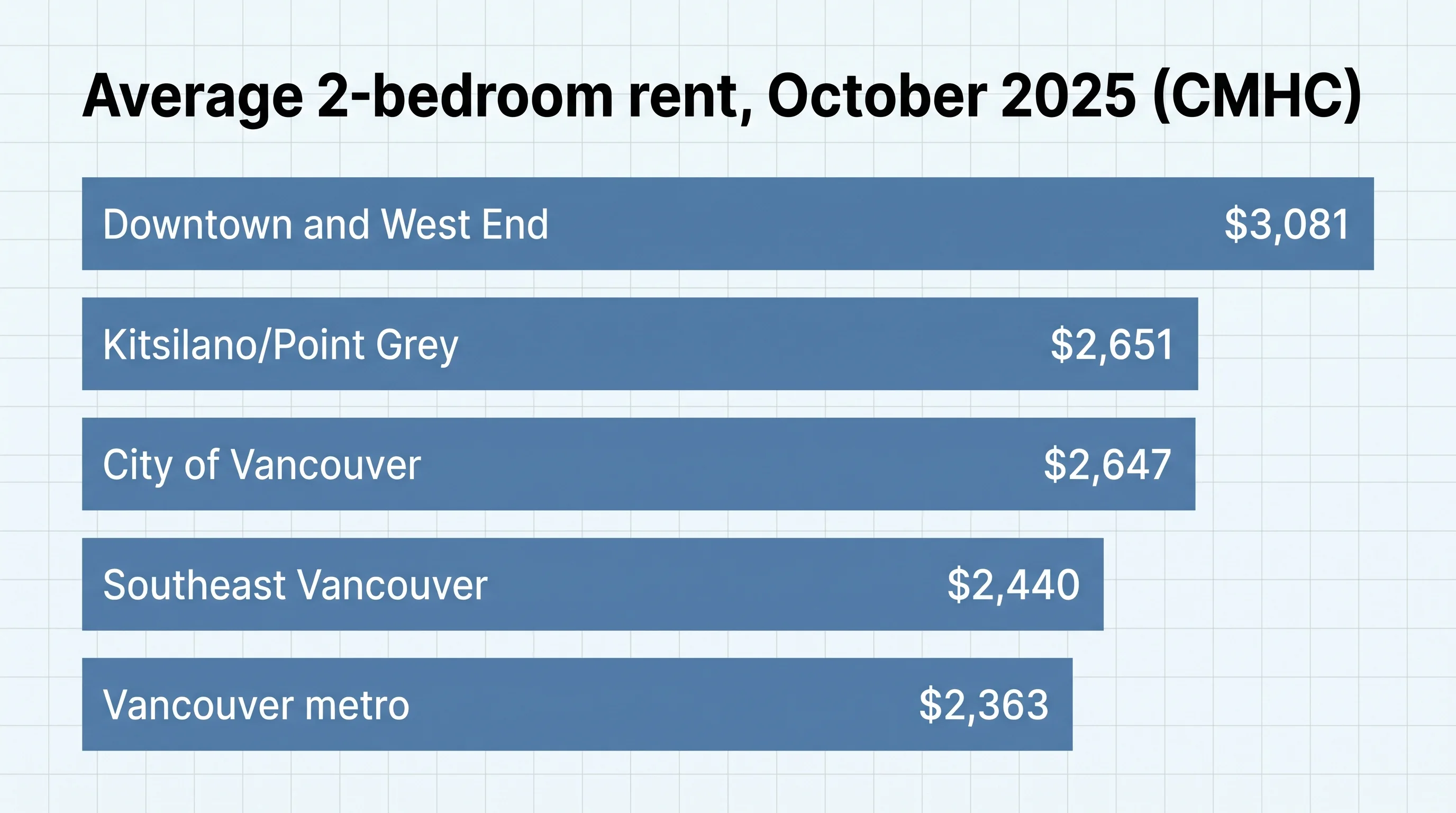
CMHC's 2025 Rental Market Survey, taken in October 2025, put the average two-bedroom purpose-built apartment in the City of Vancouver (zones 1 to 10) at $2,647 a month, up from $2,565 in October 2024. Across the Vancouver metropolitan area the two-bedroom average was $2,363, and the overall vacancy rate rose to 3.7% from 1.6%.
| CMHC 2025 survey (October) | 2-bedroom average rent | Vacancy rate, all units |
|---|---|---|
| City of Vancouver (zones 1-10) | $2,647 | 2.7% |
| Downtown and West End (zones 1-3) | $3,081 | 3.4% |
| Kitsilano/Point Grey | $2,651 | 1.7% |
| Southeast Vancouver | $2,440 | 2.6% |
| Vancouver metropolitan area | $2,363 | 3.7% |
These are averages for occupied and vacant purpose-built units, not asking rents for new listings, and condos rented by individual owners are surveyed separately. Use them to sense-check your rent, not to set it.
Common mistakes Vancouver landlords make
- Renting without a licence. The City requires a rental property business licence even when a property manager handles the unit.
- Confusing short-term and long-term. A rental under 90 days at a time needs the short-term licence and must be the home you live in.
- Declaring only one vacancy tax. The City and the Province each need a declaration, every year.
- Banning portable air conditioners. Where there is no central cooling, that is now a by-law offence.
- Skipping the move-in inspection. Under the RTA, a landlord who does not offer and complete the condition inspection can lose the right to claim against the deposit for damage.
How Tenon10 helps
Tenon10 creates the BC tenancy agreement, runs move-in and move-out inspection reports, tracks deposits and their return dates, and sends rent reminders. For Vancouver property managers, it keeps trust ledgers. Our guide to BC condition inspections explains why the move-in report matters.
Frequently asked questions
Do I need a licence to rent my basement suite in Vancouver?
Yes, if you rent it for 90 days or more at a time, the City requires a long-term rental business licence, and secondary suites are on its list of rentable property types. The exception the City gives is up to two tenants living with you in your principal residence.
Does the City of Vancouver cap rent increases?
No. Rent increases for a Vancouver tenancy follow the provincial Residential Tenancy Act and its annual limit, the same as anywhere in BC.
Can I rent my condo on a short-term platform in Vancouver?
Only within the City's short-term rental licence, which covers renting the home you live in for less than 90 days at a time. Provincial principal-residence rules and your strata bylaws apply too.
Is my rental exempt from the Empty Homes Tax?
It is not taxed if it was rented to an arm's-length tenant for residential purposes for at least six months of the year, in periods of 30 or more consecutive days. You still have to declare.
Where do Vancouver landlords and tenants resolve disputes?
At the Residential Tenancy Branch, through dispute resolution. City by-law questions, such as the cooling rule, go to the City, which you can reach through 3-1-1.
Vancouver adds three things to the provincial rulebook: a licence, a second vacancy declaration and a growing set of renter protections. Get those right and the rest is the same RTA practice that applies everywhere in BC.
Vancouver Landlord Checklist
What a Vancouver landlord does beyond BC's Residential Tenancy Act: the City licence, two yearly vacancy-tax declarations and the City's renter rules.
Get Free PDF →Set up your Vancouver rental the right way
Start with a BC tenancy agreement and a move-in inspection report.
Free • No signup required