 General
Automating BC Rent Reminders and 10 Day Notices in Tenon10
A repeatable monthly arrears workflow for BC property managers, built around section 46 and the RTB-30, and where Tenon10 fits in.
8 min read
Narrow 232 published guides by topic, province, who you are and the kind of help you need. Every filter shows how many guides it leaves.
Shaded tiles have guides written for that province.
13 of 232 guides
Showing guides matching “N1 notice”, newest first.
GeneralA repeatable monthly arrears workflow for BC property managers, built around section 46 and the RTB-30, and where Tenon10 fits in.
 Rights & Legal
Ottawa city council passed its Rental Renovation Licence bylaw 21–5 on July 15, 2026, and it takes effect January 1, 2027: a municipal licence within 7 days of issuing an N13, a building permit secured before the notice goes out, and a city-produced tenant rights guide served alongside it. Here's what the bylaw actuall
 Rights & Legal
Not every tenancy has to end at the Landlord and Tenant Board. Ontario law gives landlords and tenants several legal ways to part company without an eviction hearing — the N11 mutual agreement and cash-for-keys deal, the tenant's own N9 notice, assignment, and negotiated moves — each faster than the queue when done rig
 Rights & Legal
The tenant handed you an N9 — or signed an N11 — and then simply stayed. The L3 converts their own paperwork into an eviction order, often without a hearing. But it runs on a 30-day fuse that voids the notice entirely, and an affidavit with five required elements the LTB will refuse the file over. Here's the complete w
 Rights & Legal
Ontario's renoviction rules now run on paperwork: a qualified professional's report, building permits, written timeline estimates, update obligations, a completion notice, and a 60-day window for the tenant to come back. Here's the full document trail — what landlords must produce, what tenants can demand, and where mu
 Rights & Legal
Bill 60 gives Ontario landlords a new choice on own-use evictions: serve the N12 the fast way and pay a month's compensation, or give at least 120 days' notice and pay nothing. On a $3,000 unit, that timing choice is worth $3,000. This guide breaks down exactly how the new 120-day path works under RTA s.48.1(2), when i
 Rights & Legal
If your rental was first occupied after November 15, 2018, the annual guideline doesn't cap your rent increases — but using the N1 instead of the N2, skipping the 90-day notice, or failing to prove the exemption can void the increase entirely. Here's how the N2 actually works.
 Rent & Payments
Ontario's 2027 rent increase guideline is 1.9% — the maximum most landlords can raise rent without going to the LTB. This complete guide covers the 1.9% cap, the exact N1 notice rules, the 90-day timing (you can serve as early as October 2026 for a January 2027 increase), who's exempt, and the mistakes that quietly voi
 Rights & Legal
The N13 is the notice an Ontario landlord uses to end a tenancy to demolish, convert, or do major repairs that need the unit empty. This guide walks through the three grounds, the 120-day notice rules, the compensation and right-to-return, and exactly how the process works — for both landlords serving one and tenants w
 Rights & Legal
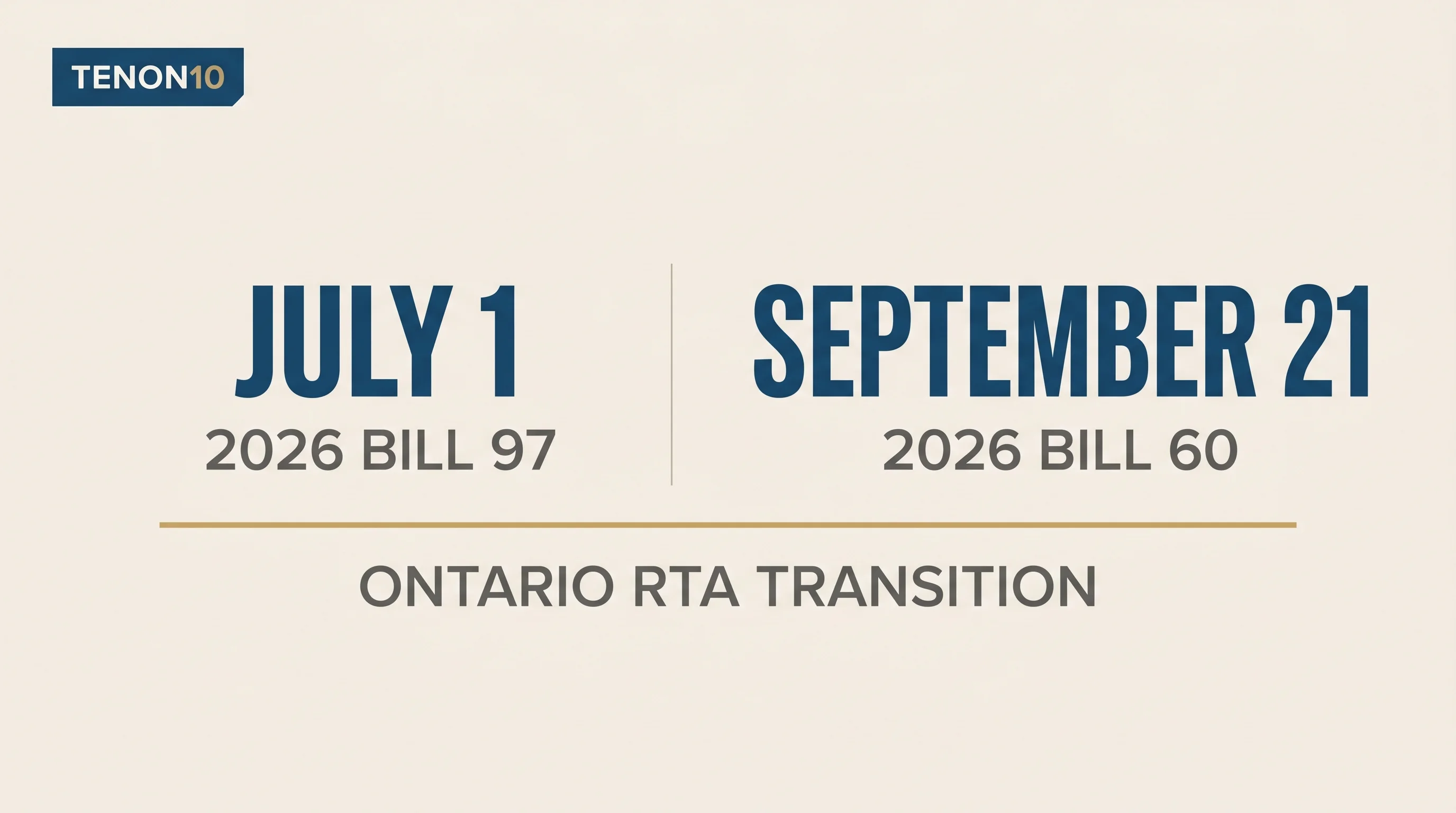
Ontario landlords face the biggest rental law changes in years. Bill 60's N4 and landlord's-own-use N12 changes are in force for notices given on or after September 21, 2026 — a 7-day N4, and no compensation on a landlord's-own-use N12 (never a purchaser's) served with at least 120 days' notice; the 15-day LTB review r
 Rights & Legal
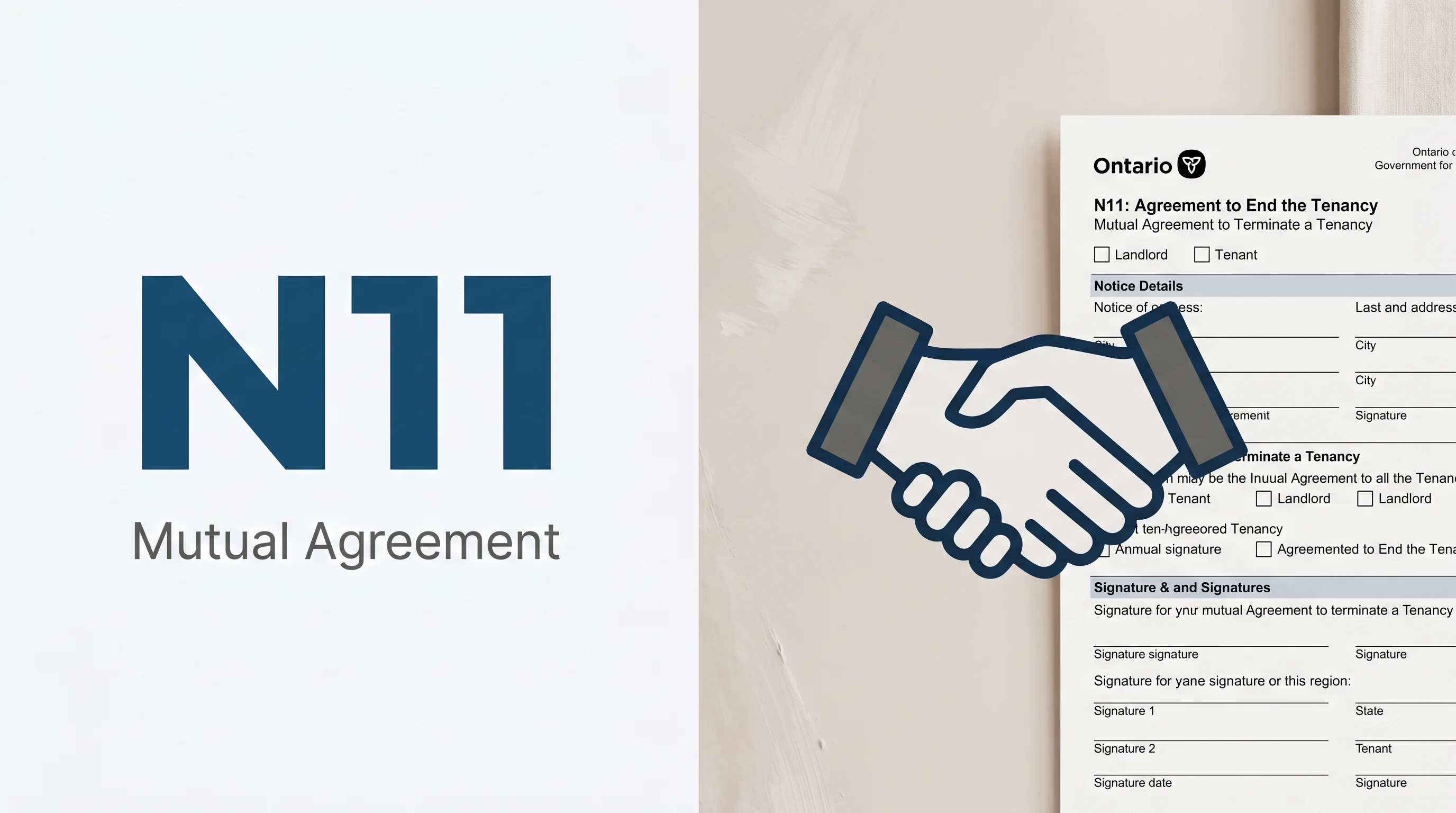
Both parties want to end the tenancy peacefully? The N11 is Ontario's cooperative path — no LTB hearing, no notice periods, no penalties. This 2026 guide explains when N11 makes sense, how to negotiate fair terms, and the protections both sides need to understand before signing.
 Rights & Legal
A complete 2026 guide to Ontario N12 notices. Understand when own-use ends a tenancy, the compensation rules under Bill 60, the good faith requirement, and how the process works for landlords, property managers, and tenants receiving an N12.
 Rights & Legal
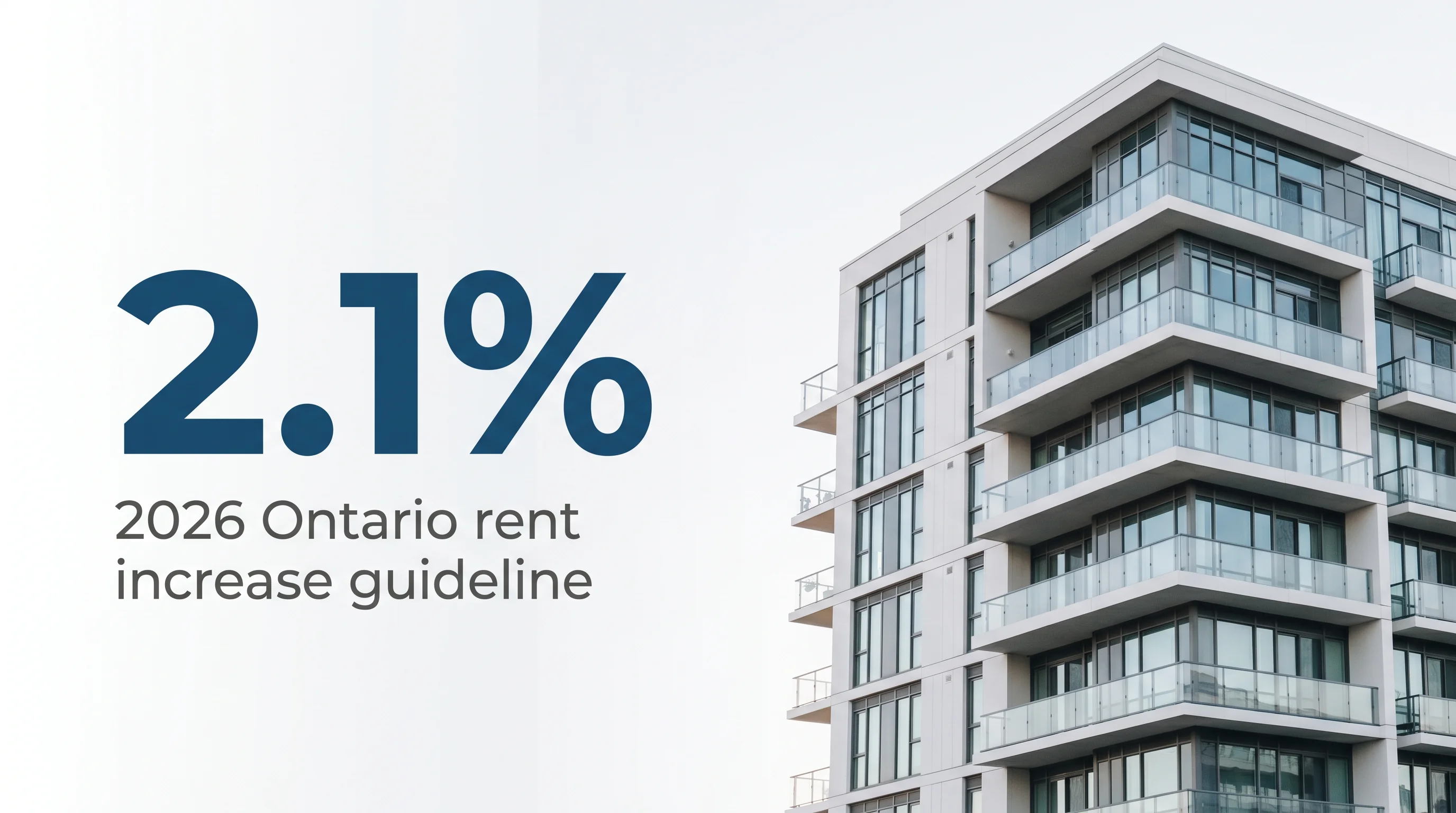
A complete 2026 guide to rent increases in Ontario. Understand the 2.1% provincial guideline, the 90-day N1 notice requirement, when rent increases apply, what voids them, and how the process works for landlords, property managers, and tenants alike.