 General
Serving 2027 BC Rent Increases Across a Portfolio in Tenon10
A workflow for property managers serving 2027 B.C. rent increases across many units, from eligibility dates to proof of service.
7 min read
Narrow 224 published guides by topic, province, who you are and the kind of help you need. Every filter shows how many guides it leaves.
Shaded tiles have guides written for that province.
15 of 224 guides
Showing guides matching “rent increase”, newest first.
GeneralA workflow for property managers serving 2027 B.C. rent increases across many units, from eligibility dates to proof of service.
 Rights & Legal
Your B.C. rent can rise by at most 2.2% in 2027. Here is what that means in dollars, when it can start, and how to check your notice.
 Rights & Legal
How B.C. tenants can check whether a rent increase is lawful, what to do if it is not, and how to recover an overpayment.
 General
B.C. rent increases need three full months' notice counted from deemed receipt. Here are the serve-by dates for every 2027 effective month.
 General
A field-by-field walkthrough of B.C.'s Notice of Rent Increase (RTB-7), with a worked 2027 example and the errors that delay increases.
 General
B.C.'s 2027 rent increase limit is 2.2%. Here is how to calculate it, when to serve the RTB-7, and the rules on the 12-month gap, tenant agreements and additional increases.
 Rent & Payments
Ontario's 2027 rent increase guideline is 1.9% — and the first day a landlord can serve an N1 for a January 1, 2027 increase is October 3, 2026, exactly 90 days out. This is the timing piece: the serve-date math for any 2027 effective date, the 12-month rule check, what the effective date controls (including which year
 Rights & Legal
Key deposits. Pet fees. An unreturned last month's rent. Interest nobody ever paid. N12 compensation that never arrived. Ontario law makes all of it recoverable — through one application with eight grounds and a filing fee under $60. But the T1 runs on a strict one-year lookback, and unchallenged rent increases become
 Rights & Legal
Your landlord's duty to repair is absolute — but it enforces itself exactly never. The T6 is the application that turns ignored repair requests into orders: rent abatements, deadlines, reimbursements, even a freeze on rent increases until the work is done. It costs $48, runs on a one-year clock, and lives or dies on da
 Rights & Legal
You've confirmed your AGI grounds — now comes the paperwork. The L5 is the LTB's most unusual filing: it skips the portal entirely, runs on an Excel form with strict naming rules, demands every receipt up front, and bills $233-plus before anyone reads a word. Here's the complete filing walkthrough — schedules, RUI, fee
 Rights & Legal
Ontario's rent guideline isn't always the ceiling. Through an Above-Guideline Increase, landlords can recover extraordinary tax hikes, major capital work, and security costs — but only on three statutory grounds, under strict caps, with a hearing at the end and an expiry date built in. Here's the full process: grounds,
 Rights & Legal
If your rental was first occupied after November 15, 2018, the annual guideline doesn't cap your rent increases — but using the N1 instead of the N2, skipping the 90-day notice, or failing to prove the exemption can void the increase entirely. Here's how the N2 actually works.
 Rent & Payments
Ontario's 2027 rent increase guideline is 1.9% — the maximum most landlords can raise rent without going to the LTB. This complete guide covers the 1.9% cap, the exact N1 notice rules, the 90-day timing (you can serve as early as October 2026 for a January 2027 increase), who's exempt, and the mistakes that quietly voi
 Rights & Legal
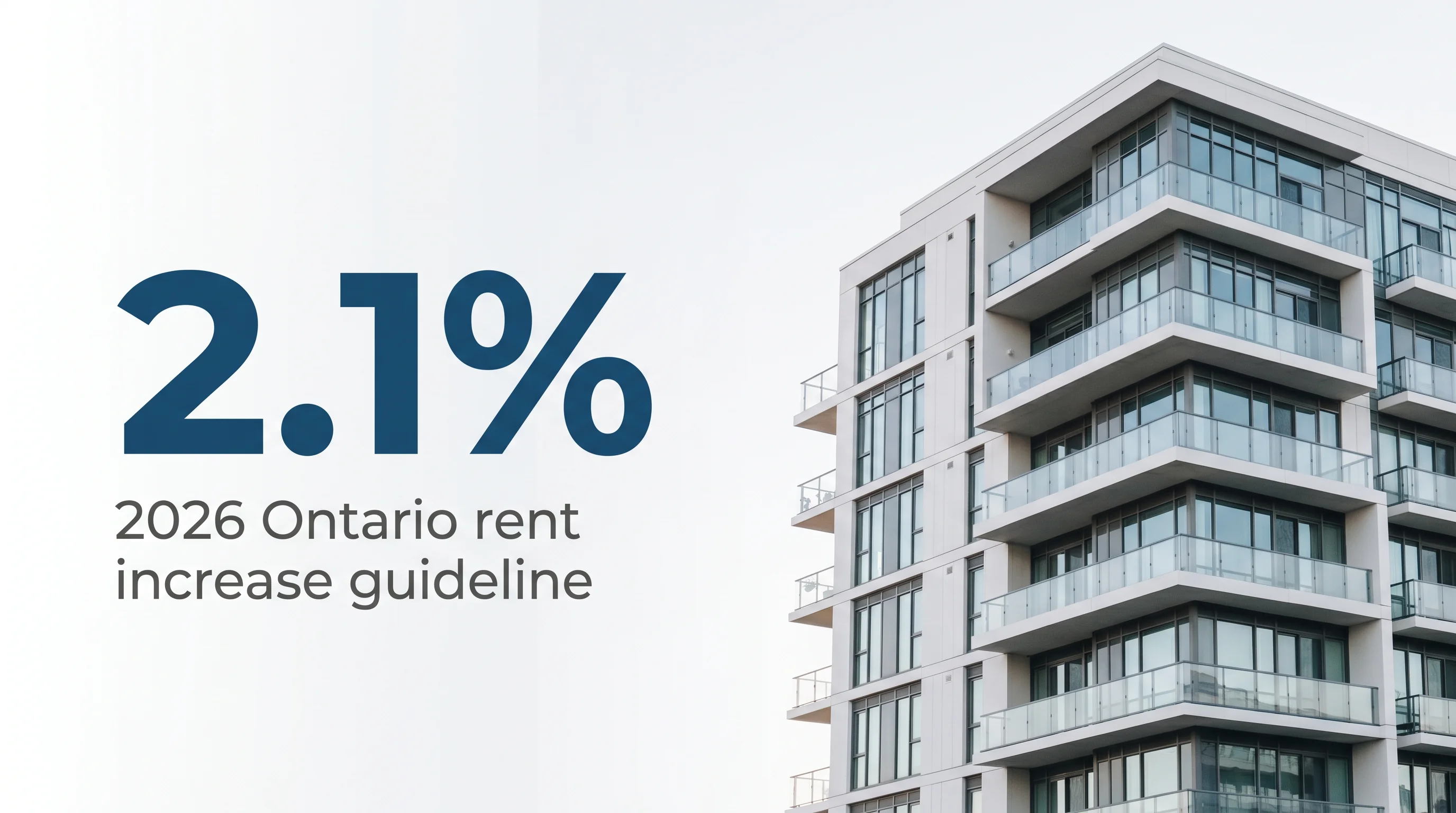
A complete 2026 guide to rent increases in Ontario. Understand the 2.1% provincial guideline, the 90-day N1 notice requirement, when rent increases apply, what voids them, and how the process works for landlords, property managers, and tenants alike.
 Tools & Evaluations
Ontario PMs need more than generic software. Here's what to evaluate in 2026 — from LTB form automation and rent increase compliance to Canadian payments, RBAC, and trust accounting.