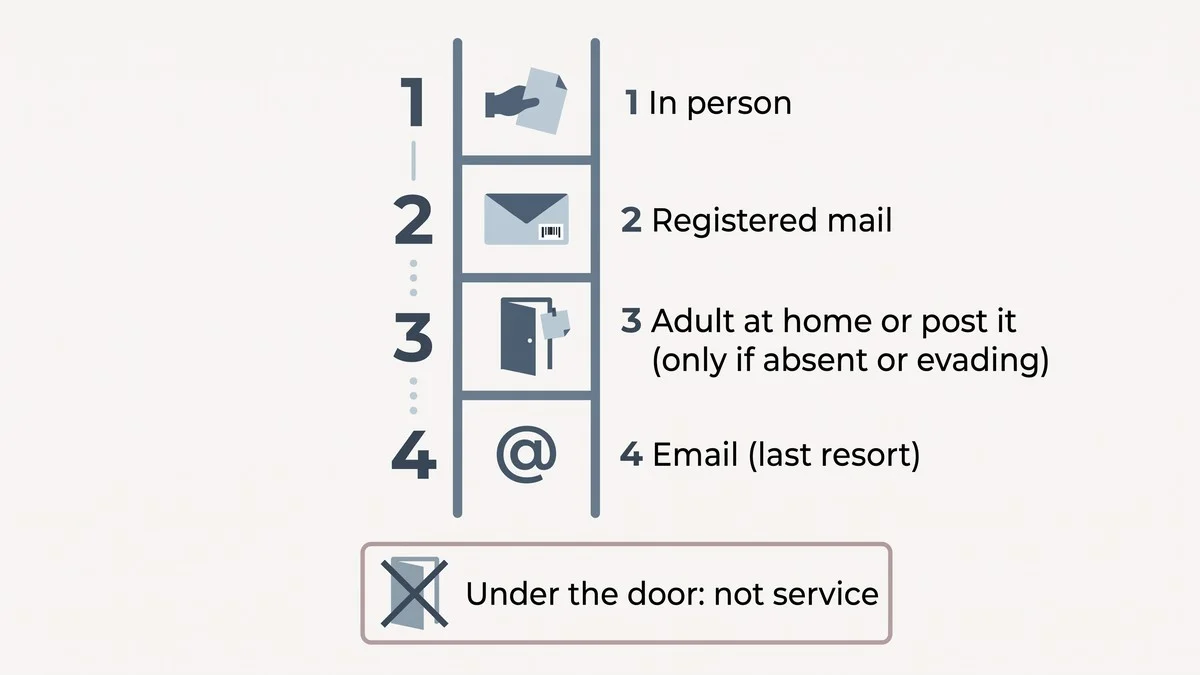
Serving notices in Alberta means delivering them in person or by registered mail, as section 57 of the Residential Tenancies Act requires. Only if a tenant is away or evading service may a landlord hand the notice to an adult living there or post it in a conspicuous place. Email is a last resort, and sliding a notice under the door is not service.
A notice that was not served properly can fail at the RTDRS or in court, however correct its contents. The rules below apply to termination notices, rent increase notices and any other notice, order or document under the Act.
Which methods count as serving a notice in Alberta?
| Method | When it is allowed |
|---|---|
| In person | Always: hand it to the other party. |
| Registered mail | Always. A tenant's address is the rental unit; a landlord's is where rent is paid or the address on the notice of landlord. |
| To an adult who apparently lives with the tenant | Only when the tenant is absent or evading service. |
| Posting in a conspicuous place on the premises | Same: only when the tenant is absent or evading. |
| Electronic (for example email) | Only when every method above has failed and the other party has given an electronic address for service. |
How do you serve a notice step by step?
- Use the right form and fill it in completely. Each notice has its own content rules, and a gap can void it; for termination notices see notice periods in Alberta.
- Make a copy for each adult tenant you plan to serve, and one for your file.
- Try personal service first. Hand it over and note the date, time and place.
- Or send it by registered mail to the correct address and keep the receipt and tracking number.
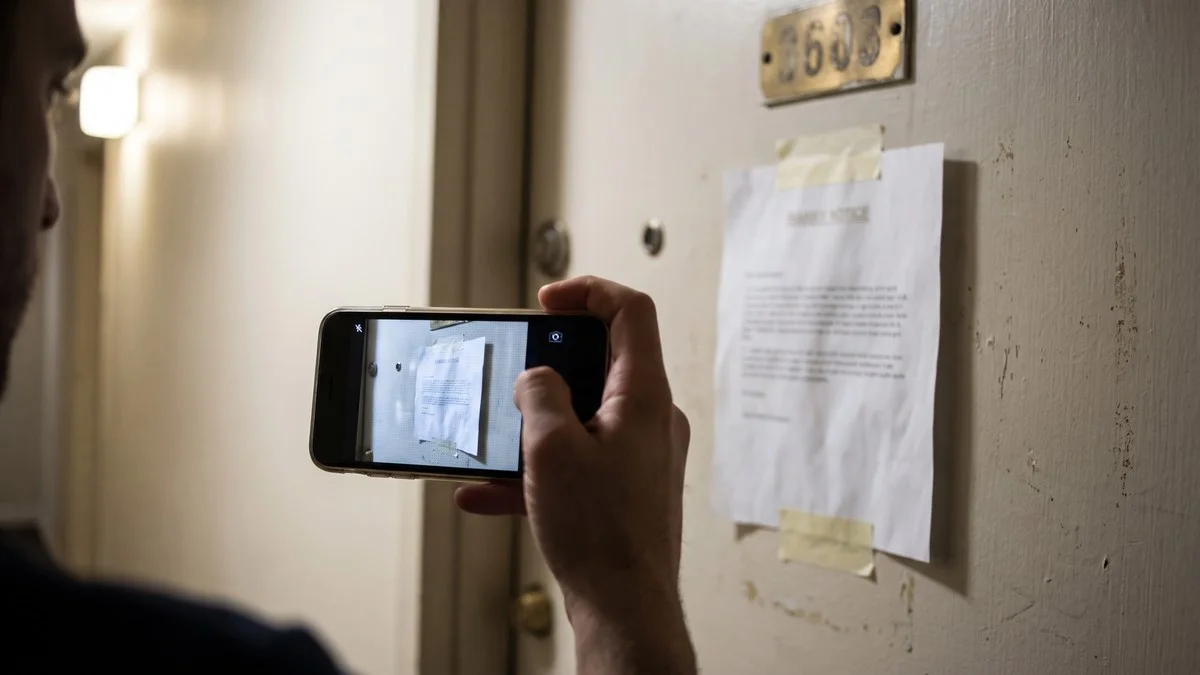
- If the tenant is avoiding you, record each attempt, then give it to an adult who lives there or post it on the door the tenant uses.
- Write down how service happened the same day: who, what, when, where. If the dispute reaches the RTDRS, you will need to prove it.
Who has to be served?
Serving one adult tenant satisfies the Act, even when several people signed the lease (s.58). A tenant likewise serves one landlord; see how a tenant gives notice. If the landlord or tenant is a corporation, it can also be served the way its corporate statute allows, such as at its registered office (s.57(7)).
The address tenants use comes from the notice of landlord: a signed, dated notice with a name and a postal address and physical location in Canada, served within 7 days after the tenant moves in or posted in a common area (s.18).
What does not count as service?
- sliding the notice under the door (the government's RTA handbook says so directly);
- a text message or email while personal service or registered mail is still possible;
- posting at a unit the tenant has already left;
- leaving it with a child or a guest.
Frequently asked questions
Can a lease clause allow email service?
The Act's order still applies: personal or registered mail first, electronic only after those fail and only to an address the party gave for service. Security deposit refunds and statements of account can go by e-transfer if both agree.
Does the tenant have to sign for registered mail?
For RTDRS application packages, service by registered mail is complete when it is signed for. Keep the delivery confirmation.
Can a tenant serve the landlord by email?
Only if personal service and registered mail both fail and the landlord gave an electronic address for service.
Is there a penalty for skipping the notice of landlord?
Yes. Failing to serve or post it is an offence under section 60, with a fine of up to $5,000.
Ending a periodic tenancy?
Fill out the AR211-F1 Landlord's Notice to End a Periodic Tenancy online and download the PDF. Free, no account required.
Free • No signup required