How to Dispute a Notice to Vacate in Saskatchewan Within 15 Days
A step-by-step guide for Saskatchewan tenants: which notices you can dispute, how to write and deliver the 15-day dispute, and what happens at the Office of Residential Tenancies.
Narrow 431 published guides by topic, province, who you are and the kind of help you need. Every filter shows how many guides it leaves.
Shaded tiles have guides written for that province.
17 of 431 guides
Showing guides matching “notices”, newest first.
A step-by-step guide for Saskatchewan tenants: which notices you can dispute, how to write and deliver the 15-day dispute, and what happens at the Office of Residential Tenancies.
Saskatchewan's residential law is The Residential Tenancies Act, 2006, not The Landlord and Tenant Act. Every main rule for landlords on one page: leases, deposits, rent increases, notices, service, possession hearings and the ORT.
Cockroaches move between units, so treatment in an Ontario apartment building usually has to cover more than one unit. The landlord's duty, the entry notice for every unit, unit-by-unit preparation, and the Toronto and Mississauga by-law rules.
Cockroaches move between units, so treating one apartment rarely works. Here is how a BC landlord organizes building-wide treatment, notices and unit preparation.
Two separate notices usually apply before a pest treatment in a BC rental: the landlord's 24-hour entry notice and the licensed applicator's 72-hour treatment notice.
Owning a BC rental while living in Ontario: the BC duties that need someone on site, how to serve notices from a distance, and when paid help must be licensed.
Your rights as an Alberta renter, in the order a tenancy runs: the lease, the deposit cap, the inspection report, entry, rent increases, repairs, notices and getting your deposit back.
Ontario's 2027 guideline is 1.9%; BC's limit is 2.2%. Rent increases, deposits, entry and unpaid-rent notices compared side by side for owners with rentals in both provinces.
Every core rule for Alberta landlords on one page: leases, the one-month deposit cap, inspection reports, rent increases, entry, repairs, notices, the RTDRS and deposit returns.
A BC tenancy ends only in the ways the Residential Tenancy Act lists. This guide covers every one: notices, mutual agreements, vacate clauses, abandonment, frustration and RTB orders.
A repeatable monthly arrears workflow for BC property managers, built around section 46 and the RTB-30, and where Tenon10 fits in.
BC has different service rules for notices and for dispute applications. Here is every method the Residential Tenancy Act allows, and when each document counts as received.
Ontario's right of first refusal used to fail at the follow-through: tenants left, renovations dragged, and nobody wrote. The new rules change the physics — missed updates or a skipped 60-day window are now deemed a denial of the right itself. Here's the complete lifecycle: the letter before you leave, the notices the
Ontario landlords face the biggest rental law changes in years. Bill 60's N4 and landlord's-own-use N12 changes are in force for notices given on or after September 21, 2026 — a 7-day N4, and no compensation on a landlord's-own-use N12 (never a purchaser's) served with at least 120 days' notice; the 15-day LTB review r
The N5 is Ontario's most-used notice for tenancy issues that aren't about money — interference, damage, or overcrowding. This 2026 guide explains the unique two-N5 rule, what tenants can do to void the notice, and what landlords must document to make an N5 stand up at the LTB.
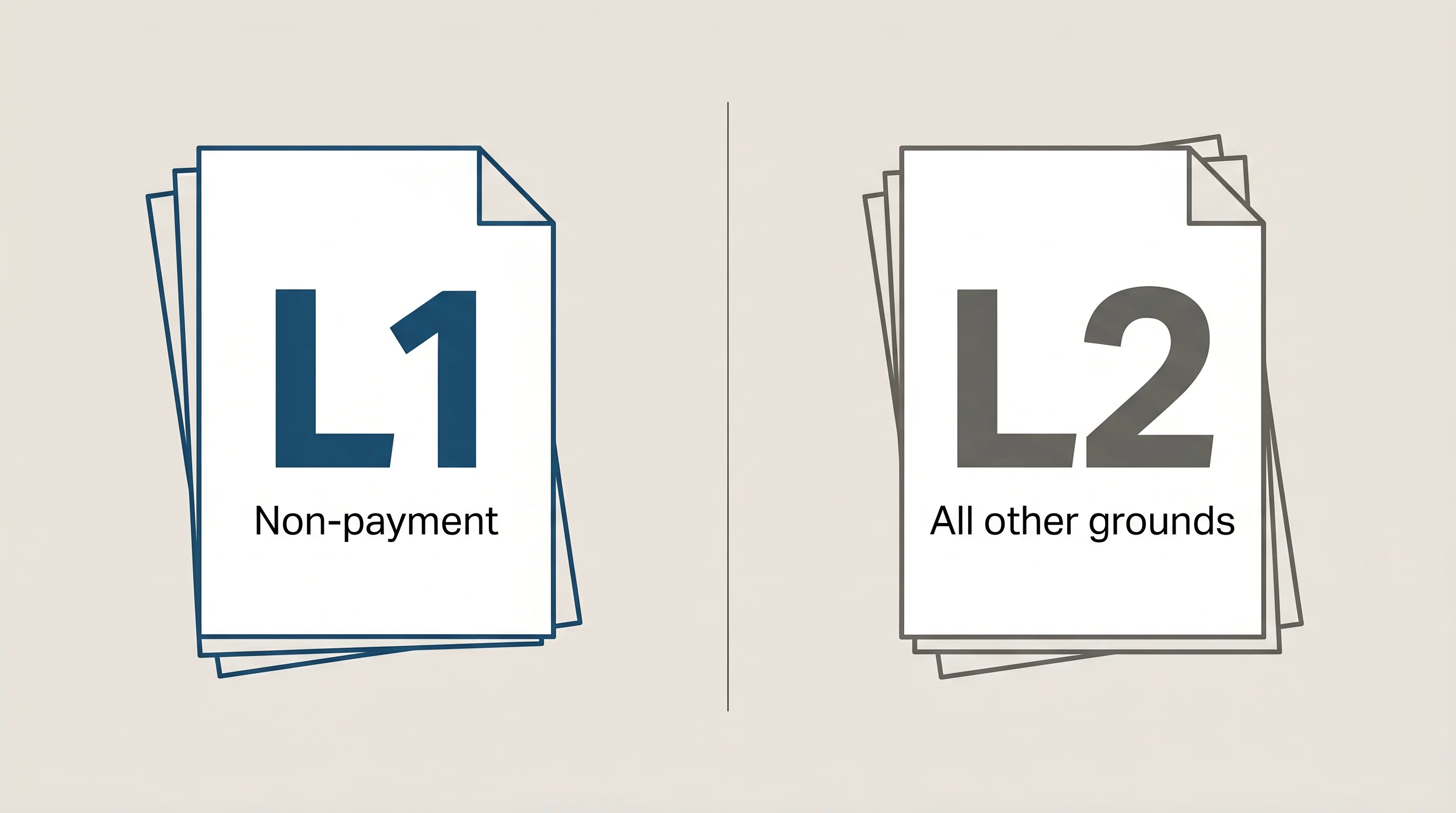
Confused about whether to file an L1 or L2 at the Ontario LTB? This 2026 guide breaks down when each application applies, what notices they follow, how hearings differ, and what documentation landlords need to win.
A complete 2026 guide to Ontario N12 notices. Understand when own-use ends a tenancy, the compensation rules under Bill 60, the good faith requirement, and how the process works for landlords, property managers, and tenants receiving an N12.