

Ontario's right of first refusal has always made renters a remarkable promise: after a renovation forces you out, you can come back to the same home at the same rent — as if you'd never left. For years, the promise failed at the follow-through. Tenants moved out, renovations dragged, nobody wrote, and the unit quietly reappeared online at $600 more. The new rules change the physics of that story: a missed update or a skipped return window is now deemed a denial of the right itself.
One clarification before anything else, because the internet muddles it: this is the tenancy right under Ontario's Residential Tenancies Act — the right to move back after repairs or renovations. It has nothing to do with the real-estate "right of first refusal" to buy a building, or with UK landlord-and-tenant law that dominates search results.
This is Deep-Dive #6 in our Bill 60/97 series, and it pairs tightly with Deep-Dive #5: that piece mapped the renoviction paper trail; this one follows the right itself, start to finish — the letter that preserves it, the three notices the landlord owes, the 60-day window, the uninterrupted-rent return, and the application (with a rebuilt time limit) when it all breaks. General information, not legal advice — and these provisions are phasing in through 2026, so confirm specifics on e-Laws.
The Coming-Home File: Preserving and Honouring the Right of First Refusal
One free PDF, both seats: the claim letter, the three notices, the 60-day window, and the application when it breaks.
Get Free PDF →What the Right Is — and Which N13s Carry It
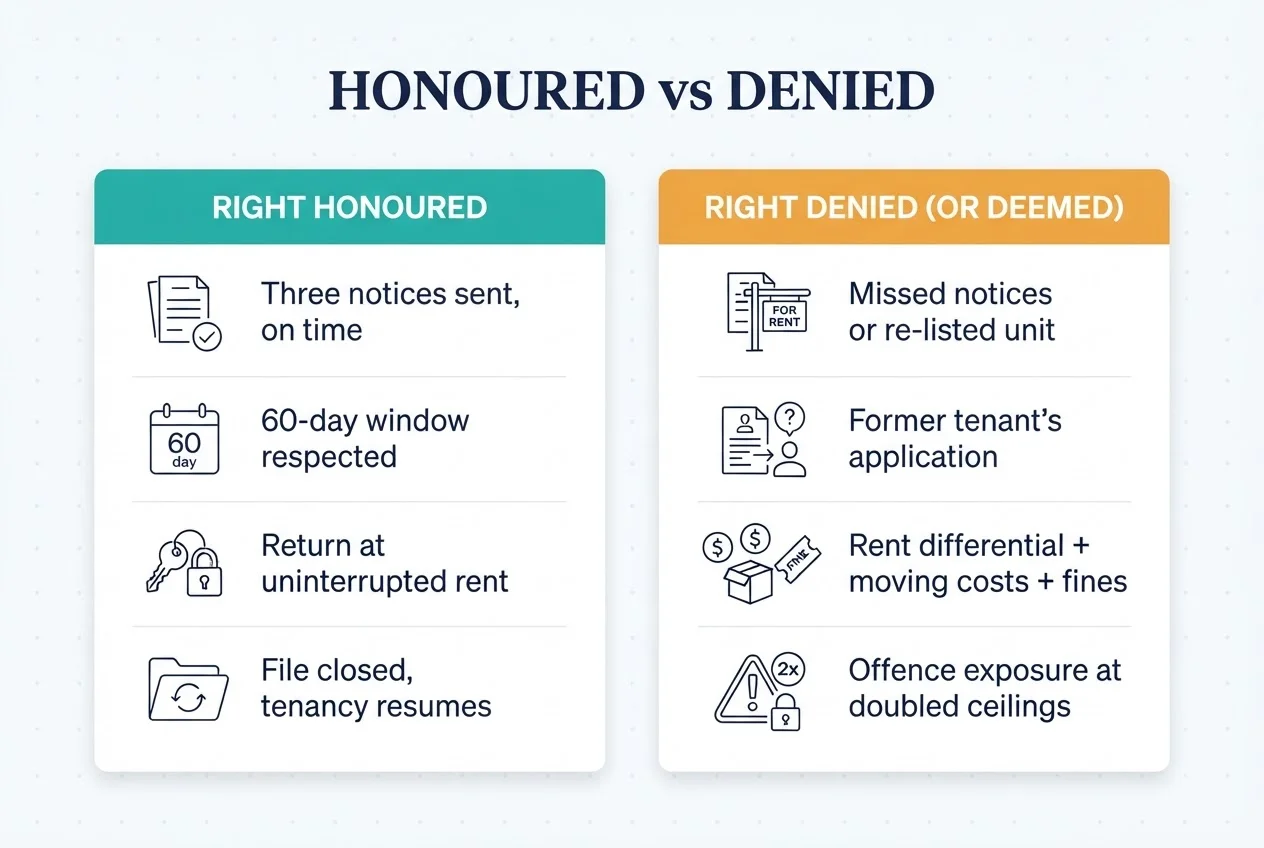
The core promise lives in section 53 of the RTA: a tenant who receives a repair-or-renovation N13 may reoccupy the unit when the work is complete, at a rent no more than what the landlord could lawfully have charged had there been no interruption. That phrasing matters in both directions. The rent isn't frozen — guideline increases that would lawfully have applied can layer on. But it can never be reset to market. Run the number: a tenant paying $1,750 returns at roughly $1,750-plus-guideline while the identical unit next door re-lets at $2,400. Toronto's sitting-versus-turnover gap runs around 21% — that gap is precisely what the right protects, and precisely why bad-faith renovictions exist.
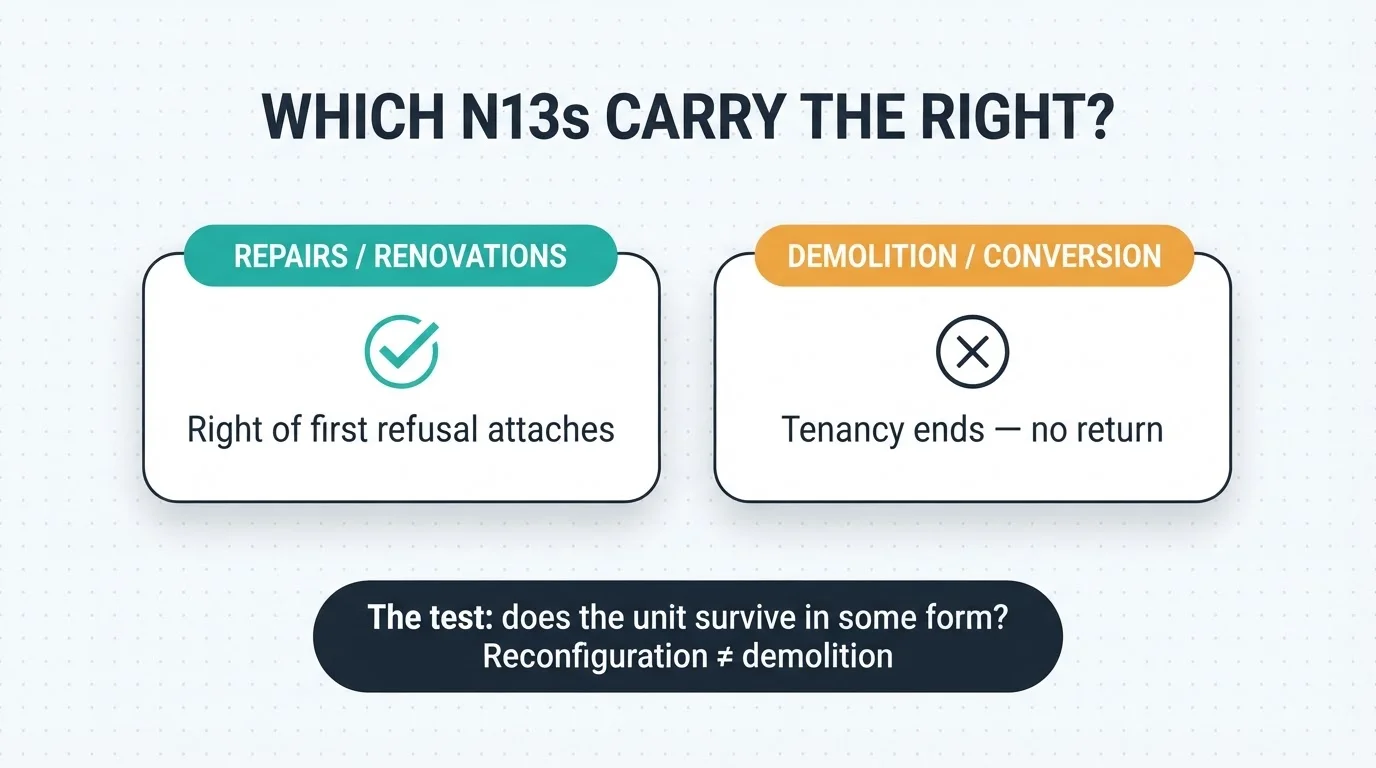
Two boundaries define who holds the right. First, repairs and renovations only — demolition and conversion N13s end the tenancy. But the demolition boundary is narrower than landlords sometimes hope: adjudicators have held that work counts as demolition only where the unit will no longer exist in any form, reasoning that the Act intends to preserve tenancies where possible — if a habitable residential unit will exist after the work, the door stays open for the tenant. Reconfiguration doesn't extinguish the right, and mislabelled "demolitions" are challengeable. Second, while displaced, most tenants are also owed compensation — generally one to three months' rent depending on building size, or rent for the renovation period — covered in detail in our renoviction hub guide.
Preserving the Right: The Tenant's Two Letters
Here is the single most important paragraph in this guide. The right of first refusal is not automatic. To have it, you must give your landlord written notice that you want it, before you vacate. No letter, no right — everything else in this article stands on that one envelope. Send it by registered mail and keep the receipt; the N13 form itself is required to tell you about this condition, but nobody will send the letter for you.
The second letter is really a habit: every address change, in writing, by the same method, for as long as you're displaced. The statute makes keeping the landlord informed of your address a condition of the right — and practically, the notices you're owed can only reach the address the landlord has. Round out the discipline with two practice-layer rules from the legal clinics: if there's an LTB hearing on the N13, tell the Board on the record that you intend to exercise the right; and never sign an N11 or accept a buyout without advice — signing away the tenancy usually signs away the right along with it.

For landlords, the mirror is simple: log the claim letter and every address update as file-critical. Those two pieces of paper define exactly who you owe the next section's notices to, and where.
The Wait: Three Notices, One Window, and the Deeming Rule
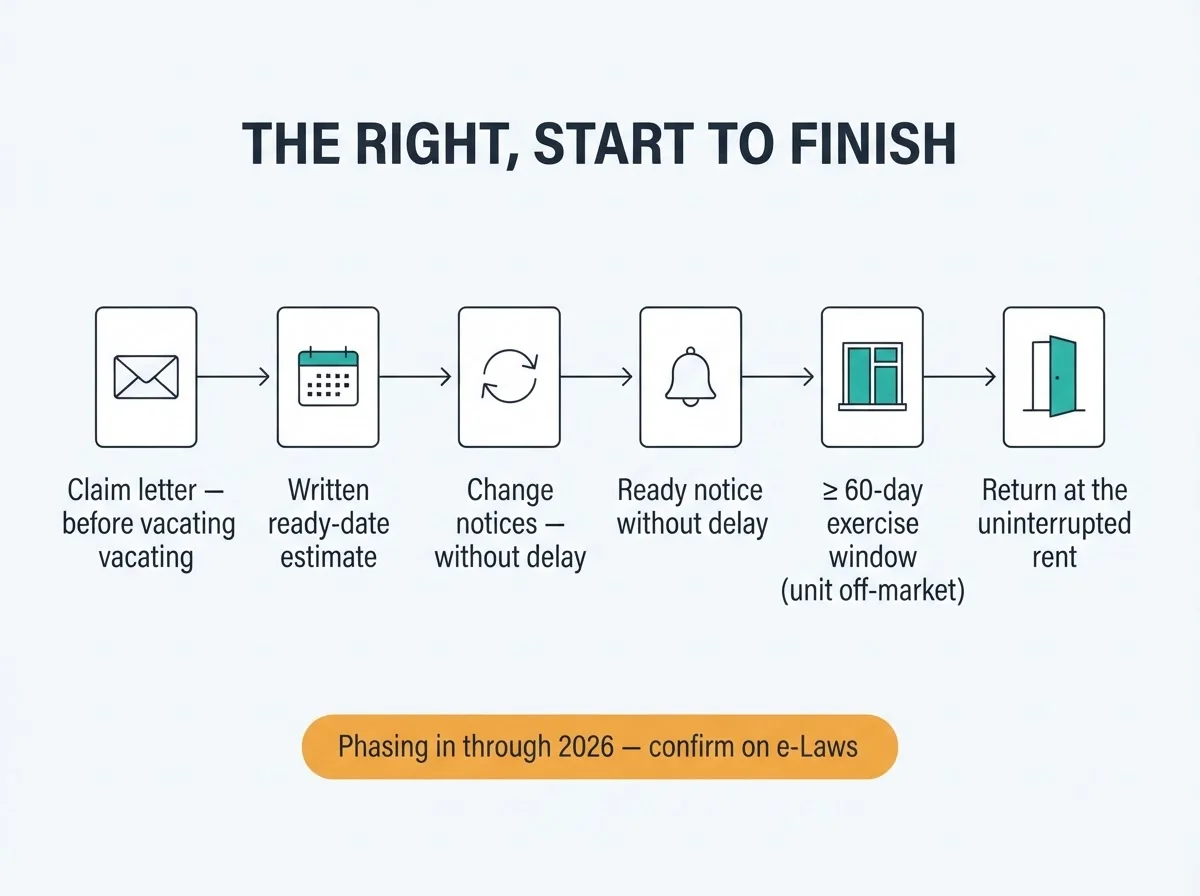
Once the right is claimed, the strengthened s. 53 puts three duties on the landlord:
- The written estimate — the date the unit is expected to be ready for occupancy;
- Change notices, without delay — if that estimated date moves, the tenant hears about it in writing;
- The ready notice, without delay — written notification when the unit is ready.
And then the window: once the unit is ready, the tenant gets at least 60 days to exercise the right. The landlord-side implication is unforgiving in the best way: the unit stays off-market through the entire window — an early listing is the denial case made for you, in screenshot form.
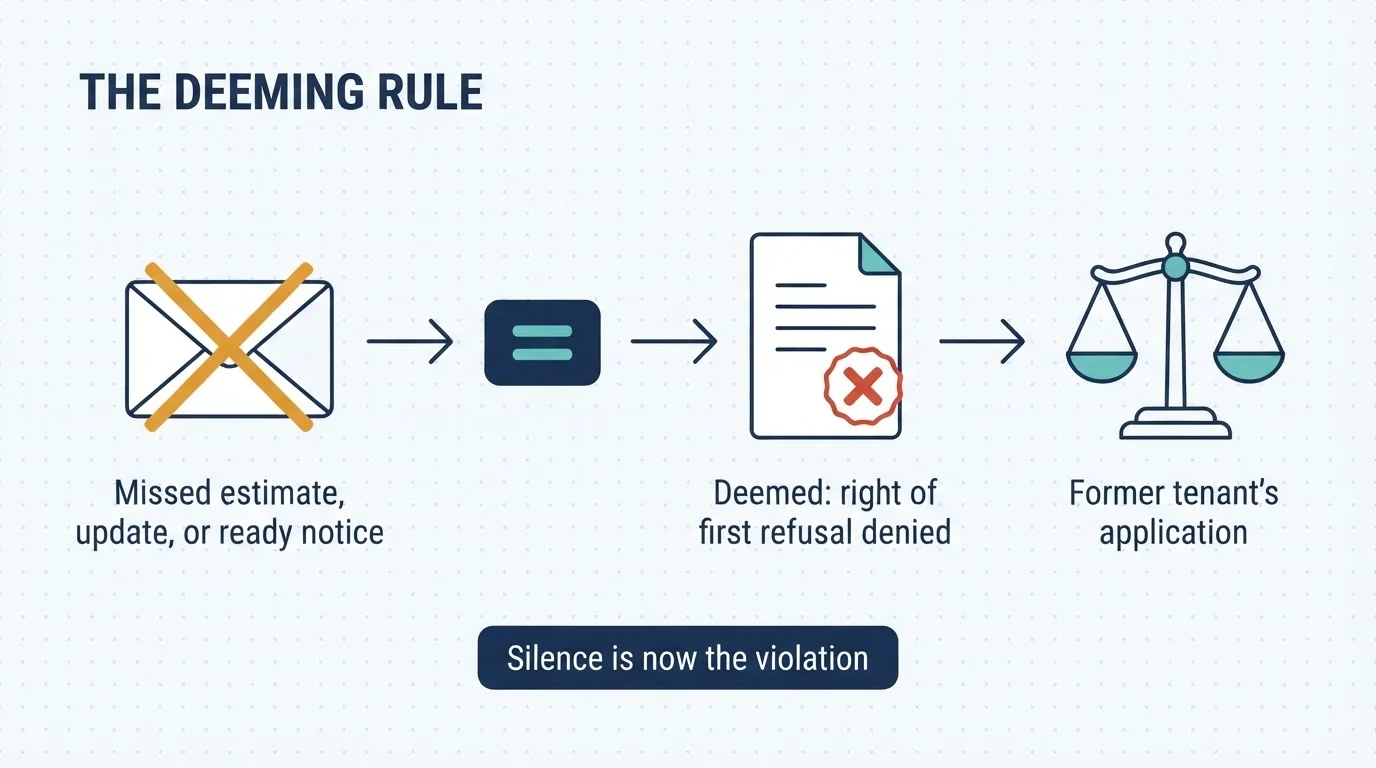
Now the headline — the provision that changes the physics. Under the new s. 57.1(1.1), a landlord who fails to comply with those duties is deemed to have failed to afford the right of first refusal for the purposes of the former tenant's application. Ottawa's staff summary calls it an "automatic assumption" of failure. Read that as a tenant: you no longer have to prove the missed update mattered — the gap is the finding. Read it as a landlord: the hearing starts from presumed breach, and only your file of dated, delivered notices answers it.
The landlord playbook is almost embarrassingly cheap: the day the claim letter arrives, put three items on the calendar, send each notice with proof of delivery, and hold the unit through the window. Minutes of admin, against a hearing that begins with the breach presumed.
When It Breaks: The Application and the Rebuilt Clock
The break patterns are familiar: the ready notice never comes; the old unit appears on a listing site; return is offered — at market rent; or the "renovation" turns out to have been a fresh coat of paint. Any of them grounds the former tenant's application under s. 57.1, with remedies that can include the rent differential you're now paying elsewhere, other compensation, moving and storage costs, and administrative fines — and, independently, denial of the right sits in offence territory backed by the ceilings that doubled on July 1.
And here's the reform almost nobody consumer-facing has noticed. The old time limit for these applications ran from the day the former tenant vacated — which quietly timed people out whenever a renovation outlasted the clock. That subsection has been repealed and replaced: the time limit has changed, the new rule applies to applications already in the system, and — remarkably — former tenants whose applications were dismissed under the old timing rule can bring fresh applications. We're deliberately not printing a specific new period here, because the provisions are phasing in and the exact wording is what governs: check e-Laws or get advice. The practical point stands either way — a "you're out of time" answer from before the reform may simply no longer be true.
Phasing honesty: These provisions arrived with the Bills 97/60 package proclaimed under Orders in Council 616–618/2026 and are phasing in through the year. Before relying on a duty (landlords) or invoking one (tenants) — and especially before treating any time limit as settled — confirm the provision's in-force status on Ontario's e-Laws, and use the current forms from Tribunals Ontario.
Practical Takeaways
Tenants:
- Claim it in writing before you vacate — registered mail, keep the receipt. This is the whole game.
- Update your address in writing, every time, by the same method.
- Expect the estimate, change notices, and ready notice — then answer within your 60 days, in writing.
- Your return rent is "as if you never left" — old rent plus lawful guideline increases, never market.
- No notices, or your unit re-listed? The denial is deemed — screenshot with dates, get clinic or paralegal help, and don't accept "too late" without checking the rebuilt clock.
Landlords and property managers:
- Log the claim letter and every address update as file-critical.
- Calendar the three notices the day the claim arrives; send each without delay, with proof of delivery.
- Hold the unit off-market through the full 60-day window.
- Set the return rent at the lawful uninterrupted figure — market re-set is the classic breach.
- Claiming demolition? If a habitable unit will exist after the work, the right survives — plan and price accordingly.
The Coming-Home File: Preserving and Honouring the Right of First Refusal
One free PDF, both seats: the claim letter, the three notices, the 60-day window, and the application when it breaks.
Get Free PDF →The Bottom Line
The right of first refusal was always the law's structural answer to renovictions: remove the payoff — the market-rate re-let — and the bad-faith case for displacing a tenant collapses. What was missing was follow-through, and follow-through is exactly what the 2026 regime adds: notices with a "without delay" standard, a window with a 60-day floor, a deeming rule that makes silence itself the violation, and a clock that no longer runs out while the drywall does. Tenants: write the letter before the boxes. Landlords: put three notices on the calendar the day the claim arrives. General information, not legal advice — for a live file on either side, a licensed paralegal, lawyer, or community legal clinic is the right next call.
Never Miss a Notice — In Either Seat
Tenon10 tracks the claim letter, the three notice duties, and the 60-day window with the tenancy record — dated, delivered, and ready if anyone ever asks.
Free • No signup required • Updated for the Bill 60 changes in force 21 Sep 2026
Frequently Asked Questions
How do I keep my right to move back after a renovation eviction?
Give your landlord written notice that you want first refusal before you vacate — registered mail is best — and keep them informed in writing of every address change afterward. Without that letter, the right doesn't attach.
What rent do I pay when I move back?
No more than what could lawfully have been charged if your tenancy had never been interrupted — typically your old rent plus any guideline increases that would have applied, never the new market rate.
How long do I have to decide once the unit is ready?
Under the new rules, at least 60 days from the landlord's written notice that the unit is ready for occupancy — and the unit should stay off the market through that window. Confirm the provision's in-force status on e-Laws, as the package is phasing in through 2026.
What happens if the landlord never tells me the unit is ready?
Missing the required notices is deemed a failure to afford the right of first refusal — the foundation of a former tenant's application, with remedies that can include the rent differential, moving costs, and fines, plus separate offence exposure for the landlord.
Does the right apply if the landlord says the unit is being demolished?
Not to true demolitions or conversions — but the boundary is whether your unit will survive in some form, not how big the project is. Adjudicators have held that reconfiguration doesn't extinguish the right, so mislabelled "demolitions" can be challenged.
I was told I applied too late — is that still true?
Maybe not. The old time limit ran from the day you vacated and has been repealed and replaced — the new rule applies to pending cases, and tenants whose applications were dismissed under the old timing rule can bring fresh applications. Check the current rule on e-Laws or get advice before accepting a timing answer from before the reform.


