

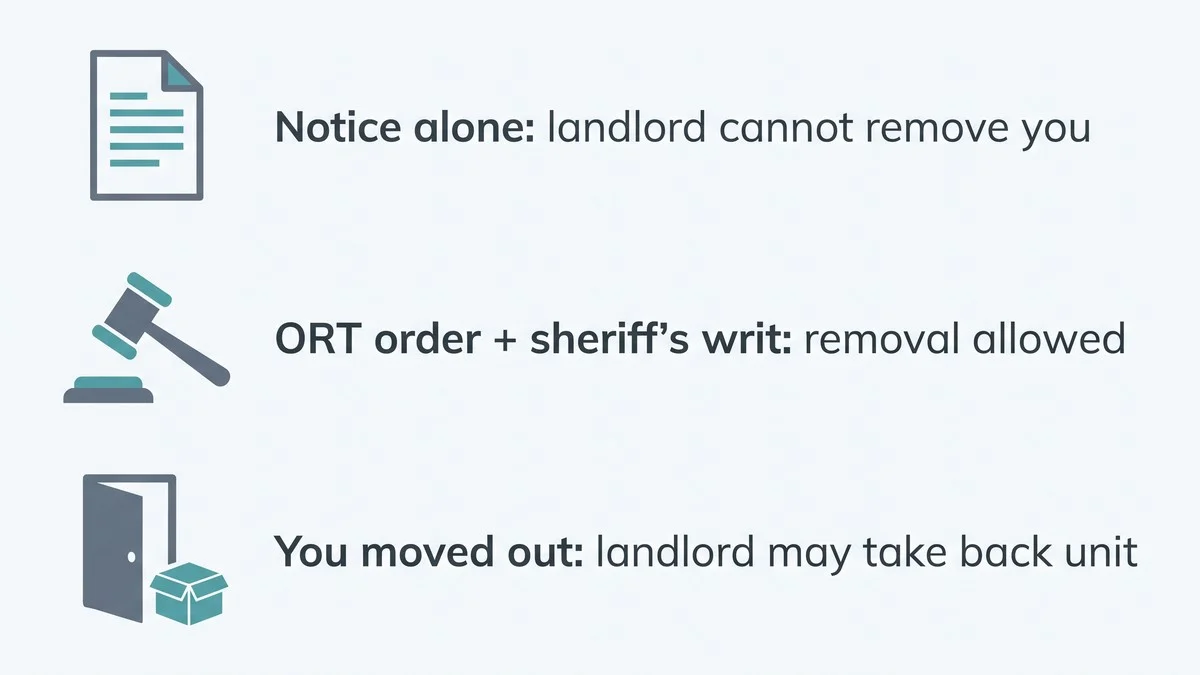
No. In Saskatchewan a landlord cannot change the locks on your unit without your agreement and new keys, and cannot take back the unit unless you have moved out or a sheriff enforces an Office of Residential Tenancies (ORT) writ of possession (Residential Tenancies Act, 2006, ss.48(2) and 65). Keeping your belongings from you is also prohibited (s.12(1)).
This FAQ is for Saskatchewan tenants who come home to a changed lock, find their things outside, or are told to leave "today". It explains what the Residential Tenancies Act, 2006 allows, what to do in the first hour, and how to get back in through the ORT, which many people still call the Rentalsman. For the full picture of your rights, see Saskatchewan Tenant Rights: A Complete Guide.
Can a Saskatchewan landlord change the locks without telling me?
No. A Saskatchewan landlord may change the lock or code to your rental unit only if you agree to the change and you are given the new key or code (s.48(2)). The Standard Conditions that form part of every tenancy agreement add one more route: a hearing officer's order (Standard Conditions s.12(1)).
The rule runs both ways. You also need the landlord's consent, or an order, before changing the lock to your own unit (s.48(4)). If the landlord changes the locks on a shared entrance or common area, every tenant must get a new key (s.48(1)).
Can my landlord evict me without going to the ORT?
No. A Saskatchewan landlord can regain possession of a rental unit only if the tenant has moved out or abandoned it, or if the landlord has an order of possession and a writ of possession directed to the sheriff (s.65). A notice to vacate, even a valid one, does not let the landlord remove you or your things.
| Situation | Can the landlord take the unit back? |
|---|---|
| You received a notice to vacate | Not by themselves; they must apply to the ORT if you stay (s.67(3)) |
| The ORT granted an order of possession | Only through the writ, enforced by the sheriff (s.70(13)) |
| You moved out or abandoned the unit | Yes (s.65(a)) |
The province's Ending a Tenancy page says that a sheriff from the Court of King's Bench may remove a tenant by enforcing a writ issued by the ORT, and that if any other person attempts to remove a tenant, the tenant should call the police. How the sheriff step works is explained in Writ of Possession in Saskatchewan.
Can my landlord keep or throw out my belongings?
Not while you are a tenant. A Saskatchewan landlord must not seize a tenant's personal property or prevent or interfere with the tenant's access to it (s.12(1)). The only exceptions to the seizure rule are a court order, an ORT order under s.85, or the left-behind property rule below (s.12(2)).
The exception is property left behind after a tenancy has ended or the unit was vacated or abandoned. If the landlord reasonably estimates it is worth $1,500 or less, the landlord may remove and dispose of it, but only after reasonable efforts to find you (s.85(4)–(6)). Above that value the landlord needs an ORT order (s.85(1)–(3)). Sale proceeds left after amounts owed under an ORT order go to the ORT to your credit (s.85(7)).
What should I do if I am locked out today?
Stay calm, keep a record, and use the ORT. In order:
- Call the police if someone other than a sheriff is removing you or your things.
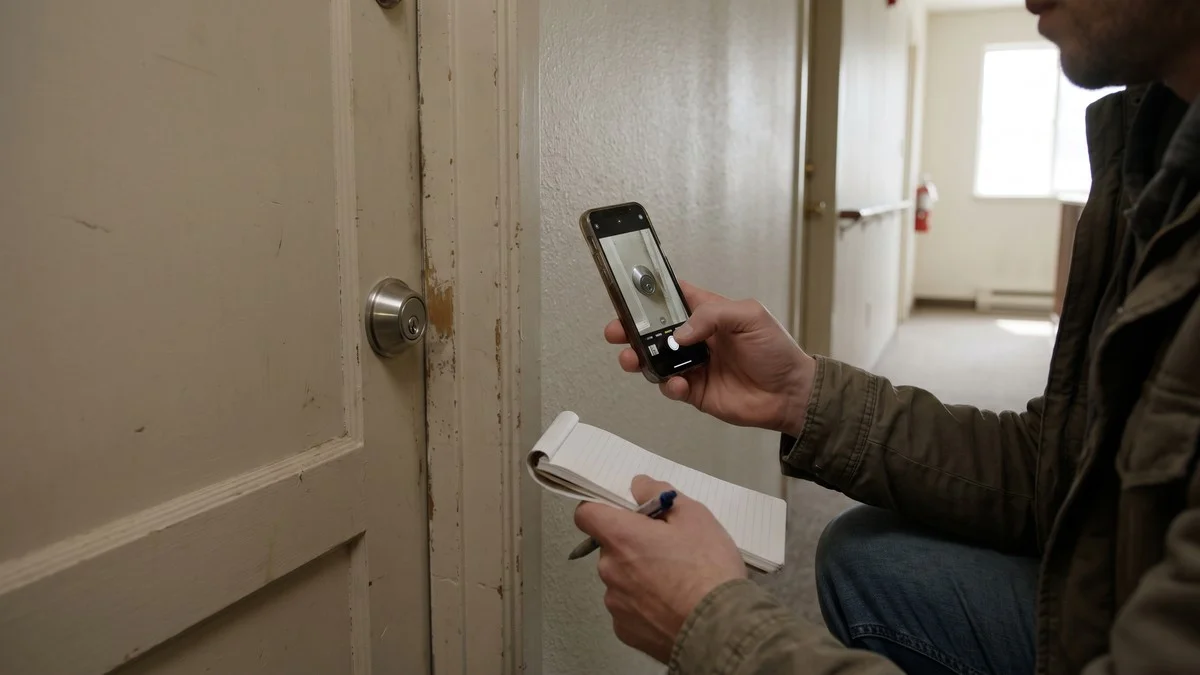
- Take dated photos of the lock, the door and anything put outside, and save every message from the landlord.
- Ask the landlord in writing for a key, so the request is on record.
- Apply to the ORT through its online portal for an order of possession of your unit (s.66(1)). The fee is $50, or you can ask for a fee waiver (Regulations s.13(1); ORT Rules of Procedure, Part 2).
The ORT lists applications for possession among its urgent applications, and a hearing notice for an urgent application must be served at least two days before the hearing (ORT Rules of Procedure, Parts 3 and 4).
Frequently asked questions
Can I get compensation for an illegal lockout?
Yes. If a hearing officer finds that the landlord locked you out without justification, they may award punitive damages against the landlord (s.66(4)). You can also ask for an order for damages, such as the cost of a hotel, under s.70(6)(c).
Is a lockout an offence in Saskatchewan?
Breaking the Act is an offence. An individual can be fined up to $500, jailed up to six months or both, and a corporation fined up to $1,000 (s.79(1)–(2)).
My landlord says I owe rent, so the lockout is allowed. Is it?
No. Unpaid rent lets the landlord serve an Immediate Notice to Vacate once rent is 15 days or more overdue, then apply to the ORT (s.57). It never allows a lockout. If you have that notice, read what tenants can do after an immediate notice.
How long do I have to apply?
Most ORT applications must be made within one year of the act or omission (s.71.1). For a lockout, apply right away: hearings are scheduled first come, first served (ORT Rules of Procedure, Part 3).
A changed lock is not an eviction in Saskatchewan; only a sheriff with an ORT writ can remove you. More help is in the Canadian Tenant Resource Center.
Know your rights before you act
Deposits, repairs, entry and notices: every Saskatchewan tenant right in one guide.
Free • No signup required


