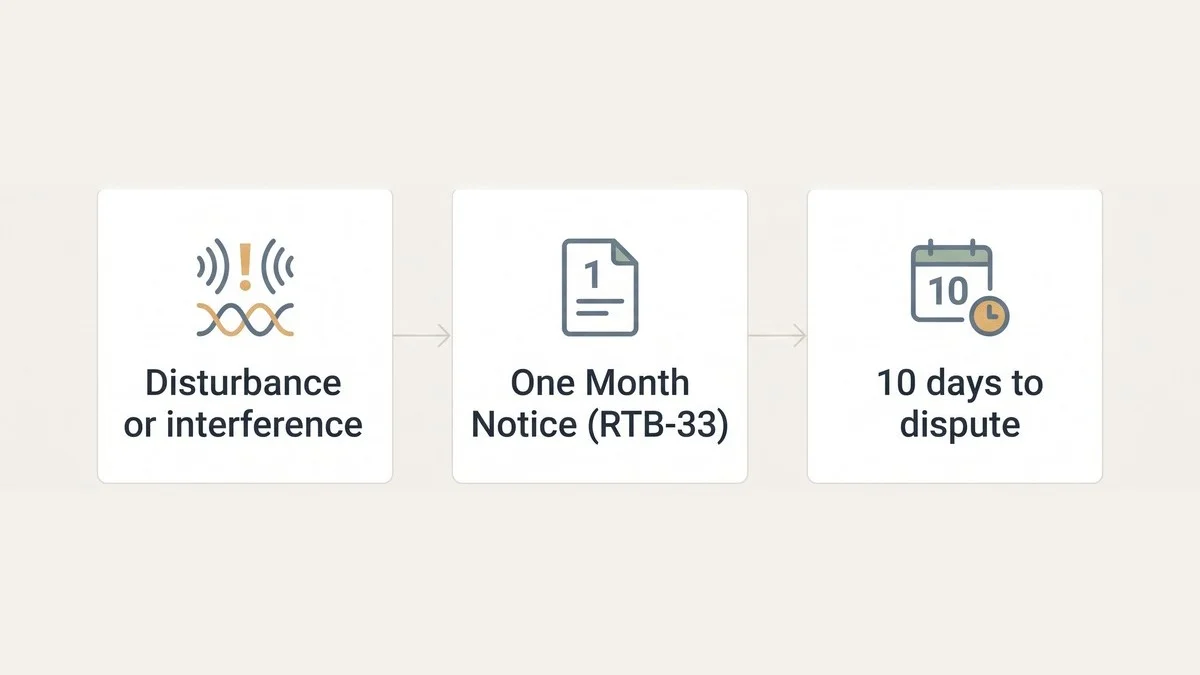
In BC, unreasonable disturbance or significant interference is cause to end a tenancy only when a tenant, or someone they let onto the property, does something well beyond the minor annoyances of shared living, such as repeated loud music late at night or threats. The landlord serves a One Month Notice for Cause and must prove the conduct if it is disputed.
What counts as unreasonable disturbance in a BC tenancy?
Under section 47(1)(d) of the Residential Tenancy Act, a landlord may end a tenancy if the tenant, or a person permitted on the property by the tenant or by an occupant of their unit, has significantly interfered with or unreasonably disturbed an authorized person, seriously jeopardized someone's health, safety or lawful right, or put the landlord's property at significant risk.
RTB Policy Guideline 55 says the words "significantly", "unreasonably" and "seriously" are deliberately strong. The test is whether the conduct would disturb a reasonable occupant in the same circumstances. Guideline 55 gives examples on each side:
| Usually not enough | Could be cause |
|---|---|
| An occasional argument heard through a wall | Repeated loud music late at night |
| Some daytime hammering to hang pictures | Long, frequent screaming fights in the unit |
| Indigenous cultural practices such as smudging | Verbal threats, harassment or racial slurs |
| An untidy unit | Hoarding or filth that draws pests or creates a fire hazard |
An "authorized person" under the RTA is broader than the landlord and neighbours: it includes guests, a contractor the landlord hired and a municipal inspector lawfully on the property.
The other limbs of section 47(1)(d): health, safety, rights and property
Disturbance is only the first of three limbs. Guideline 55 explains that "seriously" means the risk is substantial, not minor or trivial: either harm is very likely, or the harm would be particularly serious if a reasonably possible risk came about.
Seriously jeopardizing health or safety. The guideline lists situations that could meet the threshold:
- A unit so dirty or cluttered that it leads to pests, mould, a fire hazard or another serious health hazard beyond the unit, such as clothing piled on a space heater or propane tanks stored beside a stove
- Tampering with or removing smoke detectors, or overloading electrical circuits
- Unauthorized alterations that remove safety features such as handrails, or unsafe structural, electrical or plumbing work
- Blocking fire escapes, windows or doorways needed to evacuate
- Disabling security cameras, alarms or other safety measures
- Misusing appliances in a way that could cause fires, gas leaks or flooding
Seriously jeopardizing a lawful right or interest. Guideline 55's examples are a tenant changing the locks without the landlord's consent or a director's order, which can defeat the landlord's right to enter on proper notice, and a tenant whose actions or inaction could put the landlord in breach of an insurance policy.
Putting the landlord's property at significant risk. This goes beyond reasonable wear and tear or a moderate risk. The guideline's example is a tenant of a single-family home who turns the heat off before leaving on a winter vacation, risking burst pipes, even though no one's health or safety is at stake.
Does a BC landlord need to send a warning letter first?
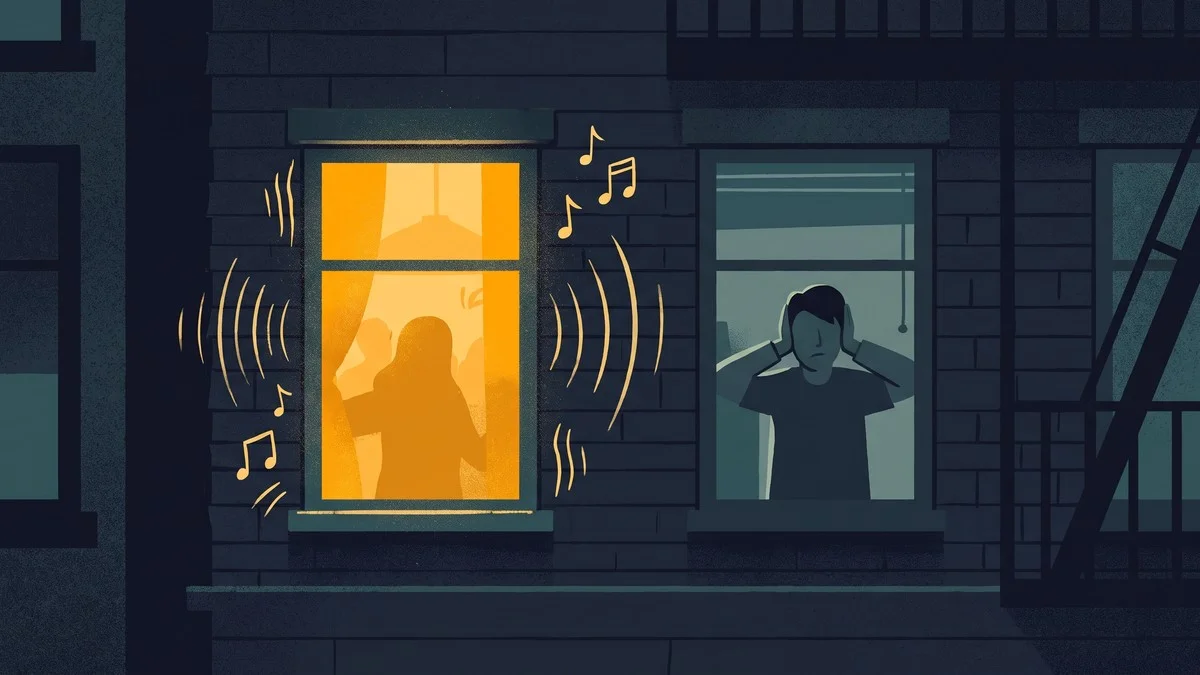
Not always, but Guideline 55 says a written warning often helps. A tenant playing the TV loudly at night may not know neighbours can hear it, so the disturbance may not be "unreasonable" until they are told. If it continues after a written warning, the letter helps show it was. A warning may be unnecessary for conduct everyone understands is disruptive, such as drilling late at night in an apartment. Written warnings are better evidence than verbal ones.
Tenants answer for their guests and occupants. Guideline 55 confirms a tenancy can end for cause even if the tenant personally did nothing wrong, which ties into the rules on co-tenants, roommates and occupants.
How does a BC landlord end the tenancy for disturbance?
Usually with a One Month Notice to End Tenancy for Cause (RTB-33) that sets out the details of the ground. The tenant has 10 days after receiving it to dispute (RTA s.47(4)); the tenant's side of that clock is in ten days to dispute. If disputed, the landlord must prove the ground on a balance of probabilities.
An application to end the tenancy early under section 56 is only for imminent danger, where waiting for a one-month notice would be unreasonable or unfair. Guideline 55's examples are a physical assault, knocking out a load-bearing wall or threatening someone with a gun; repeated late-night noise belongs on a one-month notice. Other routes are in every way a BC tenancy can end.
A worked example: late-night noise in an apartment
Neighbours complain about loud music after midnight on several nights. The landlord logs each complaint and gives the tenant a written warning. The music continues, so the landlord serves an RTB-33 citing significant interference or unreasonable disturbance and describing the incidents. Here is how the dates work if rent is due on the 1st:
- Receipt. The tenant is handed the notice on March 10. Had it been mailed, section 90 deems it received on the fifth day after mailing; posted on the door, on the third day after it was attached.
- Effective date. Section 47(2) requires a date no earlier than one month after receipt and the day before rent is due. One month after March 10 is April 10, so the earliest valid date is April 30. If a notice names a date that is too early, section 53 changes it automatically to the earliest date that complies.
- Dispute window. The tenant has 10 days after March 10 to apply for dispute resolution.
- No dispute. The tenant is conclusively presumed to accept that the tenancy ends on April 30 and must vacate by then (s.47(5)). If they stay, the landlord can apply for an order of possession under section 55(2)(b).
- Dispute. At the hearing the landlord must prove the ground. If the director upholds the notice or dismisses the tenant's application, and the notice complies with section 52, the director must grant the landlord an order of possession (s.55(1)).
What an early-end application needs
Guideline 55 says applications under section 56 are automatically considered for the expedited hearing process under Rule 10 of the RTB Rules of Procedure, which is for emergencies and very serious breaches. The landlord must file enough evidence with the application to prove both a serious breach and that waiting for a one-month notice would be unreasonable or unfair. A financial loss alone is not typically enough, and applications that are not based on a section 47(1)(d) to (f) type ground, such as unpaid rent, are dismissed without a hearing being scheduled.
Common mistakes on disturbance notices
- Relying only on verbal warnings, which are weaker evidence than a dated letter if the notice is disputed
- Serving a notice over minor, daytime noise that a reasonable occupant of a multi-unit building would tolerate
- Leaving out the details of the ground on the notice
- Applying for an early end for conduct, like noise, that belongs on a one-month notice
- Expecting the tenant's behaviour after the notice to prove the notice was valid, which Guideline 55 says a landlord cannot do
Frequently asked questions
Can a tenant be evicted because of a guest's behaviour in BC?
Yes. Section 47(1)(d) covers anyone the tenant, or an occupant of the unit, permits on the property. Guideline 55 says the landlord may end the tenancy even if the tenant did not engage in the conduct.
Does it matter if the tenant stops after getting the notice?
It can. Guideline 55 says a tenant's positive steps after a notice can make ending the tenancy unnecessary, especially if the risk is gone. But the landlord cannot rely on conduct after the notice to prove the notice was valid.
Is a messy unit unreasonable disturbance?
Not on its own. Guideline 55 says an untidy unit is usually not enough; it must be dirty or cluttered enough to attract pests, cause a fire hazard or otherwise put the health or safety of others at risk.
How long does the tenant have to move out?
A one-month cause notice must take effect no earlier than one month after it is received and on the day before rent is due (RTA s.47(2)). A tenant who does not dispute within 10 days is presumed to accept the end date.
Is the rule the same in a manufactured home park?
Similar, but narrower. The Manufactured Home Park Tenancy Act has its own cause ground (s.40(1)(c)) and no "authorized person" definition, so Guideline 55 says the conduct must affect the landlord or another occupant of the park.
Serve a cause notice that states the ground
Fill in BC's One Month Notice to End Tenancy for Cause (RTB-33) online.
Free • No signup required