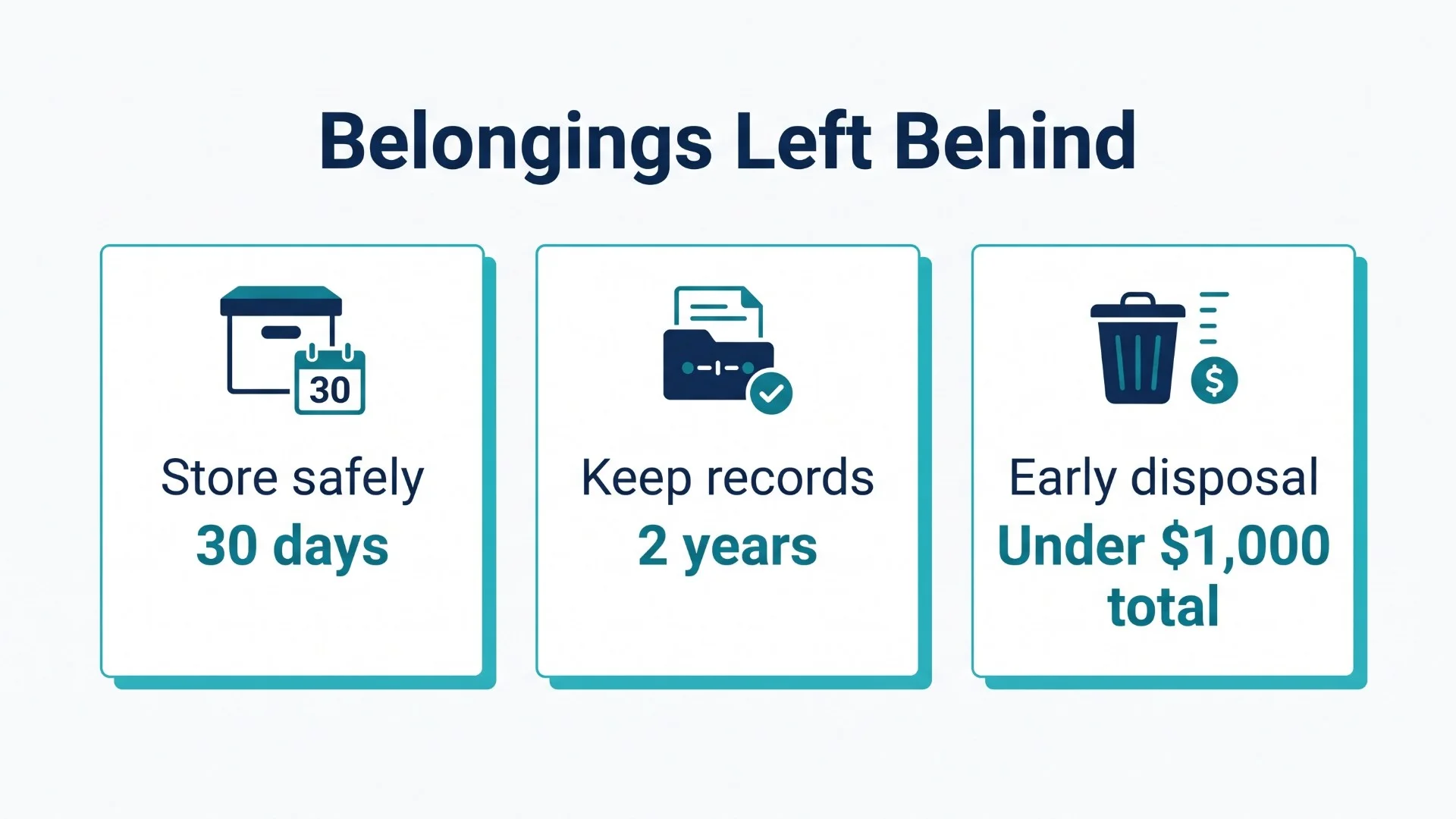
In BC, a landlord who finds a tenant's belongings left behind must store them safely for at least 30 days, keep a written inventory for 2 years, and follow the notice rules before selling or disposing of them. Property worth less than $1,000 in total, or unsafe to store, can be disposed of sooner (Residential Tenancy Regulation ss.30.3 to 30.95).
At a glance
- New rules: Part 5 of the Regulation was replaced for property abandoned on or after April 9, 2025 (s.30.95).
- Store: in a safe place and manner for at least 30 days (s.30.4(b)).
- Record: a written inventory and the details of disposal, kept for 2 years (s.30.4(c), (e)).
- Early disposal: if storage would be unsanitary or unsafe, or the property is worth under $1,000 in total, or costs would exceed sale proceeds (s.30.8).
- Personal value property: medical equipment and framed photographs always get the 30 days (s.30.91).
When can a BC landlord treat belongings as abandoned?
Section 30.3 of the Residential Tenancy Regulation sets two situations. The first is simple: the tenant has moved out after the tenancy agreement has ended and left the property behind. The second covers a tenancy that has not formally ended: the tenant has not ordinarily lived in the unit or paid rent for a continuous month, or has removed substantially all of their belongings.
In that second situation the landlord may treat the property as abandoned only if the tenant has told the landlord, orally or in writing, that they do not intend to return, or the circumstances are such that the tenant could not reasonably be expected to return (s.30.3(2)). If the landlord and tenant have an express agreement about storing the property, that agreement applies instead (s.30.3(4)).
Before then, the Act protects the tenant's things. Section 26(3) of the Residential Tenancy Act says a landlord must not seize a tenant's personal property or interfere with the tenant's access to it, whether or not the rent is paid, unless the landlord has a court order or the tenant has abandoned the unit and the landlord follows the Regulation.
What must the landlord do with the belongings?
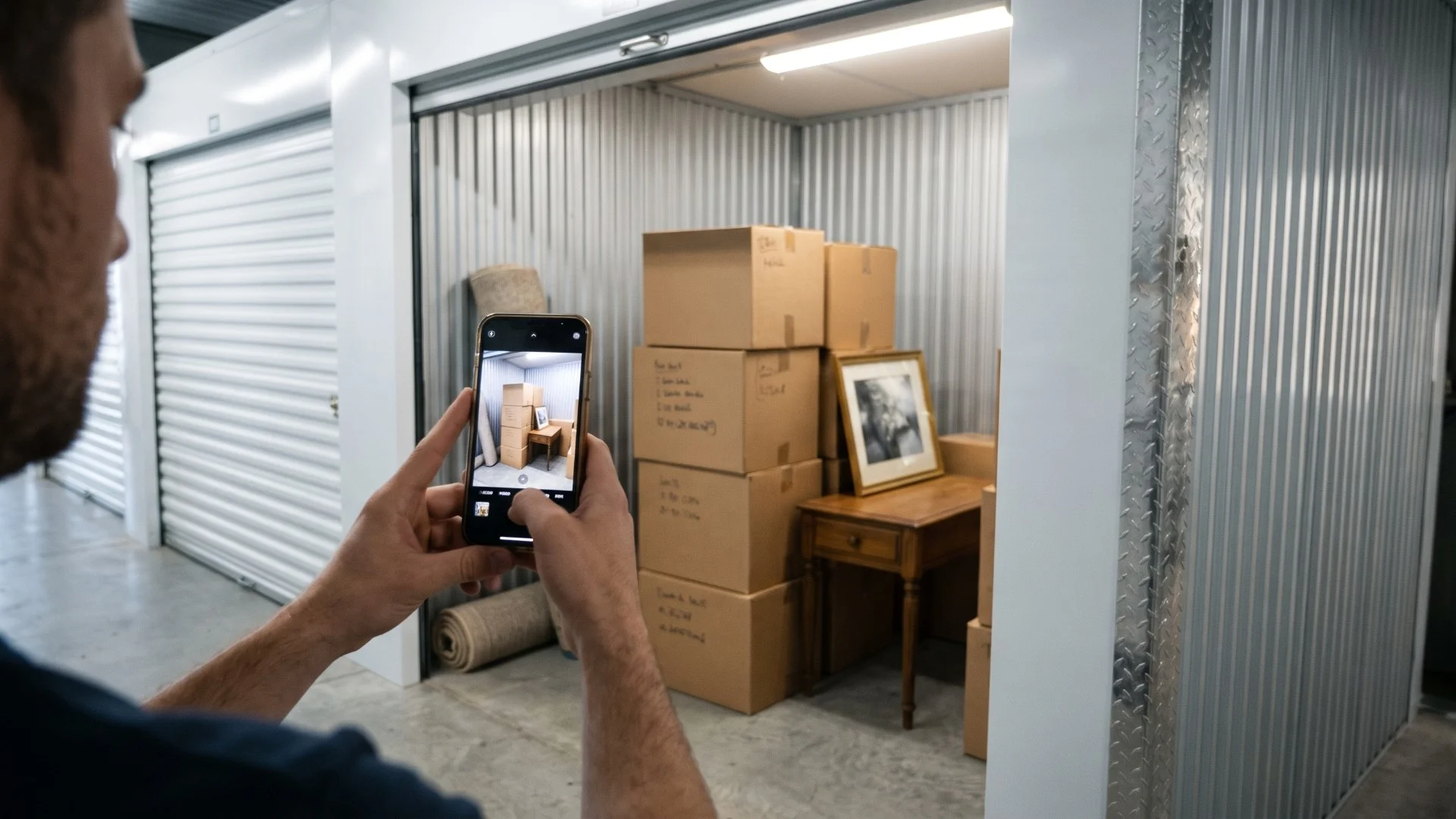
Section 30.4 sets the landlord's duty of care. The landlord must take reasonable care, suited to the kind of property, so that it does not deteriorate or get damaged, lost or stolen through a poor method of removal or an unsuitable storage place. Then the landlord must:
- Store the property in a safe place and manner for at least 30 days, unless early disposal applies.
- Keep a written inventory of the property for 2 years from the date it is disposed of.
- Dispose of it only as the Regulation allows.
- Keep the details of the disposal for 2 years.
- Tell the tenant, on request, whether the property has been removed, stored or disposed of.
Photograph each item where it was found and again in storage. The inventory and the photographs together are your evidence if the tenant later claims something was lost.
Which items get special protection?
"Personal value property", defined in section 30.1, means medical equipment, photographs in paper form that are framed or otherwise clearly of personal value, and specific items the tenant has named in a written notice to the landlord as having personal value (s.30.3(5)). Under section 30.91 these must be stored for the full 30 days even when the rest of the property could go sooner, unless storing the item would be unsanitary or unsafe.
When can the landlord dispose of belongings early?
Section 30.8 allows disposal, in a commercially reasonable manner, without waiting the 30 days in three cases:
| Situation | Rule |
|---|---|
| Storage would be unsanitary or unsafe | That item may be disposed of (s.30.8(2)) |
| Total market value under $1,000 | The property may be disposed of (s.30.8(3)(a)) |
| Removing, storing and selling would cost more than the sale would bring | The property may be disposed of (s.30.8(3)(b)) |
| Personal value property | 30 days' storage still applies, unless unsanitary or unsafe (s.30.91) |
Each test depends on what the landlord "reasonably believes", so write down why: a short note with photographs and a rough valuation is enough to show the belief was reasonable.
What notice is needed before selling more valuable property?
For property that does not qualify for early disposal, section 30.6 requires a notice of disposition at least 30 days before the landlord disposes of it. The notice goes to anyone who has registered a financing statement in the personal property registry under the tenant's name or the item's serial number, and to anyone the landlord knows claims an interest, and it must be published in a newspaper in the area. It must contain the tenant's name, a description of the property, the address, the landlord's name and address, and a statement that the property will be disposed of unless the person takes possession, establishes a right to it or applies to court within 30 days.
Once the 30 days after the latest notice or publication have passed, the landlord may dispose of the property in a commercially reasonable manner, unless someone has claimed it or started court proceedings and told the landlord (s.30.9).
Can the tenant get the belongings back?
Yes, any time before they are disposed of. Under section 30.5, the landlord may first require the tenant to pay the reasonable costs of removing and storing the property and of any registry search, and to pay amounts the tenant owes under the Act or the tenancy agreement. If the tenant claims the property but does not pay, the landlord may dispose of it under the Regulation.
What happens to the money from a sale?
Section 30.92 lets the landlord keep enough of the proceeds to cover the reasonable costs of removing, storing, advertising and disposing of the property, any registry search, and amounts the tenant owes. Any balance goes to the administrator under the Unclaimed Property Act, with a copy of the inventory and the details of the disposal (s.30.93). The landlord does not keep a surplus.
Frequently asked questions
Did the abandoned property rules change in 2025?
Yes. B.C. Reg. 50/2025 repealed the old sections 24 to 30 and enacted sections 30.1 to 30.95. Property abandoned before April 9, 2025 is dealt with under the rules as they read before that date (s.30.95).
Can I throw out a mattress the tenant left?
If you reasonably believe storing it would be unsanitary or unsafe, section 30.8(2) allows disposal in a commercially reasonable manner. Record why, with photographs.
Can I keep the furniture instead of the unpaid rent?
No. The Regulation lets you recover costs and amounts owed from sale proceeds, with any balance paid to the unclaimed property administrator. It does not let you keep the property itself in place of rent.
The tenant left mid-month without a word. Is that abandonment?
Only once the section 30.3 test is met: no ordinary occupation or rent for a continuous month, or substantially all belongings removed, plus a statement or circumstances showing the tenant will not return. Until then, the tenancy and the tenant's property are still protected.
How long do I keep the records?
Two years from the date of disposal, for both the inventory and the details of the disposal (s.30.4(c), (e)).
Belongings left behind are a short, rule-bound process in BC: confirm it is abandonment, store and list, wait or qualify for early disposal, and account for the money.
Document the move-out properly
Free BC landlord and tenant forms, including inspection reports.
Free • No signup required