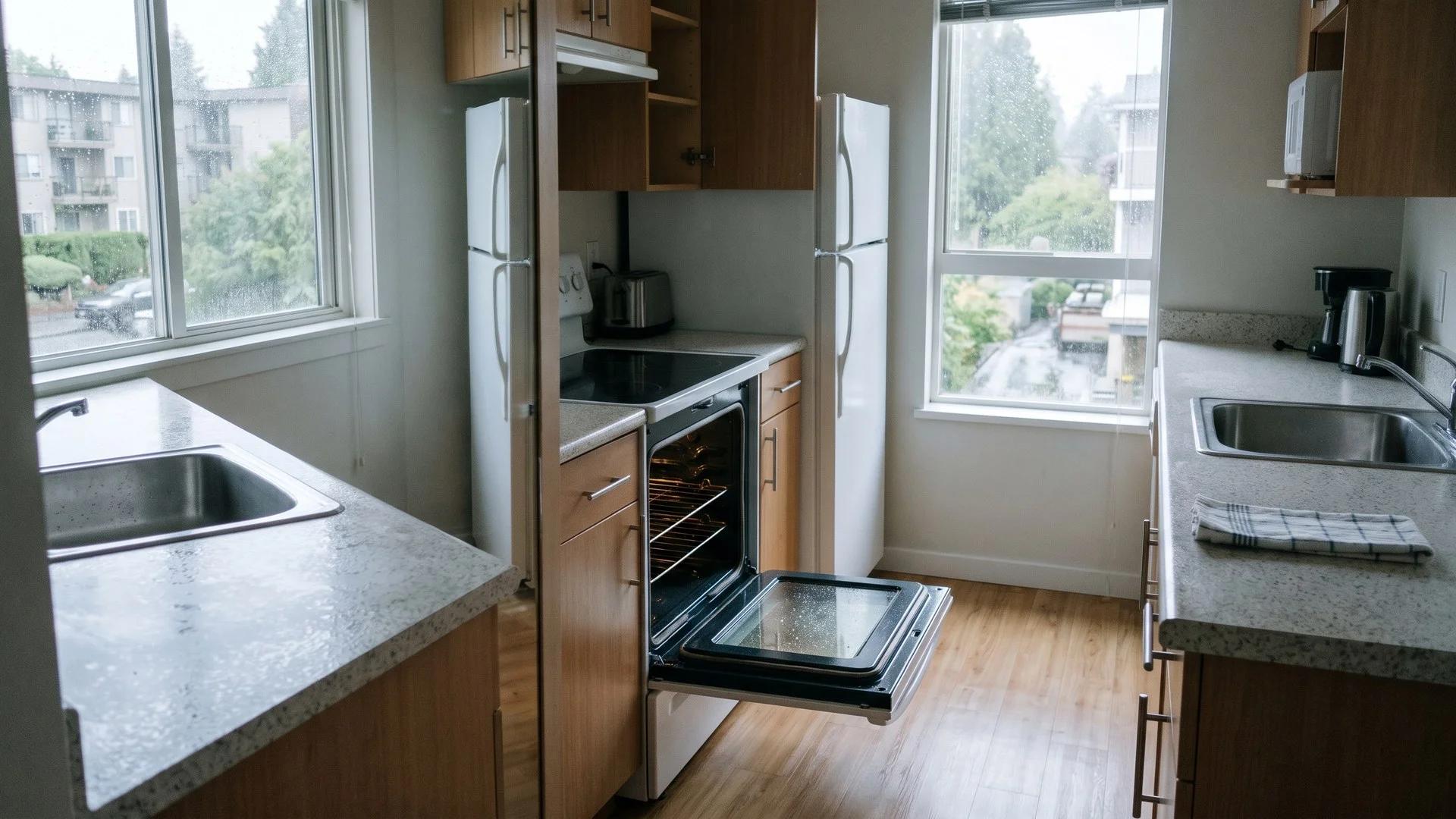
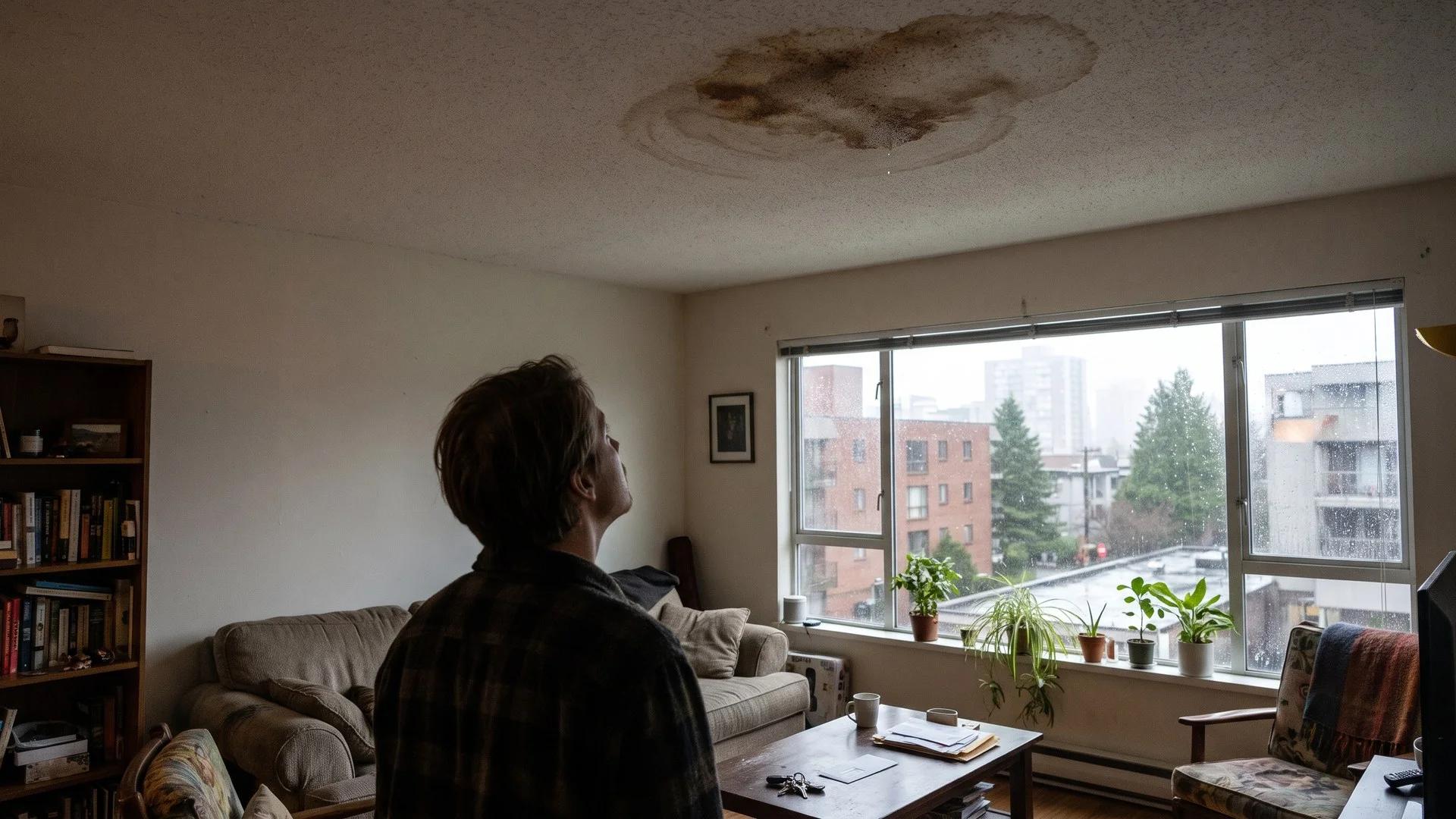
When you rent a strata condo in BC, your landlord is responsible to you for repairs, even when the strata corporation has to do the work. Report every problem to your landlord in writing. Interior repairs are usually the landlord's to fix; for a leak or defect coming from common property, the landlord must get the strata to act promptly.
That split comes from RTB Policy Guideline 21, which deals with strata condo repairs in rented units. This how-to shows you how to get a problem fixed and what you can claim if it drags on. For more renter guides, see the BC Tenant Resource Center.
BC Strata Condo Repairs: Tenant Checklist
A one-page checklist for BC tenants renting a strata condo: who is responsible, how to report, emergency repairs and claiming a rent reduction.
Get Free PDF →What you'll need
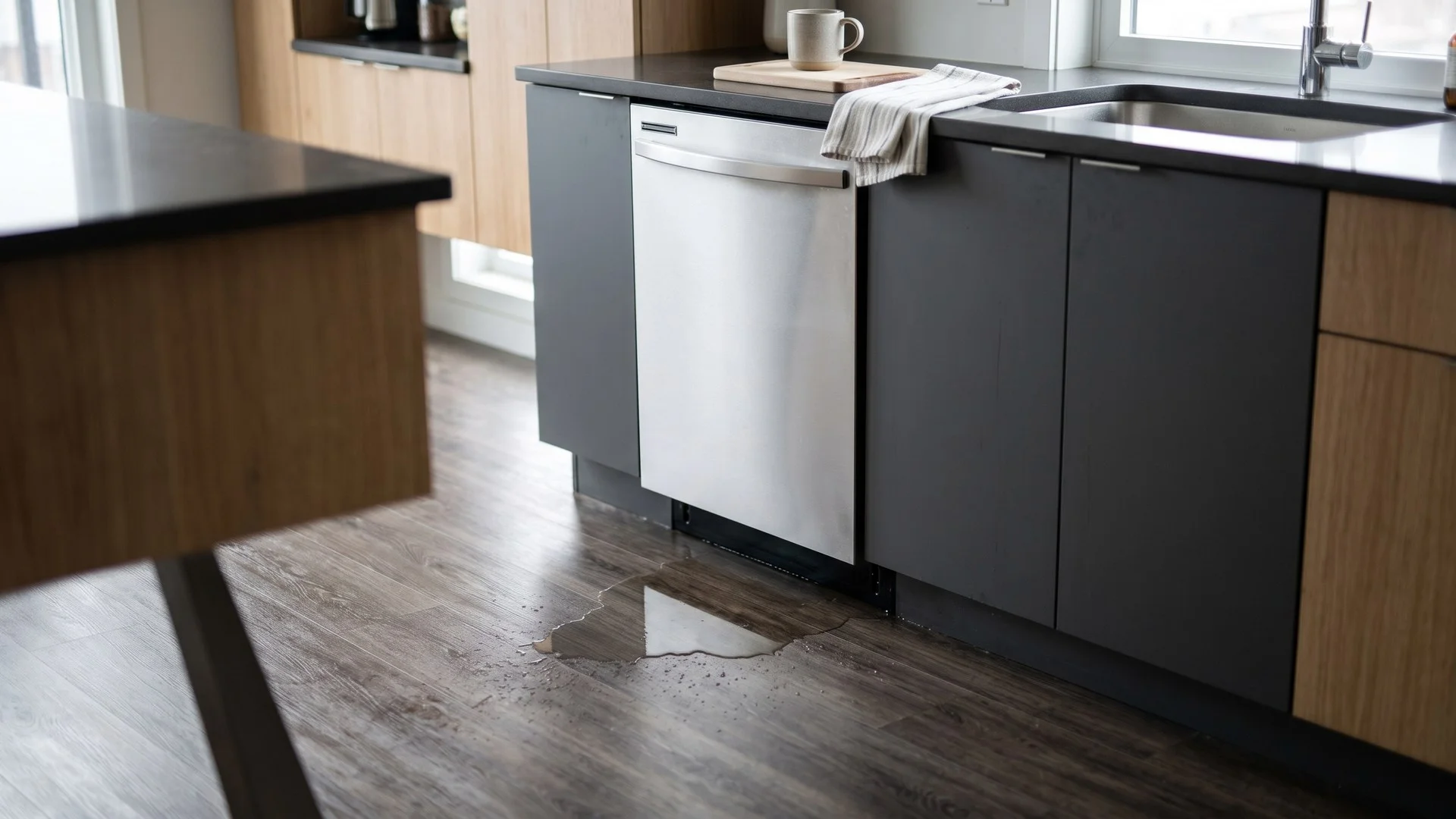
- Your tenancy agreement and your landlord's contact details.
- The emergency repair contact your landlord must post or give you in writing.
- Dated photos or video of the problem.
- A record of every message about it.
Who is responsible for repairs in a strata rental?
Under section 72 of the Strata Property Act, the strata corporation must repair and maintain common property and common assets, though a bylaw can make an owner responsible for limited common property the owner has the right to use. Guideline 21 says the dividing line between a strata lot and the common areas is usually the mid-point of the lot's exterior walls, and repairs such as water leaks that start in the common areas are the strata corporation's responsibility. Repairs inside the strata lot are generally the owner's, which means your landlord's.
None of that changes your landlord's duty to you. Section 32(1) of the Residential Tenancy Act requires a landlord to provide and maintain the rental in a state of repair that meets health, safety and housing standards and makes it suitable for occupation.
Steps to get a strata condo repair done
1. Report it to your landlord, not the strata
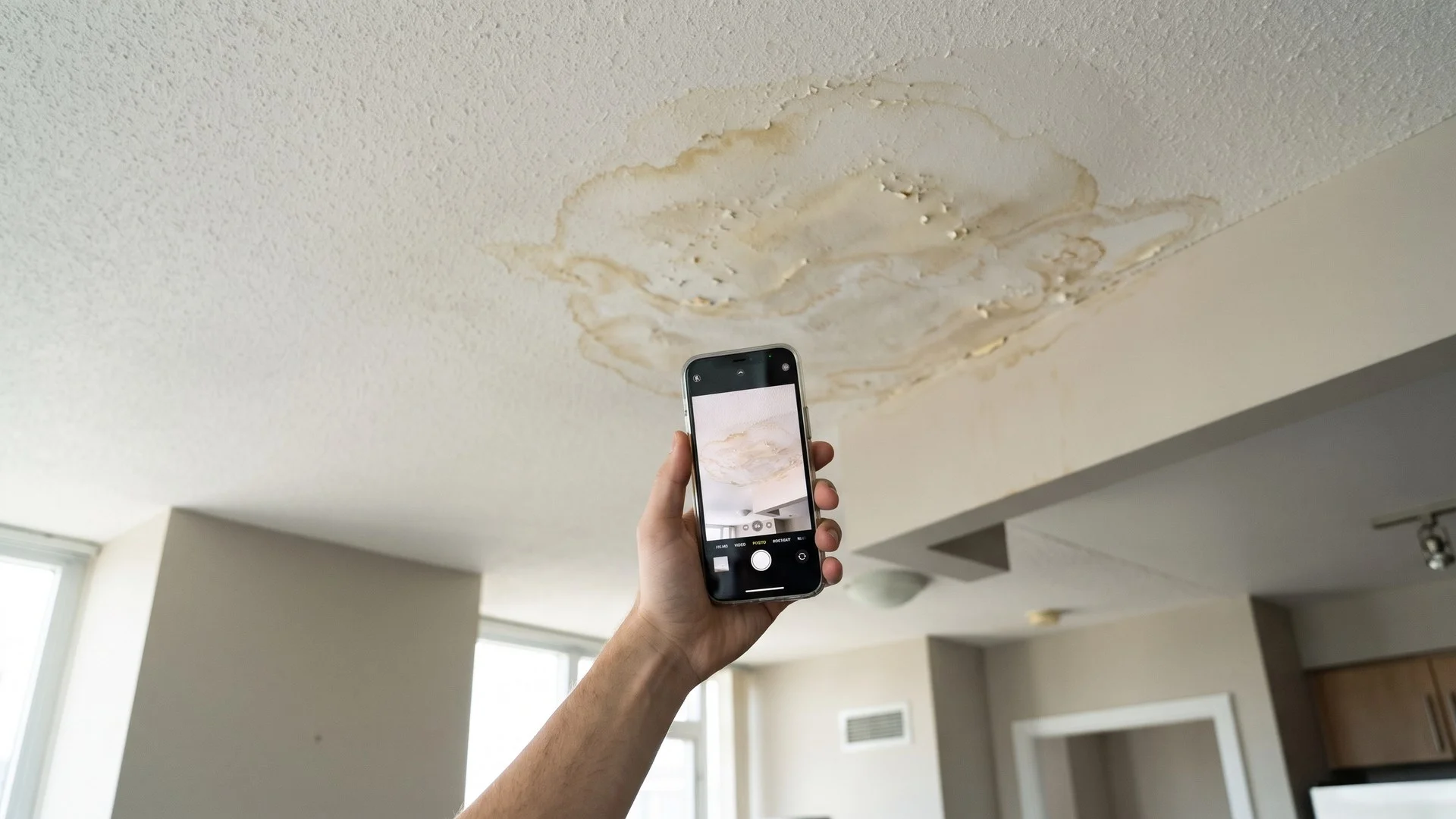
You rent from the owner, not the strata corporation. Tell your landlord in writing what is wrong, where, and since when, with photos. Guideline 21 notes an owner has no power to do work on the common areas, so the landlord needs to know quickly to pass it on.
2. Ask your landlord to involve the strata if the cause is outside your unit
For a defect that starts in the common areas, Guideline 21 says the owner must make sure the strata corporation is aware of the problem and take reasonable steps to have it repaired in a timely way. It is reasonable to ask your landlord to confirm when they reported it to the strata or the property manager.
3. Use the emergency process for urgent problems
Section 33 lists emergency repairs, including major leaks in pipes or the roof, damaged or blocked water or sewer pipes, the primary heating system, defective locks and the electrical system. You may have an emergency repair done only after at least two attempts to phone the emergency contact and giving the landlord reasonable time. With a written account and receipts, the landlord must reimburse you, and if they do not, you may deduct the amount from rent. In a strata building, a repair to common property may need the strata's approval, so call first and keep records. See emergency repairs in BC for the details.
4. Apply to the RTB if nothing happens
If an interior problem is not fixed, you can apply for dispute resolution and ask for a repair order. For a defect that starts in common property, Guideline 21 says the RTB will not order the landlord to do the repair, because the owner has no authority to do it. But you can still ask for compensation. Our guide to getting repairs done in BC covers the application.
5. Claim a rent reduction or damages
Guideline 21 says that even if the defect starts outside the strata lot, if your use and enjoyment of the unit is affected, you may be awarded a rent abatement or damages. Section 65(1)(f) of the Act lets the RTB order that past or future rent be reduced by an amount equal to the reduction in the value of the tenancy. Your landlord can pursue the strata corporation for the cost in the appropriate forum; that is between them.
Tips
- Keep writing to your landlord even when the strata manager is the one sending trades.
- Note every day a room was unusable. It supports a rent reduction claim.
- You must repair damage you or your guests cause (section 32(3)), but not reasonable wear and tear (section 32(4)).
Troubleshooting
- "My landlord says it's the strata's problem." The strata may have to do the work, but your landlord still has to report it and take reasonable steps, and the RTB can still award you compensation.
- "The strata manager won't talk to me." The strata deals with owners. Route your requests through your landlord and keep copies.
- "There is mould around the windows." Window condensation can have several causes; see condensation and mould in BC rentals.
Frequently asked questions
Who fixes a leak in a rented BC condo?
If the leak starts in common property, such as the roof or an exterior wall, the strata corporation must repair it. Your landlord must make sure the strata knows and push for a timely repair.
Can the RTB order my landlord to fix common property?
Guideline 21 says no repair order will be made against the owner for a defect in the common area, because the owner has no authority to do that work. The RTB can still award you a rent reduction or damages.
Can I contact the strata corporation directly?
You can, but your rights under the Residential Tenancy Act are against your landlord. Always report to your landlord in writing.
Who fixes the appliances in my rented condo?
Appliances inside the unit that came with the tenancy are generally the landlord's to repair, as interior repairs are the owner's responsibility.
BC Strata Condo Repairs: Tenant Checklist
A one-page checklist for BC tenants renting a strata condo: who is responsible, how to report, emergency repairs and claiming a rent reduction.
Get Free PDF →Key takeaways
- Report every repair to your landlord in writing.
- Interior repairs are usually the landlord's; common property is the strata's.
- The landlord must get the strata to act on common-area defects.
- You can claim a rent reduction or damages even if the strata is at fault.
Know your rights as a BC renter
Free BC forms and plain-language guides for tenants.
Free • No signup required