In BC, a tenant must repair damage that they, their guests or the people living with them cause, but is not required to repair reasonable wear and tear (Residential Tenancy Act s.32(3) and (4)). Wear and tear is the natural deterioration that comes with age and normal use; damage comes from deliberate acts or neglect. Even for real damage, what a tenant owes is reduced by the item's age.
At a glance
- Tenant pays: for damage caused by the tenant, a guest or an occupant (RTA s.32(3)).
- Tenant does not pay: for reasonable wear and tear (s.32(4); s.37(2)(a)).
- Painting: the landlord's job at reasonable intervals; a lease cannot make the tenant repaint (Policy Guideline 1).
- Age matters: compensation reflects an item's remaining useful life (Policy Guideline 40).
- Evidence: the move-in and move-out condition inspection reports.
What is reasonable wear and tear in BC?
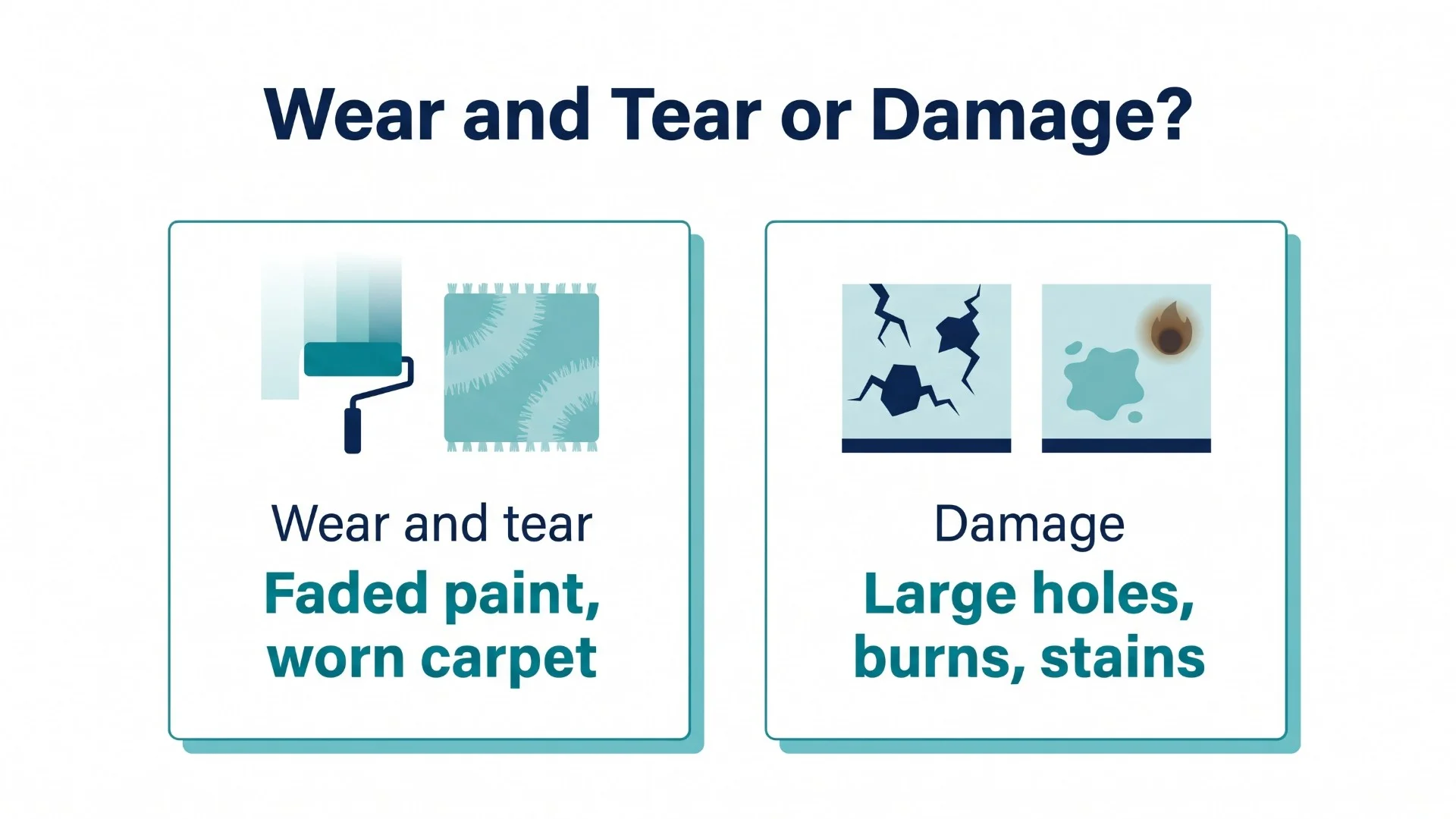
RTB Policy Guideline 1 defines it as natural deterioration that occurs due to aging and other natural forces, where the tenant has used the premises in a reasonable fashion. Paint that fades with age, or carpet worn by ordinary foot traffic, fits that description. Section 32(4) of the Residential Tenancy Act says plainly that a tenant is not required to make repairs for reasonable wear and tear, and section 37(2)(a) asks for the unit to be left reasonably clean and undamaged except for reasonable wear and tear.
What counts as damage a tenant must pay for?
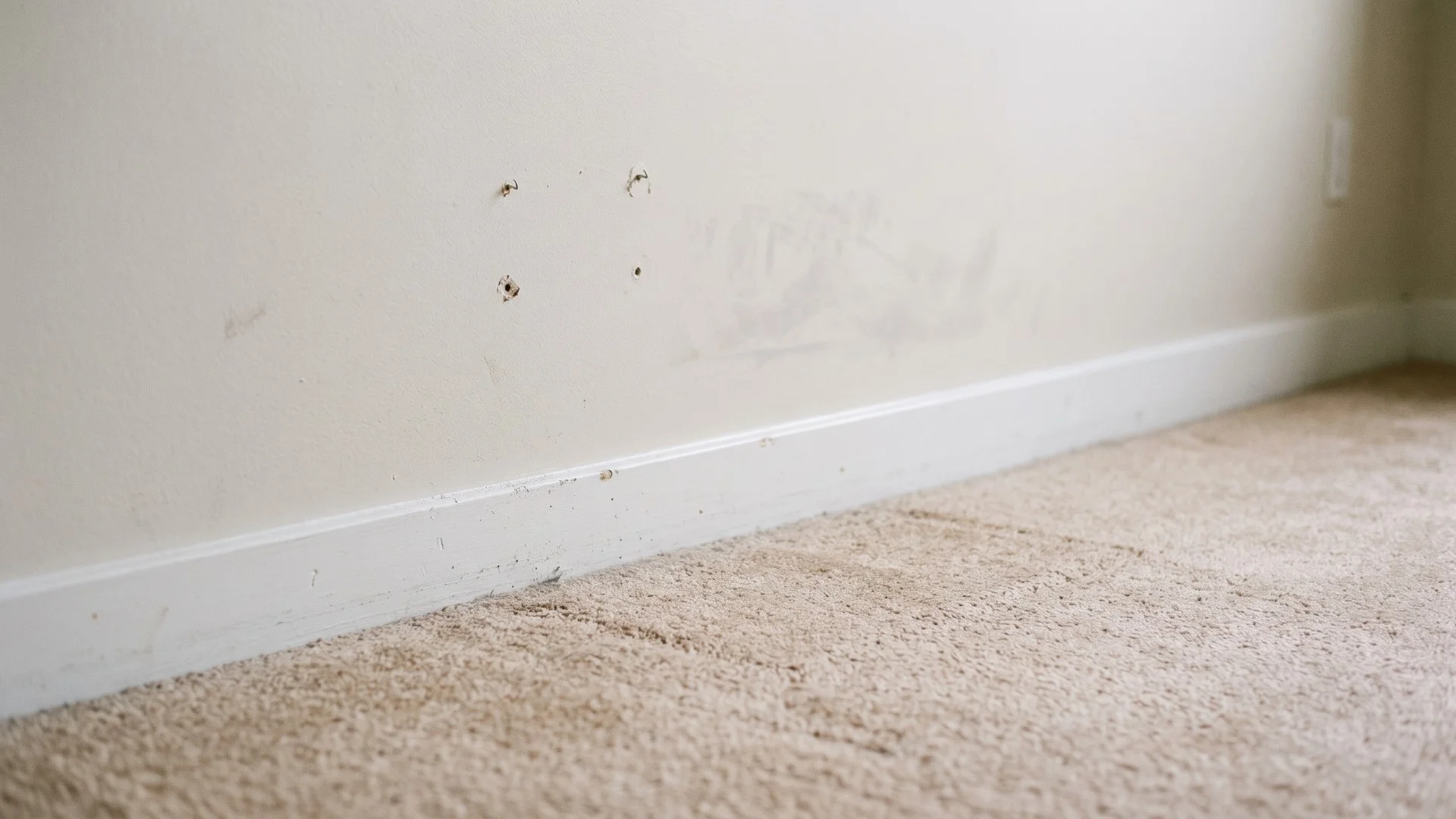
Damage caused by the actions or neglect of the tenant, a person the tenant lets onto the property, or an occupant of the unit (RTA s.32(3)). Guideline 1 describes it as damage caused deliberately or through neglect. It gives concrete examples:
| Item | Usually the tenant's | Usually the landlord's |
|---|---|---|
| Walls | An excessive number of nail holes, large nails, screws or tape that leave damage | Picture-hook holes made following the landlord's reasonable instructions |
| Paint | Repainting needed because of damage the tenant caused | Repainting the interior at reasonable intervals |
| Carpet | Deliberate or careless stains; steam cleaning after a tenancy of one year | Clean carpet at move-in; cleaning after a leak or flood the tenant did not cause |
| Window coverings | Burns, claw marks, damage from not using the pulls | Water stains from inadequate windows |
| Appliances | Damage from deliberate actions or neglect | Repairs to appliances provided under the agreement |
Can my lease make me paint or repair appliances?
No. Policy Guideline 1 says a tenant cannot be required, as a condition of tenancy, to paint the premises or to maintain and repair appliances the landlord provided, and that such a term is unenforceable. A tenant may be required to paint or repair only where the work is needed because of damage the tenant is responsible for. Section 6(3) of the Act makes a term inconsistent with the Act unenforceable; see illegal clauses in a BC lease.
How does the age of an item change what I owe?
A landlord is not entitled to a brand-new replacement at your expense. RTB Policy Guideline 40 uses each item's useful life to measure loss, so the award can be reduced to reflect the remaining life of what was damaged. The guideline's own example: a tenant's dog breaks a 5-year-old dishwasher with a 10-year useful life; the landlord pays $900 for a comparable new one, and an award of about $450 may be appropriate.
The guideline's table gives estimates such as interior paint 6 years, carpet 12 years, window coverings 15 years and a fridge 15 years. The arbitrator may depart from the table where there is evidence of a different life, such as a warranty or poor maintenance.
How do I protect myself at move-in and move-out?
Through the condition inspection reports. The landlord and tenant inspect together at the start and end of the tenancy, and the landlord completes a report both sign. Note every existing mark at move-in and take dated photos; an unrecorded scratch at move-in can become "your" scratch at move-out. Our guides to BC condition inspections and the RTB-27 report, field by field explain what to check.
Can the landlord keep my deposit for damage?
Only with your written agreement or an RTB order. Within 15 days after the later of the end of the tenancy and the date the landlord receives your forwarding address in writing, the landlord must return the deposit with any interest or apply for dispute resolution to claim against it (RTA s.38(1)). Read getting your deposit back in BC for each step.
What if I caused damage during the tenancy?
Tell the landlord in writing and fix it properly, or agree that the landlord will. Section 32(3) puts the repair on you, and a tenant who does not repair that damage within a reasonable time can face a One Month Notice for cause (RTA s.47(1)(g)). Changes you made without the landlord's consent, such as a new paint colour, must be returned to the original condition before you leave, according to Guideline 1.
Frequently asked questions
Are small scuffs on the walls wear and tear?
Guideline 1 expects the tenant to wash scuff marks and fingerprints off walls unless the wall's texture prevents it. Marks that wash off are cleaning, not damage; gouges are damage.
Do I have to steam clean the carpet when I move out?
Generally yes after a tenancy of one year, and at any length of tenancy if you had uncaged pets or smoked in the unit, according to Guideline 1.
My landlord wants me to repaint because I lived there five years. Do I have to?
No. Interior painting at reasonable intervals is the landlord's responsibility. You pay only where repainting is needed because of damage you caused.
Is a broken appliance my fault if it just stopped working?
No. The landlord repairs appliances provided under the agreement unless the damage came from the tenant's deliberate actions or neglect.
Can a landlord charge me for wear and tear out of my deposit?
No. Section 32(4) says a tenant is not required to make repairs for reasonable wear and tear, and the landlord needs your written consent or an RTB order to keep any part of the deposit.
The dividing line is simple to state and harder to apply: age and ordinary use belong to the landlord, carelessness and deliberate harm to the tenant. Good inspection reports make it much easier to apply.
Record the unit's condition from day one
Free BC forms, including condition inspection reports.
Free • No signup required