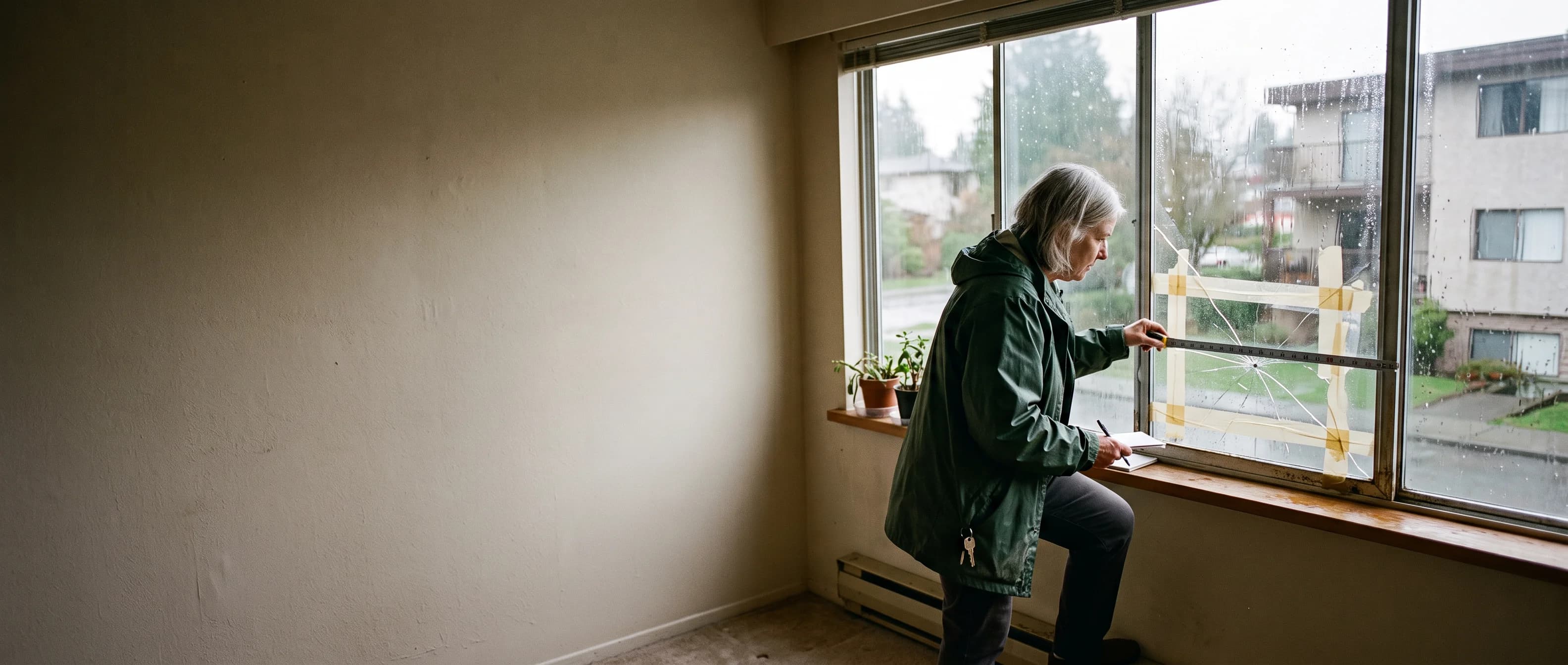
Yes. In Ontario, a landlord must fix drafty windows in a rental unit. Section 20(1) of the Residential Tenancies Act, 2006 (RTA) requires the landlord to keep each unit in good repair and to meet maintenance standards that call for weathertight windows. The tenant pays only for undue damage they, an occupant or a guest caused (RTA s.34).
A cold draft along the sill, a cracked pane, a window that will not close or lock: in Ontario these are not comfort complaints the landlord can put off until spring. This guide covers what the RTA and the property standards rules say about windows, what a tenant should do first, when a city inspector can help, when a T6 application to the Landlord and Tenant Board (LTB) makes sense, and the cases where the tenant, not the landlord, pays.
Does an Ontario landlord have to fix drafty windows?
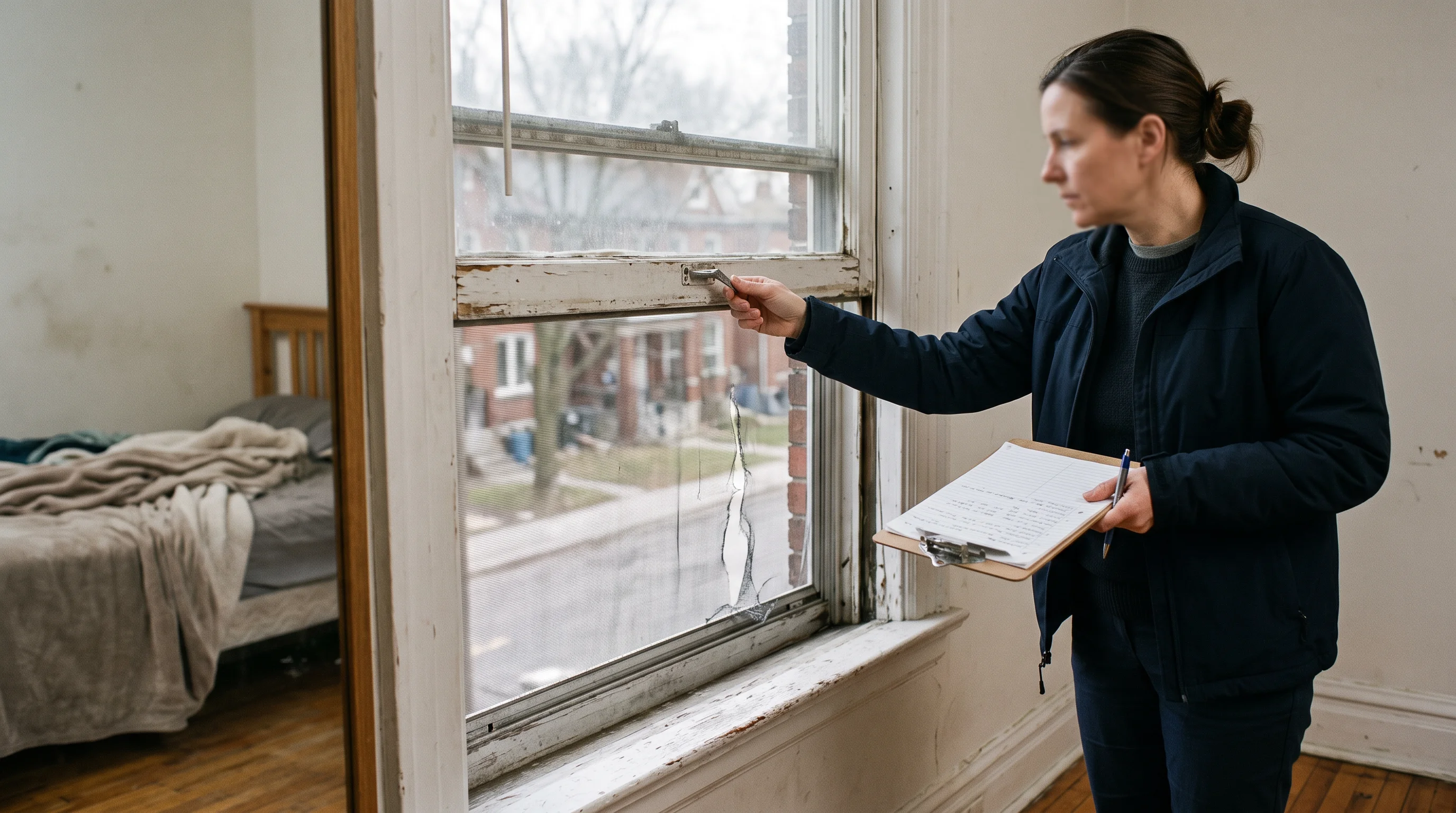
Yes. Under RTA section 20(1), an Ontario landlord must keep the residential complex, including each rental unit, "in a good state of repair and fit for habitation" and must comply with health, safety, housing and maintenance standards. RTA section 20(2) adds that this duty applies even if the tenant knew about the problem before signing the lease, so a unit rented "as is" with a broken window is still the landlord's to fix.
The exception is damage the tenant caused. RTA section 34 makes an Ontario tenant responsible for repairing "undue damage" caused by the wilful or negligent conduct of the tenant, another occupant, or a guest. A window cracked by a thrown ball is the tenant's cost. A seal that failed with age is the landlord's.
What do Ontario's property standards say about windows?
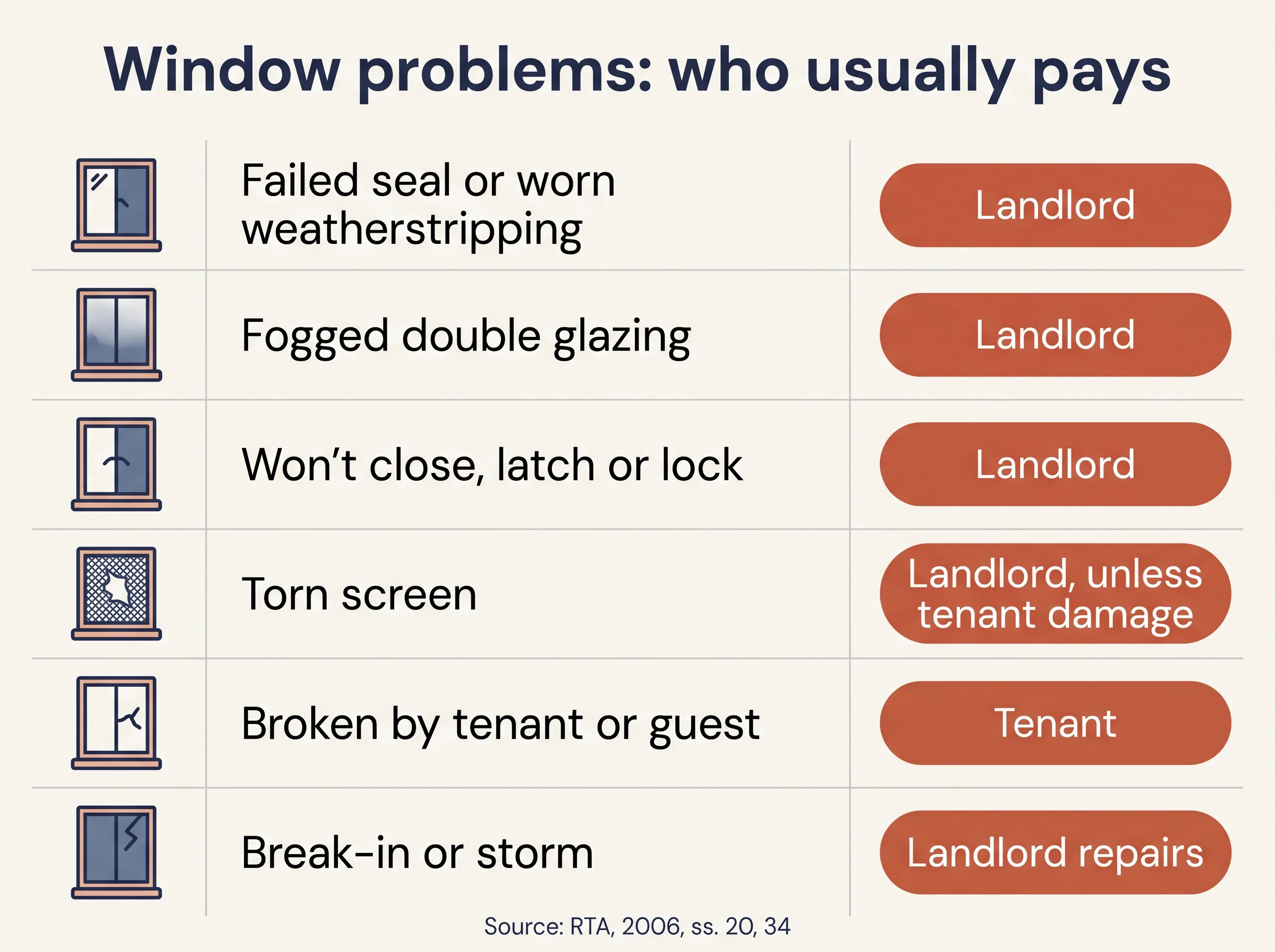
Ontario's property standards require rental windows to be weathertight, in good repair and lockable from inside, whether the rule comes from a municipal bylaw or the provincial regulation. The RTA ties the repair duty to "maintenance standards", and which standards apply depends on where the unit is.
Cities with a property standards bylaw
Most Ontario municipalities have their own property standards bylaw. Toronto's is a useful example because it is specific. Toronto Municipal Code Chapter 629, section 629-21, requires that:
- every exterior opening for a door or window be fitted with a door or window maintained in a weather-tight condition "to prevent drafts or leakage";
- exterior doors, windows, skylights and storm windows be kept in good repair, free from defects and missing components;
- every window in a dwelling unit that can be opened have a screen in good repair; and
- every openable window be free from defective hardware and capable of being locked or secured from inside.
Other cities word their bylaws differently. If your unit is outside Toronto, look up your own municipality's property standards bylaw on the city's website.
Places with no municipal bylaw
Where no municipal property standards bylaw applies, RTA section 224 applies the provincial Maintenance Standards regulation, O. Reg. 517/06. Section 23 of that regulation requires every existing door or window opening to have a door or window "capable of performing the intended function", and requires doors, windows and skylights to be kept weathertight, with damaged or missing parts repaired or replaced. Section 29 requires openable windows that can be reached from outside to be securable from the inside.
Who pays for common window problems in an Ontario rental?
In an Ontario rental, the landlord usually pays for window problems caused by wear, age or failed parts, and the tenant pays for damage the tenant, an occupant or a guest caused (RTA ss.20 and 34).
| Problem | Usually | Why |
|---|---|---|
| Draft from a failed seal, worn weatherstripping or a warped frame | Landlord | Wear and age; the window is not weathertight (s.20) |
| Fogged double glazing (moisture between panes) | Landlord, if it affects function | A failed sealed unit is a defect, not tenant damage |
| Window will not close, latch or lock | Landlord | Defective hardware; security standards |
| Torn or missing screen on an openable window | Landlord, unless the tenant damaged it | Toronto and many bylaws require screens in good repair |
| Pane broken by the tenant, a child or a guest | Tenant | Undue damage from wilful or negligent conduct (s.34) |
| Pane broken in a break-in or storm | Landlord to repair | Not caused by the tenant's conduct; insurance questions are separate |
These are general patterns, not rulings. If the landlord says the tenant caused the damage, the LTB hears evidence from both sides. The LTB's Interpretation Guideline 5 notes that the landlord may raise section 34 as a defence and that a tenant who prevented the landlord from getting in to fix a problem may see that reflected in the remedy.
What should an Ontario tenant do about a drafty window?
An Ontario tenant with a drafty window should report it to the landlord in writing, keep paying rent, and escalate to the municipality or the LTB only if the repair does not happen in a reasonable time.
- Tell the landlord in writing. Describe the window, the room, what is wrong and when it started. Photos help: a candle flame bending at the sill, frost on the inside of the frame, a crack, a latch that will not catch. Keep a copy.
- Give a reasonable time to respond. The RTA does not set a fixed number of days for ordinary repairs. A broken window in January is more urgent than a sticky latch in June, and Guideline 5 says it is reasonable for a landlord to handle requests in order of urgency.
- Keep paying rent. Withholding rent is risky. Since September 21, 2026, a tenant who wants to raise repair issues at the landlord's hearing for unpaid rent must, under RTA section 82 as amended, pay half of the arrears claimed before the hearing. See our guide to Ontario's 50% arrears rule.
- Call the municipality if nothing happens. A property standards officer can inspect and, if the bylaw is breached, order the work done. Our explainer on how municipal property standards enforcement works covers the process.
- Apply to the LTB on a T6. The T6 (Tenant Application about Maintenance) asks the LTB to find that the landlord breached section 20.
What can the Ontario LTB order on a T6 for window repairs?
On a T6, the Ontario LTB can order the landlord to repair the window, reduce the rent, or pay the tenant's costs, among the remedies in RTA section 30(1). If it finds a breach, it may:
- order the landlord to do specified repairs or replacements within a set time;
- order an abatement (a partial refund or reduction) of rent;
- authorize the tenant to have the work done and order the landlord to pay for it;
- order the landlord to pay for the tenant's damaged property and reasonable out-of-pocket costs;
- in serious cases tied to work orders, stop the landlord from giving or taking a rent increase until the work is done; or
- terminate the tenancy.
Under RTA section 29(2), the application must be filed within one year. Guideline 5 explains that for an ongoing problem, such as a draft that has never been fixed, the breach continues, so the clock runs from when the repair is finished; but the LTB can only look back one year from the filing date when it sets an abatement.
Guideline 5 also sets expectations on both sides: the tenant "has no right to insist upon a standard of perfection regarding repairs," but a landlord cannot rely on a repair that did not actually fix the problem. Re-caulking that leaves the draft in place is not a finished repair.
The T6 is filed through the Tribunals Ontario Portal or by mail. The current fee is on the LTB's forms, filing and fees page, and a fee waiver is available for low-income applicants. Our full T6 guide walks through the form, and the free T6 form page has the form itself.
What should an Ontario landlord do when a window complaint comes in?
An Ontario landlord should acknowledge a window complaint in writing, inspect with 24 hours' written notice (RTA s.27), and fix it within a reasonable time, because most window disputes that reach the LTB are about delay, not about whether the window needed work.
- Acknowledge in writing. Reply the same day with what happens next and a rough timeline.
- Inspect with proper notice. Entry to inspect or repair needs 24 hours' written notice under section 27 unless the tenant agrees at the time or it is an emergency. See how much notice an Ontario landlord needs to replace windows.
- Do a temporary fix if parts take weeks. Plastic film, a board over a broken pane in a break-in, or new weatherstripping shows the landlord acted. Guideline 5 says a landlord who responds within a reasonable time with an appropriate repair is generally not ordered to pay an abatement.
- Keep the record. Dates of the request, the inspection, quotes, the work and the tenant's sign-off.
- Plan for replacement. If several windows in a building are failing, a replacement program may be cheaper than repeated repairs, and window replacement can count as an eligible capital expenditure. See whether an Ontario landlord can raise rent above the guideline for new windows.
Choosing a window contractor in Ontario: what should you check?
When a repair in an Ontario rental turns into a replacement, check permits, written quotes, insurance and timing before you hire. A few neutral checks:
- Ask whether the job needs a building permit. In Toronto, replacing windows in any building other than a detached, semi-detached or row house with a single dwelling unit requires one, as does enlarging or moving an opening (City of Toronto). Other cities set their own rules.
- Get written quotes that list the product, the installation method, removal of old units and a warranty.
- Confirm liability insurance and, for employees on site, WSIB coverage.
- Agree on dates that leave time to give tenants proper written notice.
- If you plan to claim a rebate, confirm the product and installer meet the program's rules before work starts. See window rebates for Ontario rental owners.
How can Tenon10 help with window repair requests?
Tenants can send maintenance requests through Tenon10, and landlords see and track them in one place, so the date a problem was reported and every reply are on record. Tenon10 also has free Ontario form pages, including the T6 and the Standard Lease.
Frequently asked questions
Can my Ontario landlord make me pay for drafty windows?
Not for wear, age or a failed seal, because the repair duty in RTA section 20 belongs to the Ontario landlord. A tenant pays only for undue damage caused by the tenant, an occupant or a guest under RTA section 34.
Can I stop paying rent until the window is fixed in Ontario?
That is risky, because non-payment can lead to an eviction application. Since September 21, 2026, an Ontario tenant who wants to raise repair problems at that hearing must first pay half of the arrears claimed (RTA s.82). A T6 application is the safer route.
The window was broken when I moved in. Is it still the landlord's job?
Yes. RTA section 20(2) says an Ontario landlord's repair duty applies even if the tenant knew of the problem before signing the lease.
How long does an Ontario landlord have to fix a window?
The RTA does not set a fixed deadline for ordinary repairs in Ontario; the test is what is reasonable given the urgency. A municipal work order or an LTB order will set a specific deadline.
How long does an Ontario tenant have to file a T6 about a window?
RTA section 29(2) requires the T6 to be filed within one year. For a draft that has never been fixed, Guideline 5 treats the breach as continuing, but the LTB looks back only one year from filing when it sets an abatement.
Which Ontario repair guides should you read next?
- Maintenance Standards in Ontario: The Landlord's Duty to Repair
- The T6 Application: How Tenants Enforce Repairs at the LTB
- Condensation on Windows in an Ontario Rental: Landlord or Tenant Problem?
- Ontario tenants hub
Keep every repair request on record
Tenon10 keeps tenant maintenance requests, replies and lease records together for each unit.
Built for Canadian landlords and property managers.