

Roughly 28,000 GTA condo units complete this year, and thousands of their buyers are discovering the same three surprises at once: the unit they've paid deposits on for years still isn't legally theirs, the advertised price assumed a rebate that belongs to someone who lives there, and the lender is funding today's appraisal — not 2021's contract.
A pre-construction condo is the only rental you'll operate before you own — and every stage runs on a different rulebook. The deposit stage runs on the Condominium Act's ten-day window. The occupancy stage runs on "phantom rent" and the developer's permission to lease. The closing stage runs on HST machinery and an appraisal you can't control. And the first tenancy — the whole point — runs on the Residential Tenancies Act, exemption included. This guide walks the full timeline for investor-landlords: the two closings and what each one costs, the HST rebate you repay and reclaim, the right-to-lease clause that decides whether the occupancy year earns anything, the occupancy tenant's full RTA rights, the appraisal-gap stress test the 2026 market demands, and the exemption payoff on the other side. General information, not financial, tax, or legal advice — the lawyer, accountant, and mortgage broker belong on the team before anything gets signed.
The Pre-Con Investor's Timeline Kit: Keys Before Title — the 10-Day Window, the Occupancy Year, the HST Machinery, and the First Tenancy
A pre-construction condo is the only rental you'll operate before you own — and every stage runs on a different rulebook. This free kit walks Ontario investors through the whole timeline: the 10-day window where the deal is actually decided, the four-stage cash plan from deposits to the appraisal-gap reserve, the occupancy-period tenancy that runs on the full RTA before you hold title, and the NRRP and N2 machinery on the other side of closing. Two printable pages to work before you sign.
Get Free PDF →The Two Closings: the Timeline Nobody Reads Until It's Money
Everything begins with a structure most resale buyers never encounter: one purchase, two finish lines. Between signing and the first of them sits the deposit stage — typically 15–20% of the price paid in stages before occupancy (the classic Toronto cadence is 5% on signing, 5% in 30 days, 5% in 180 days, 5% at occupancy; international buyers usually pay around 35%). Those deposits are held in trust with Tarion protection starting at $20,000 and tiering up on pricier units — and they are non-refundable once the ten-day cooling-off period closes. That window, which the Condominium Act opens the day you receive the signed agreement and disclosure statement, is the only no-penalty exit the entire transaction will ever offer. It's also the negotiation moment: a pre-construction-experienced lawyer reads the agreement now or never, the development charges get capped now or never, the right to lease gets secured now or never, and the Tarion clauses get protected now or never.
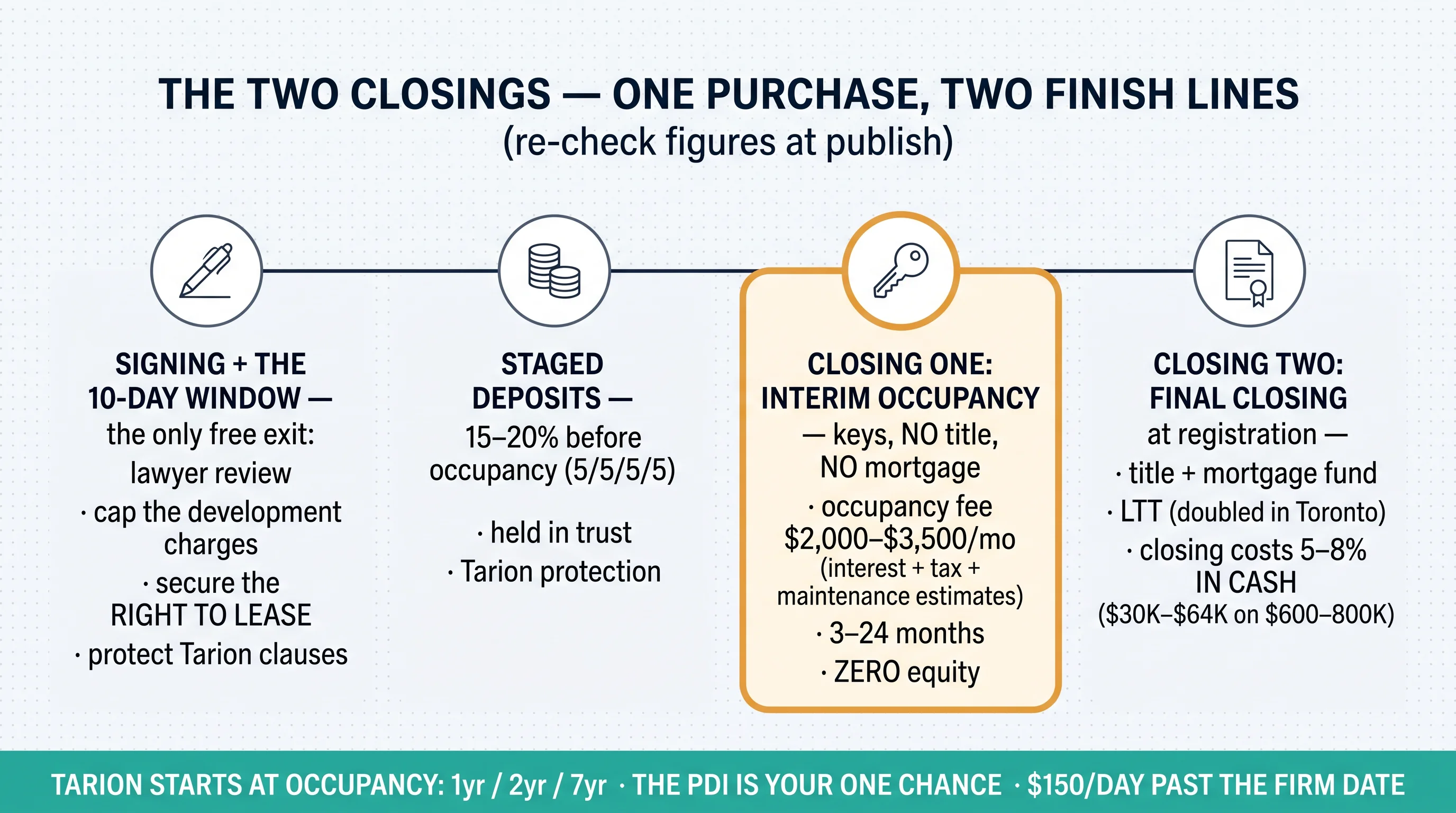
Closing one is interim occupancy. The municipality clears your unit as safe to live in, you get keys and possession — and no title, and no mortgage, because the condominium corporation hasn't been registered yet. Instead you pay the builder a monthly occupancy fee with three components fixed by law: interest on the unpaid balance of your purchase price (at the Condominium Act's prescribed rate), an estimate of property taxes, and an estimate of maintenance fees. On a typical Toronto unit that's $2,000–$3,500 a month, building zero equity — "phantom rent" is the honest name. The period runs anywhere from a few months to two years (lower floors occupy first and wait longest), and some builders allow topping the deposit up toward the full price to eliminate the interest component. Closing two arrives at registration: title transfers, your mortgage finally funds, and the real bill lands — land transfer tax (billed twice in Toronto), the statement of adjustments, title insurance, and legal fees, with total closing costs running 5–8% of the price: $30,000–$64,000 on a $600,000–$800,000 unit, in cash, none of it financeable in the mortgage. The biggest single line is development charges and levies at $15,000–$40,000+, which is exactly why the capped-versus-uncapped question was the biggest lever back at the signing table.
One block on Tarion, because the warranty clock is part of the timeline: coverage starts at occupancy — one year on workmanship and materials, two on major systems, seven on structural defects. The pre-delivery inspection (PDI) is your one chance to document deficiencies, a missed Firm Occupancy Date owes you $150 a day — and builder amendments frequently contain clauses waiving exactly that compensation, which is why nothing gets signed mid-project without the lawyer either. The Statement of Critical Dates in your agreement defines the firm dates, the outside dates, and your termination rights; know where it is. If this is your first property purchase of any kind, the first-rental buying guide covers the financing and cash-flow layers this article builds on.
The HST Trap: the Rebate That Was Never Yours
New construction attracts 13% HST — but you'd never know it from the brochure, because advertised prices are "net of rebates." The builder credits the New Housing Rebate against the price at closing on one assumption: that the buyer (or an immediate family member) will occupy the unit as a primary residence. Rent it out instead, and that rebate was never yours to keep.
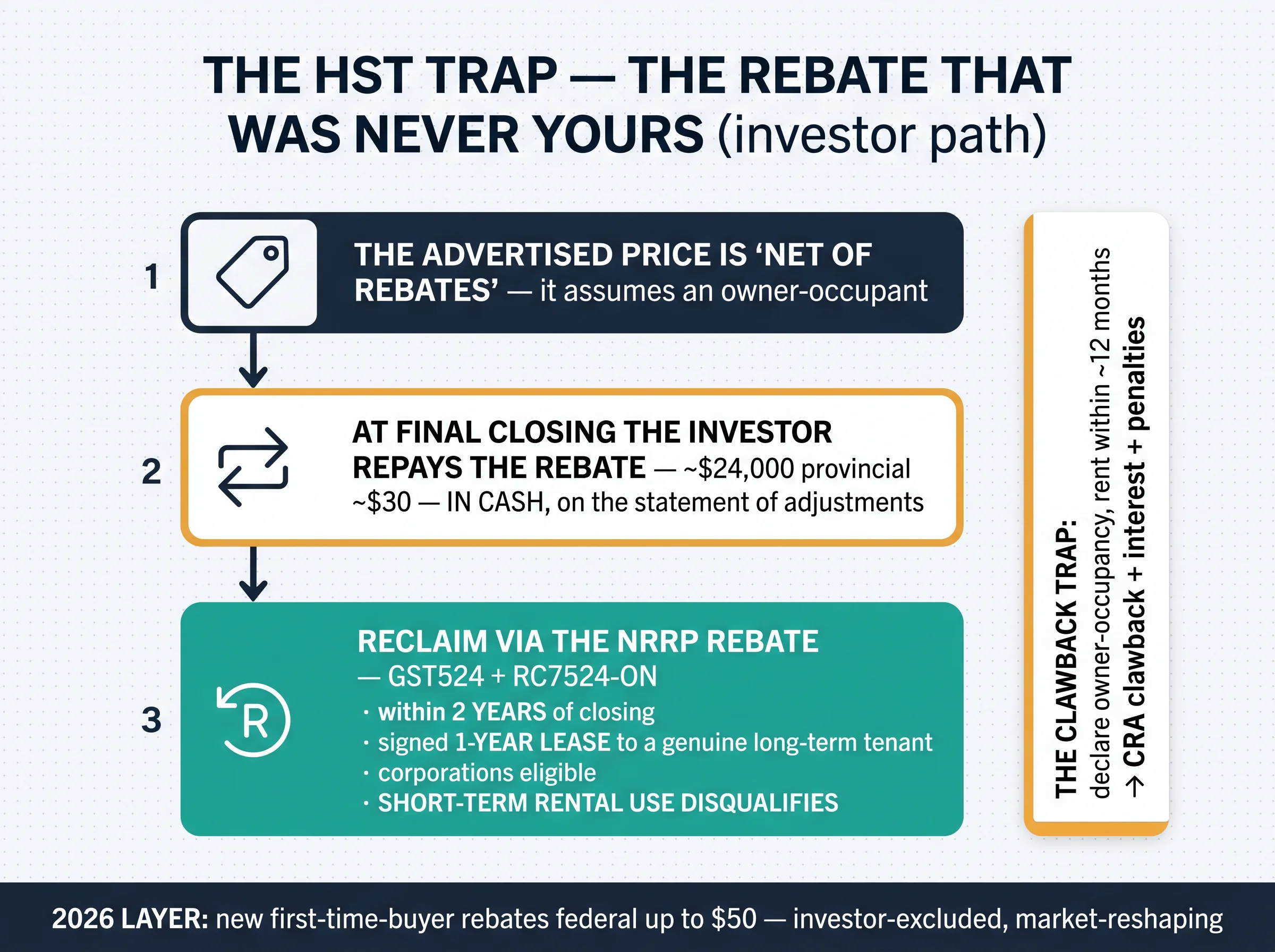
Here's the investor path, plainly: at final closing you repay the rebate amount to the builder — roughly $24,000 on the provincial portion, about $30,300 combined — on the statement of adjustments, in cash. You then reclaim it through the New Residential Rental Property (NRRP) rebate: file GST524 with the Ontario schedule RC7524-ON, within two years of closing, supported by a signed one-year lease to a genuine long-term tenant. Corporations are eligible for the NRRP (unlike the owner-occupant rebate), and short-term rental use disqualifies the claim entirely — if the plan involves nightly stays, read the short-term tenancy guide first, because the rebate is only one of the things at stake. The composite that repeats every closing season: an investor budgets the down payment and land transfer tax, the adjustments add the rebate repayment because the unit is leased, and the NRRP refund arrives five months later. The gap was always in the paperwork — it just wasn't in the budget.
The 2026 legislative layer matters even though it excludes investors. Bill C-4, which received Royal Assent in March, created a federal First-Time Home Buyers' GST/HST rebate of up to $50,000 on qualifying new homes up to $1 million; Ontario has announced an enhanced provincial rebate for agreements signed between April 2026 and March 2027 that would push combined relief toward $130,000 — though the provincial piece was still awaiting final passage as of this writing. These are first-time-buyer programs, not investor programs — but they reshape the end-user pool an investor eventually sells into. One assignment nuance worth filing: rebate eligibility follows the original agreement date, not the assignment date.
The Occupancy-Period Rental: Operating the Unit You Don't Own
Now the layer no buying guide teaches — and the reason this piece exists. Can you rent the unit during the occupancy period? Only with the developer's permission. You don't own it yet; leasing it requires an "owner right to lease" clause, often offered as a sales incentive and always best negotiated into the agreement at signing. Renting without it means breaching your purchase agreement while the builder is holding years of your deposits — a leverage position no landlord should volunteer for.
And here's what the pre-construction industry consistently gets wrong, or simply never mentions: once a tenant moves in, it's a full Residential Tenancies Act tenancy. The Act's definition of a landlord doesn't require registered title — the person who permits occupancy and collects rent is the landlord, full stop. So the occupancy-period tenant gets everything: the Standard Lease, the deposit rules, the 24-hour entry rules, the maintenance duty — from day one, at full strength. Title is the builder's problem. The tenancy is yours.
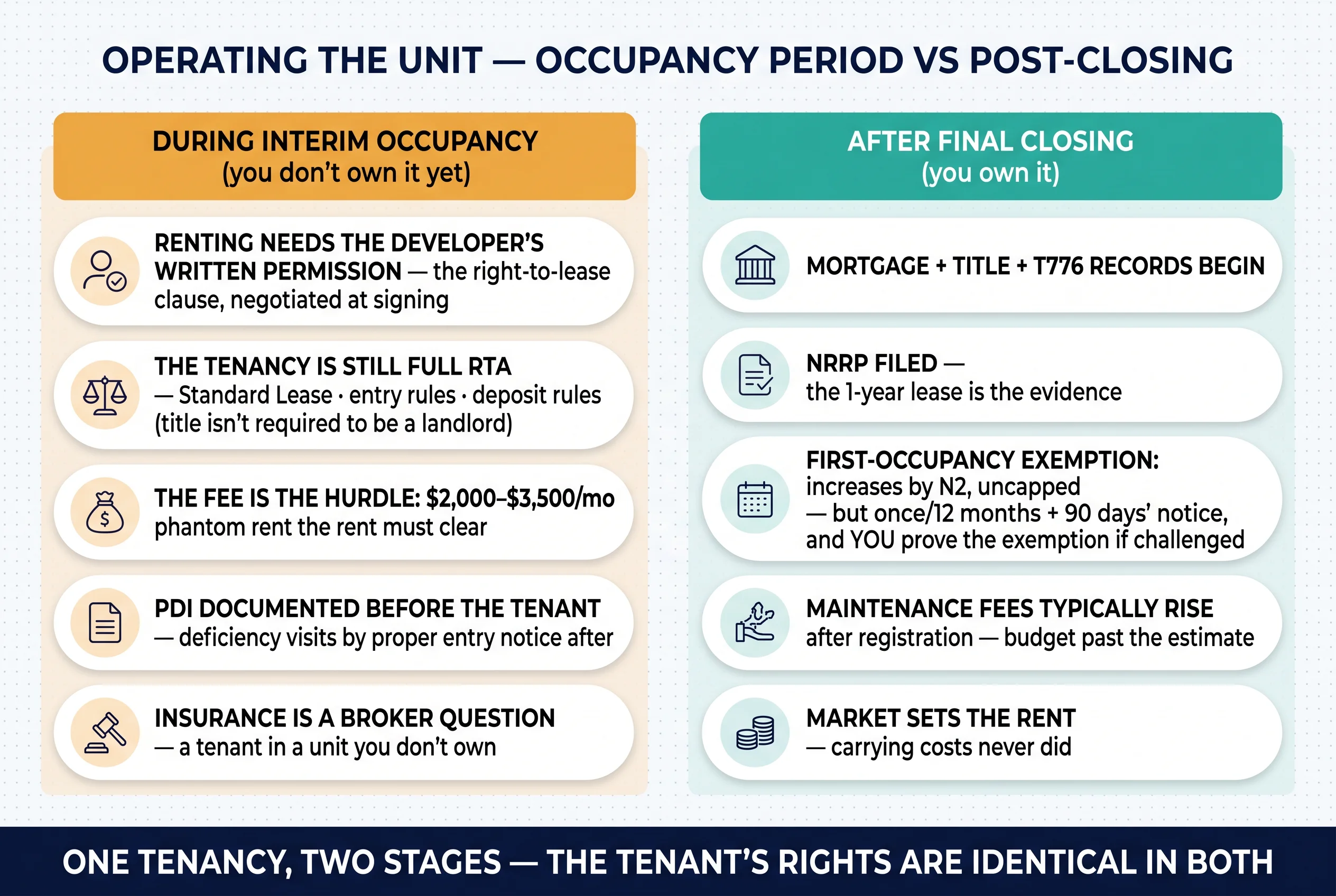
The occupancy math is where pro formas go to die. The occupancy fee is the carrying cost the rent has to clear, and at $2,000–$3,500 a month against 2026's levelled rents, it often doesn't. The composite: fourteen months of $2,900 phantom rent against a $2,600 market rent — with the right to lease, thankfully negotiated at signing — where the pro forma had assumed four months and equity from day one. The investor held, but only because the cash reserve was real. The related trap is pricing: a listing set to cover your carrying costs instead of comparable rents simply sits empty while the fee clock runs. The market has never once asked what you pay the builder.
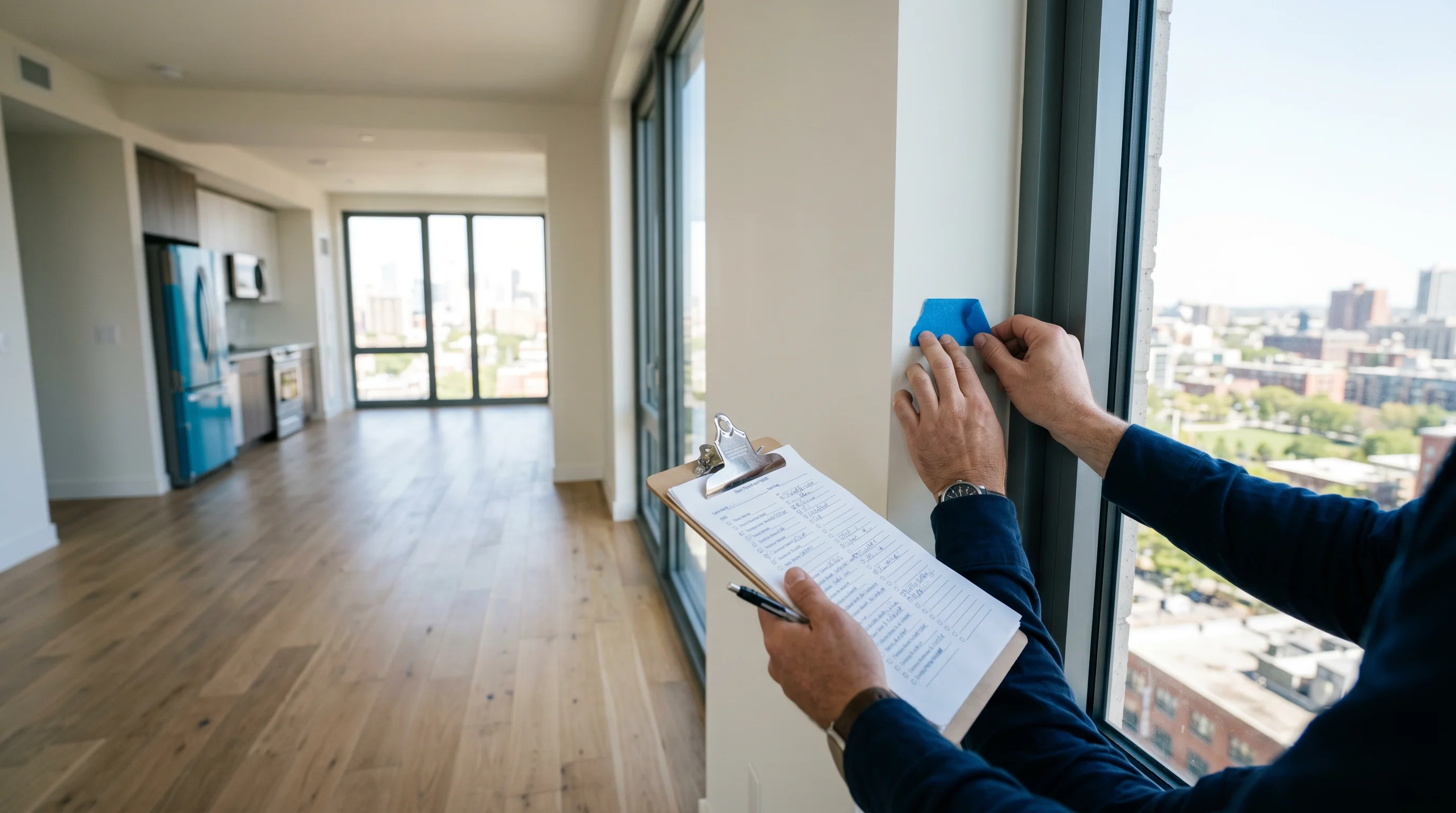
Operations during occupancy follow one sequence. The PDI gets documented before any tenant moves in — it's your only chance, and an empty unit is the only honest way to take it. Tarion deficiency work afterward runs on proper entry notices, exactly like any other landlord access. Insurance for a tenant-occupied unit in a building you don't yet own is a broker conversation, not an assumption — the landlord insurance guide explains why occupancy status drives everything — and the policy changes again at closing. Budget note: the maintenance-fee estimates in your occupancy fee typically rise after registration, when the corporation's real operating costs replace the developer's optimistic first-year budget. And screen the first tenant like the long-term partner they are — income verification included — because this lease is also your NRRP evidence.
Then the payoff, stated with its limits. A new condo's first residential occupancy is after November 15, 2018 by definition, which means the unit is exempt from the annual rent-increase guideline under s. 6(2) of the Act — increases run on the N2 instead of the N1, with no cap on the amount. But the exemption is narrower than the marketing suggests: increases still happen at most once every 12 months, with 90 days' written notice; if a tenant challenges the exemption at the LTB, the landlord bears the burden of proving the first-occupancy date, so keep the occupancy certificate; and the market — not your carrying costs — still decides what a tenant will actually pay. Done right, the composite is quiet: market rent on the Standard Lease, honest disclosure, and an N2 at the anniversary handling the adjustment the guideline would have capped. That's the one structural advantage the new unit genuinely delivers, used lawfully.
The 2026 Reality Check: the Appraisal Gap, and Who Should Still Do This
The market context is blunt. Around 28,000 GTA units complete this year on top of roughly 83,000 delivered in 2023–25; completed inventory sits at record highs while new-condo sales sit near record lows; and industry data has reported a negative spread of roughly $284 per square foot between resale values and original pre-construction contract prices. Projects that miss the ~70% presale threshold lenders require are being cancelled at record rates, and delays stretch occupancy periods — burning exactly the cash reserves thin buyers don't have.
Which brings the single biggest closing risk into focus: the lender funds the closing-day appraisal, not your contract. The signature composite of this cycle: a unit contracted at $760,000 in 2021 appraises at $640,000 at registration; the mortgage advances against $640,000; and the buyer bridges six figures in cash — or forfeits years of deposits, with the builder able to sue for losses if the unit later sells below the contract price. The assignment "exit" needs the builder's consent, carries $5,000–$25,000 in fees plus HST, usually bans public marketing — and requires a buyer who may simply not exist at your price. A possibility, never a plan.
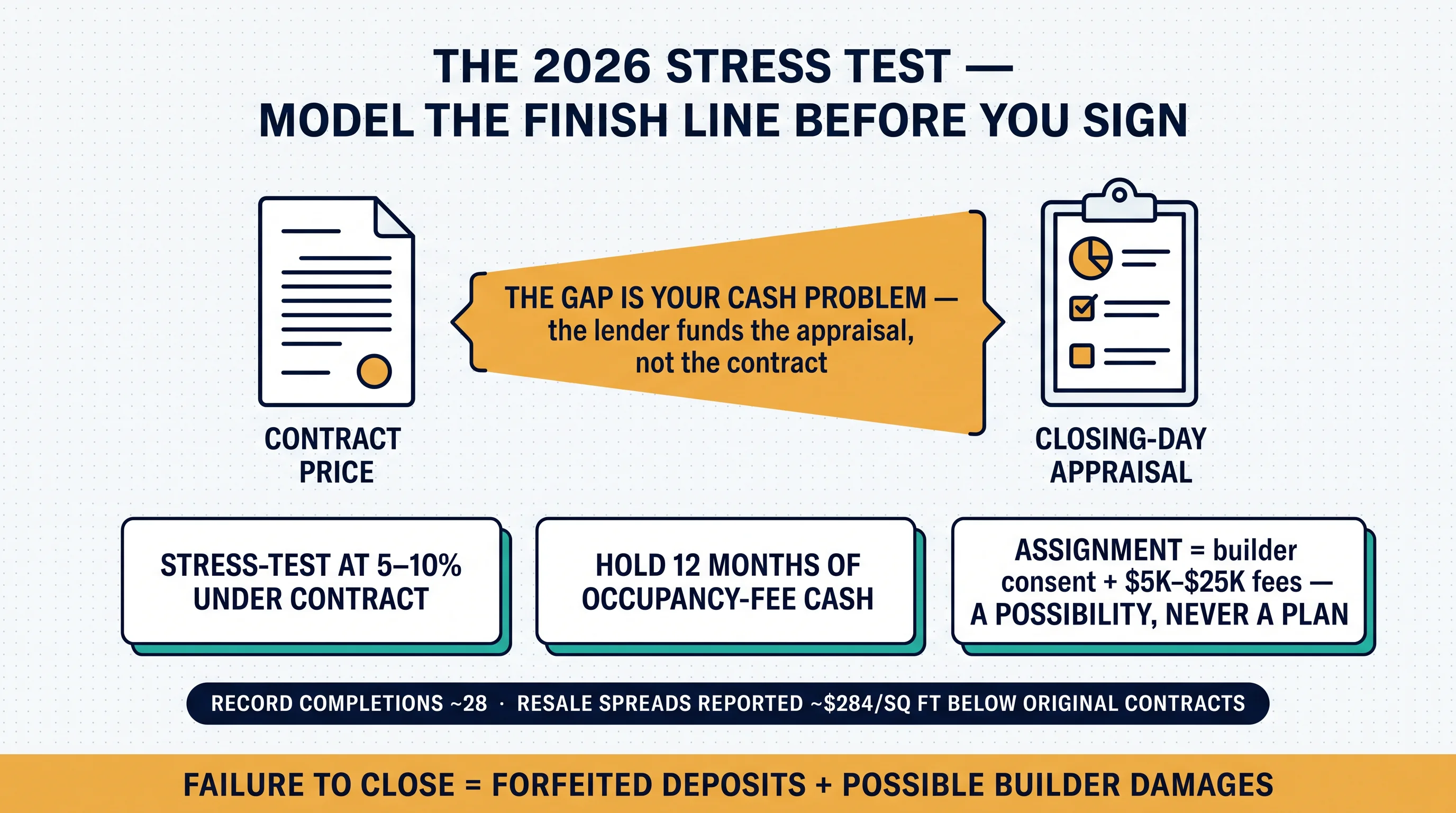
So who should still do this? Buyers with a genuinely long horizon, twelve months of occupancy-fee cash, an appraisal-gap reserve built on a stress test at 5–10% under the contract price, conservative rent assumptions run through an honest spreadsheet — and the discipline to treat the exemption as a lawful tool rather than a business model. There's a cycle logic on their side: today's dry launch pipeline is tomorrow's tight supply, and patience is the strategy this market rewards. Track the legal side as it moves through the rental-law changes hub, and put the operational side — occupancy fees today, mortgage and maintenance tomorrow — into a system built to track it.
Practical Takeaways
- Spend the 10-day window like it's the whole deal: lawyer review, capped development charges, right to lease in writing, Tarion clauses intact.
- Build the four-stage cash plan: staged deposits, 12 months of phantom rent, 5–8% closing costs including the rebate repayment, and the appraisal-gap reserve.
- Choose the HST path honestly: investor means repay-then-NRRP with a one-year lease, filed within two years.
- Run the occupancy rental as a full tenancy: Standard Lease, entry rules, deposit rules — title changes nothing for the tenant.
- PDI before the tenant, entry notices after.
- Set the first rent from comparable leases, not carrying costs — then use the N2 lawfully at the anniversary.
- Stress-test the closing at 5–10% under contract and treat assignment as a fallback, never the plan.
The Pre-Con Investor's Timeline Kit: Keys Before Title — the 10-Day Window, the Occupancy Year, the HST Machinery, and the First Tenancy
A pre-construction condo is the only rental you'll operate before you own — and every stage runs on a different rulebook. This free kit walks Ontario investors through the whole timeline: the 10-day window where the deal is actually decided, the four-stage cash plan from deposits to the appraisal-gap reserve, the occupancy-period tenancy that runs on the full RTA before you hold title, and the NRRP and N2 machinery on the other side of closing. Two printable pages to work before you sign.
Get Free PDF →The Bottom Line
A pre-construction rental is a timeline, not a transaction. The deposit stage is decided in ten days. The occupancy stage is paid for monthly in phantom rent and governed by a permission clause most buyers never negotiate. The closing stage bills the rebate the brochure assumed away and funds against an appraisal the buyer doesn't control. And the first tenancy — the whole point — runs on the full Residential Tenancies Act from the day the tenant arrives, exemption and all. The 2026 market has stripped the strategy of its shortcuts: no reliable assignment exit, no automatic appreciation, no forgiveness for thin reserves. What remains is the honest version — real cash, a long horizon, market rents, and a tenant treated to every right the Act gives them. Which happens to be the version that was always going to work.
Keys Before Title. Plan for Both.
From the first occupancy-period lease to the anniversary N2 — Tenon10 runs the tenancy side of the timeline: the Standard Lease, screening, rent collection, and every notice done right.
Free • No signup required • Updated for the Bill 60 changes in force 21 Sep 2026
Related Resources
- Buying Your First Rental Property in Ontario — the financing, cash-flow, and tenanted-purchase layers this guide builds on
- Ontario Rent Increases: The Complete Guide · N2 Form (Rent-Control-Exempt Units) · Rent Increase Calculator
- Holiday Rentals and Short-Term Tenancies — why the NRRP's long-term-only condition matters
- CRA Audits of Rental Income — the audit-ready records the NRRP and clawback rules assume
- Landlord Insurance in Ontario · The 24-Hour Notice of Entry Rule
- Becoming a Landlord in Ontario · Income Verification for Self-Employed Tenants
- Ontario Standard Lease · Ontario LTB Forms Hub
Frequently Asked Questions
Can I rent out my condo during interim occupancy in Ontario?
Only with the developer's permission. During interim occupancy you have possession but not title — the builder still owns the unit — so leasing it requires an "owner right to lease" clause, often granted as a sales incentive and best negotiated into your purchase agreement at signing. Renting without permission breaches your agreement while the builder holds your deposits. And once a tenant moves in, it's a full Residential Tenancies Act tenancy: the Standard Lease, entry rules, and deposit rules all apply, because the RTA doesn't require a landlord to hold registered title. Note that renting during occupancy also signals investor status for HST purposes, which changes your rebate path.
Do investors pay HST on pre-construction condos?
Effectively, yes — up front. Advertised prices are usually "net of rebates," assuming the buyer will occupy the unit as a primary residence, in which case the builder credits the rebate at closing. Investors don't qualify for that credit: at final closing they repay the rebate amount (roughly $24,000 provincial, about $30,300 combined) and then reclaim it through the New Residential Rental Property (NRRP) rebate — filed within two years of closing, with a signed one-year lease to a genuine long-term tenant. Short-term rental use disqualifies the claim. The practical point: the rebate money must exist in cash on closing day, because the refund arrives months later.
What are occupancy fees on a new condo?
Monthly payments to the builder during interim occupancy — the period after you get keys but before the condo corporation is registered and title transfers. By law the fee has three components: interest on the unpaid balance of your purchase price, an estimate of property taxes, and an estimate of maintenance fees. On a typical Toronto unit it runs $2,000–$3,500 a month, lasts anywhere from a few months to two years, and builds no equity — your mortgage doesn't start until final closing. "Phantom rent" is the honest nickname. Some builders let you prepay the balance to eliminate the interest component.
What happens if my condo appraises for less than I paid at closing?
Your lender funds a percentage of the closing-day appraisal, not your contract price — so if a unit contracted at $760,000 appraises at $640,000, the shortfall between what the mortgage covers and what you owe the builder comes from your own cash. In the current market, with record completions and resale values below many original contract prices, this appraisal gap is the single biggest closing risk. Buyers who can't close typically forfeit their deposits, and the builder can sue for losses if the unit later sells below the contract price. The protection is preparation: start mortgage finalization during occupancy and stress-test your closing at 5–10% below your purchase price.
Is a new condo exempt from rent control in Ontario?
Generally yes, for units first occupied for residential purposes after November 15, 2018 — which every new pre-construction condo is by definition. The annual rent-increase guideline (2.1% in 2026) doesn't apply, and increases run on Form N2 instead of the N1. But the exemption isn't unlimited: rent can still rise only once every 12 months, 90 days' written notice is still required, and if a tenant challenges the exemption at the Landlord and Tenant Board, the landlord bears the burden of proving the first-occupancy date — keep the occupancy certificate. And the market still sets what a tenant will actually pay: pricing to your carrying costs instead of comparable rents is how new-condo listings sit empty.


