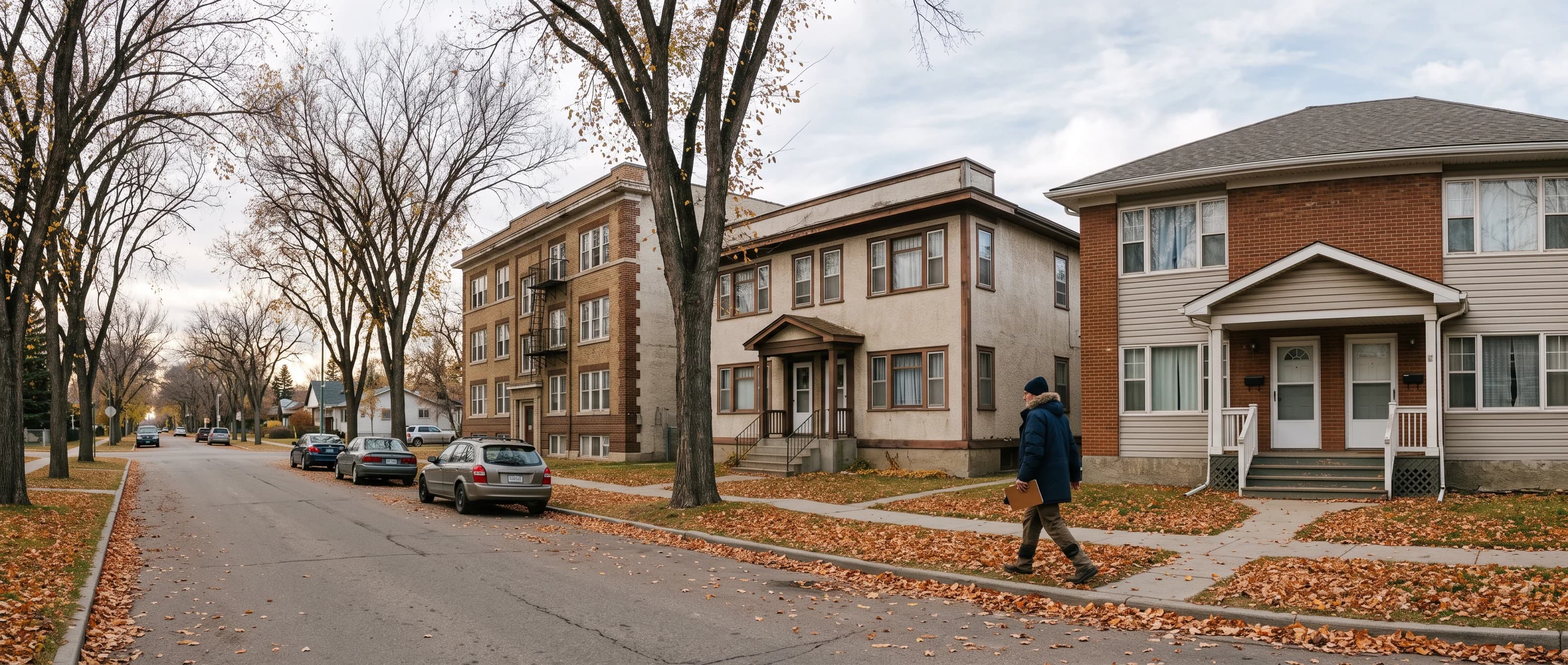
In BC, a fire or flood that damages a rental unit but leaves it repairable does not end the tenancy. The landlord must repair it to the standard in the Residential Tenancy Act (RTA s.32(1)), the tenant keeps paying rent, and a tenant who loses use of the unit can ask for compensation or apply to the Residential Tenancy Branch (RTB) for a rent reduction (s.65(1)(f)).
Only when the unit is destroyed or unlivable with no prospect of a timely repair is the tenancy frustrated and over. That case has its own guide: frustrated tenancies after a fire or flood in BC. This one is about the far more common situation: a kitchen fire, a burst pipe, a leaking roof, and weeks of repairs with the tenancy still running.
At a glance
- Repairable means the tenancy continues. Frustration (RTA s.44(1)(e)) is a high test, not the default.
- The landlord repairs to health, safety and housing standards (s.32(1)); a tenant repairs damage they or their guests caused (s.32(3)).
- Rent is still due (s.26(1)); agree in writing how rent works during repairs.
- Lost use can be compensated: by agreement, or by an RTB order reducing past or future rent (s.65(1)(f)).
- Belongings are the tenant's to insure; the building is the landlord's to repair.
Does fire or flood damage end a BC tenancy?
Usually not: a BC tenancy ends after a fire or flood only if the tenancy agreement is frustrated, and RTB Policy Guideline 34 calls that test "a high one". Section 44(1)(e) of the Residential Tenancy Act lists frustration as a way a tenancy ends, and section 92 applies the Frustrated Contract Act to tenancy agreements.
Guideline 34 says mere hardship is not enough while the agreement can still be performed, and that a party cannot rely on frustration caused by their own deliberate or negligent act or omission. A unit that can be put right in a reasonable time is a repair problem, not the end of the tenancy.
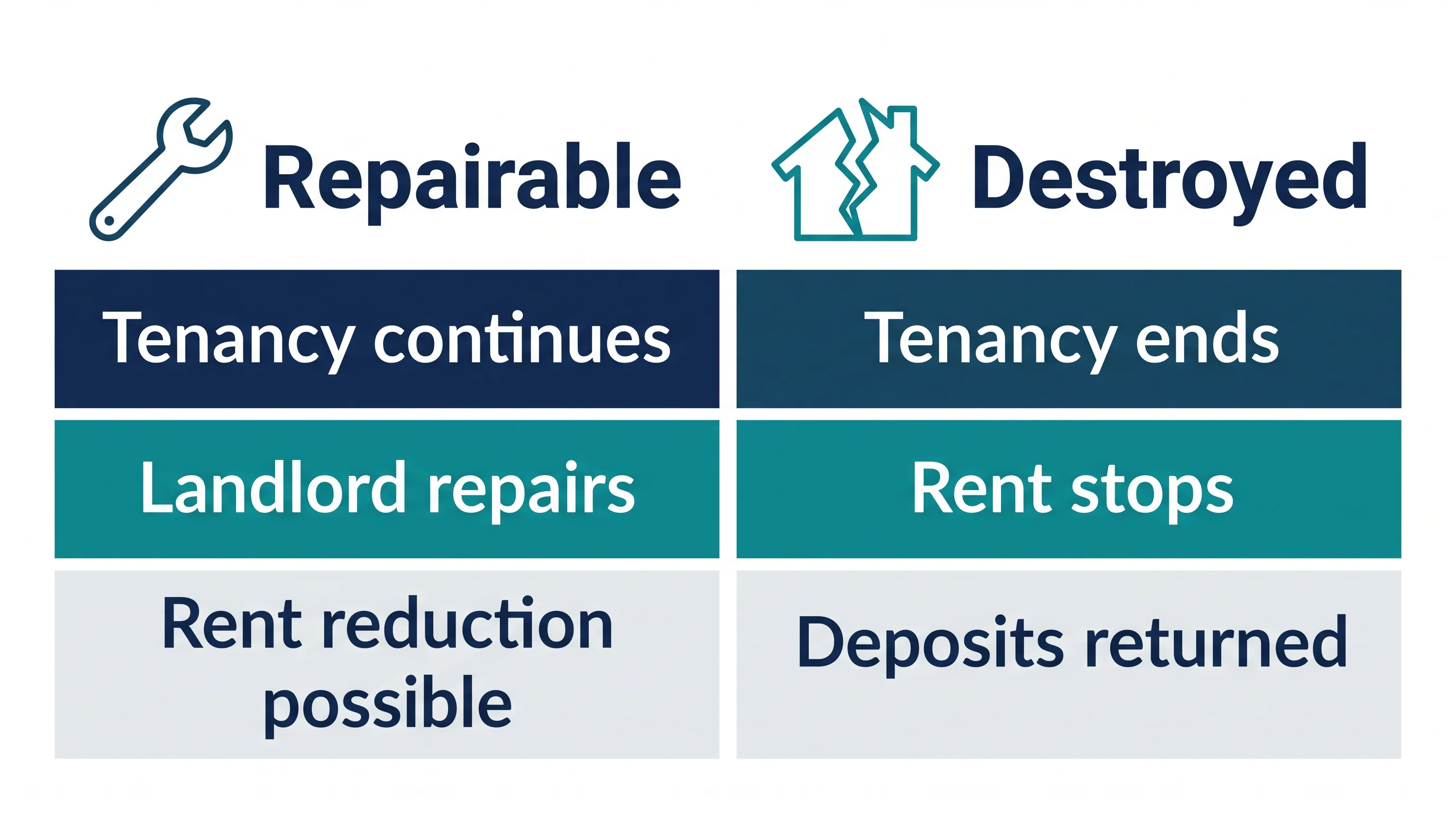
The two outcomes look very different:
| Question | Repairable unit | Destroyed or unlivable unit (frustrated) |
|---|---|---|
| Does the tenancy continue? | Yes | No, it ends without notice from either side |
| Is rent still due? | Yes, subject to any agreed or ordered reduction | Not after the event; rent paid for the period after is returned |
| Who repairs? | The landlord (s.32(1)), unless the tenant caused it (s.32(3)) | The landlord's own decision; there is no tenancy to repair for |
| Deposits | Stay held until the tenancy ends | Returned under the end-of-tenancy rules |
Frustration does happen. In October, a fire in a Kelowna supportive-housing building left it uninhabitable and its operator treated the residents' tenancies as frustrated, Global News reported. But most damage is local to one unit or one room, and the tenancy carries on.
Who has to repair a BC rental after a fire or flood?
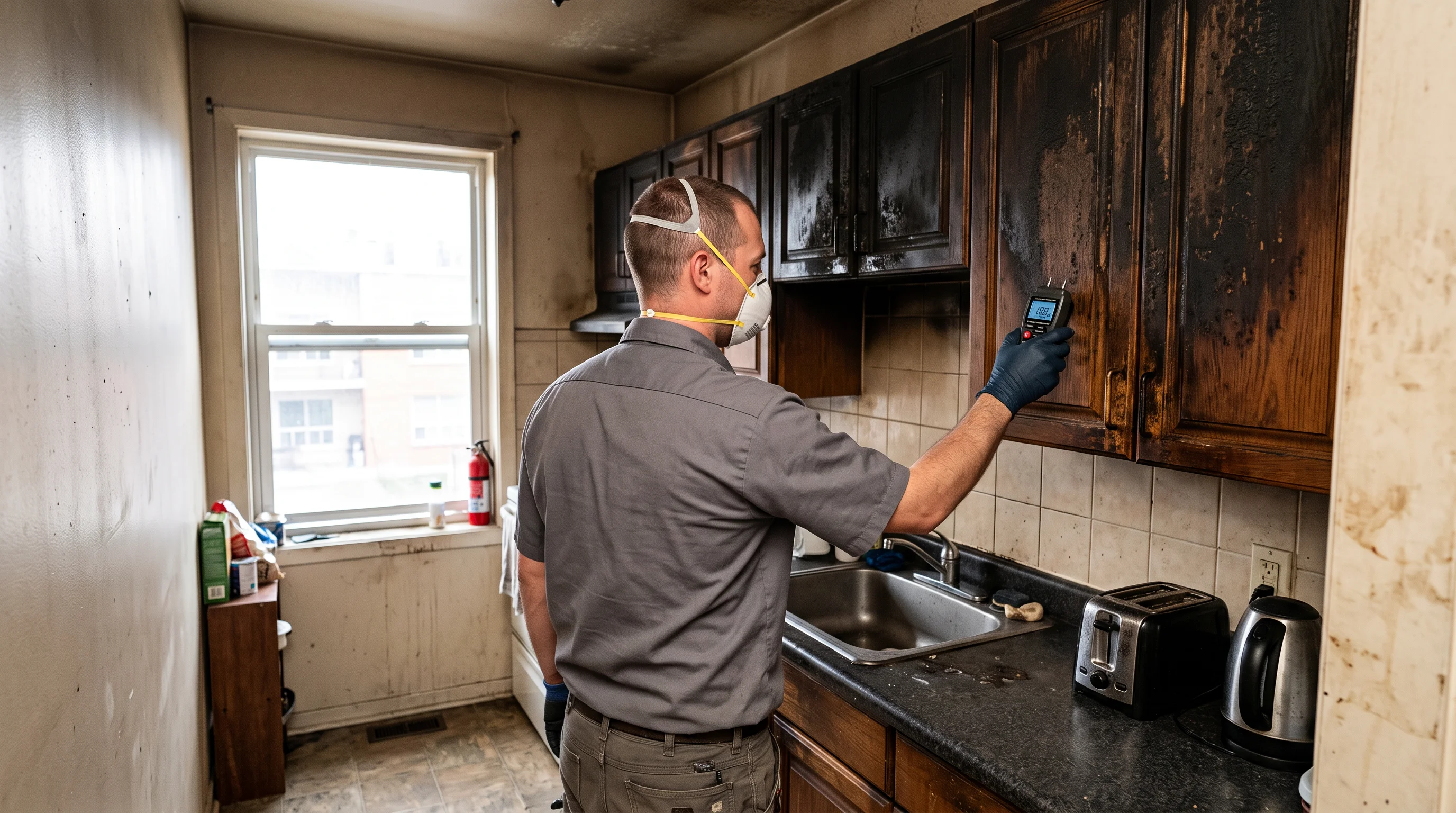
The landlord does. RTA s.32(1) requires a landlord to provide and maintain residential property in a state of decoration and repair that complies with the health, safety and housing standards required by law and, having regard to its age, character and location, makes it suitable for occupation. The Province's natural disasters page adds that a landlord who fails to make important repairs after a disaster may be breaching a material term of the tenancy.
The exception is damage the tenant caused. Under s.32(3), a tenant must repair damage caused by their own actions or neglect, by an occupant, or by a person they permitted on the property. A kitchen fire left unattended or a bathtub left running is a different conversation from a pipe that failed in the wall.
Is a burst pipe an emergency repair?
It can be. Section 33(1) defines emergency repairs as urgent, necessary for health or safety or the preservation of the property, and made to repair one of a short list of things, including major leaks in pipes or the roof, damaged or blocked water or sewer pipes or plumbing fixtures, the primary heating system and the electrical systems. A tenant who pays for an emergency repair and gives the landlord a written account with receipts must be reimbursed (s.33(5)); if the landlord does not pay, the tenant may deduct the amount from rent (s.33(7)). Our guide to a BC landlord's repair duty covers the full process.
Whose insurance covers what after a BC rental fire or flood?

In BC, the tenant's belongings are the tenant's responsibility and the building is the landlord's to repair, so each side looks first to its own policy. The Province says tenants are responsible for their personal belongings, that after a natural disaster a landlord cannot be held responsible for damage to them, and that tenants should consider tenant's insurance to protect them.
The same page says that, unless the tenancy agreement says otherwise, tenants are responsible for finding somewhere else to stay, and should check whether their insurance covers temporary accommodation.
For landlords, the duty in s.32(1) to restore the unit applies whether or not an insurer pays. Read your own property policy before you need it: what it covers for the building, whether it pays for lost rent while a unit is empty, and what it requires of you after a loss. Policies differ, so do not assume a particular cover is included.
Does a BC tenant keep paying rent while the unit is repaired?
Yes. Under RTA s.26(1) a tenant must pay rent when it is due, whether or not the landlord complies with the Act, unless the Act gives the tenant a right to deduct. The Province's guidance is the same: keep paying rent during repairs, and make a written agreement with the landlord about rent while the work is done. Rent is also due during an evacuation.
That does not mean the tenant absorbs the loss. The Province says a tenant who cannot use the unit, or part of it, should talk to the landlord about compensation, and if that goes nowhere can apply through dispute resolution for a rent reduction. Section 65(1)(f) lets the RTB order that past or future rent be reduced by an amount equivalent to the reduction in the value of the tenancy agreement.
| Situation | What usually follows |
|---|---|
| Tenant stays; one room is out of use for three weeks | Rent continues; the two sides agree a credit for the lost room, or the tenant applies for a reduction |
| Tenant moves out temporarily while repairs are done | Rent continues unless the two sides agree otherwise in writing; the tenant can seek compensation for lost use |
| Tenant paid for an emergency plumbing repair | The landlord reimburses on a written account with receipts, or the tenant deducts it from rent (s.33) |
| The landlord delays important repairs | The tenant can apply to the RTB; the Province says it may be a breach of a material term |
When should a landlord or tenant go to the RTB?
Go to the Residential Tenancy Branch when the two sides cannot agree. A tenant can apply for a rent reduction or compensation for lost use; a landlord who believes the unit cannot be restored can apply under s.56.1 for an order ending the tenancy because the unit is uninhabitable or the agreement is otherwise frustrated, together with an order of possession. Our guide to filing a dispute resolution application walks through the steps.
If both agree the tenancy should end, a mutual agreement to end a tenancy puts the date in writing.
What should both sides do in the first week?
- Safety first. Follow the fire department or restoration company before anyone returns to the unit.
- Photograph everything, dated, before cleanup starts. The move-in condition inspection report is the record of how the unit looked before.
- Put the damage in writing (tenant to landlord) and the repair plan in writing (landlord to tenant).
- Call your own insurer: the tenant for belongings and temporary housing, the landlord for the building.
- Agree rent in writing for the repair period, including any credit for lost use.
- Decide honestly whether it is repairable. Only a destroyed or unlivable unit ends the tenancy.
For how an Ontario landlord and tenant handle the same event, see fire in an Ontario rental; the rules there are different. More BC guides are in the BC Landlord Resource Center and the BC Tenant Resource Center.
Frequently asked questions
Can a BC tenant stop paying rent after a flood?
Not if the unit is repairable and the tenancy continues. RTA s.26(1) requires rent to be paid unless the Act gives a right to deduct, such as unreimbursed emergency repair costs under s.33(7). The tenant's remedy for lost use is compensation by agreement or an RTB rent reduction.
Does the landlord have to pay for a hotel while repairs are done?
Not unless the tenancy agreement says so. The Province says tenants are responsible for alternate accommodation after a disaster and should check whether their insurance covers it.
Does the landlord's insurance cover the tenant's furniture?
Do not count on it. The Province says tenants are responsible for their own belongings and that a landlord cannot be held responsible for damage to them after a natural disaster, which is why it suggests tenant's insurance.
The tenant caused the fire. Who pays for the repairs?
Under RTA s.32(3), a tenant must repair damage caused by their own actions or neglect or by someone they let onto the property. If the two sides disagree about the cause or the cost, the RTB decides on an application.
How long can repairs take before the tenancy is frustrated?
The RTA sets no number of days. Guideline 34 asks whether the event has made the agreement impossible to perform as intended, so a long but finite repair usually points to compensation rather than frustration.
A damaged unit is stressful for both sides, but the law's starting point is simple: if it can be fixed, the landlord fixes it, the tenancy continues, and lost use is settled in money rather than by ending the tenancy.
Keep a clear record before anything goes wrong
Free BC landlord and tenant forms, including the documents that show how a unit looked at move-in.
Free • No signup required