A frustrated tenancy in BC, after a fire, flood or other unforeseeable event leaves the unit uninhabitable through no one's fault, ends without notice from either side. The tenant stops owing rent from that point, and the landlord should refund rent paid for the period after and return the deposits. If the unit can be repaired, the tenancy usually continues.
At a glance
- The law: RTA s.44(1)(e) ends a tenancy when the agreement is frustrated; s.92 applies the Frustrated Contract Act.
- The test is high: an unforeseeable event, no one's fault, that makes the tenancy impossible, not just harder.
- No notice needed from either side; the Province advises a written agreement to end.
- Money: no rent after the end date; refund rent for the rest of the period and return deposits.
- Repairable unit: the tenancy continues and rent is still payable, with a written arrangement.
After a Fire or Flood: BC Tenancy Checklist
What BC landlords and tenants do when a rental is damaged: decide whether the tenancy is frustrated, settle rent and deposits, and handle repairs.
Get Free PDF →What makes a BC tenancy "frustrated"?
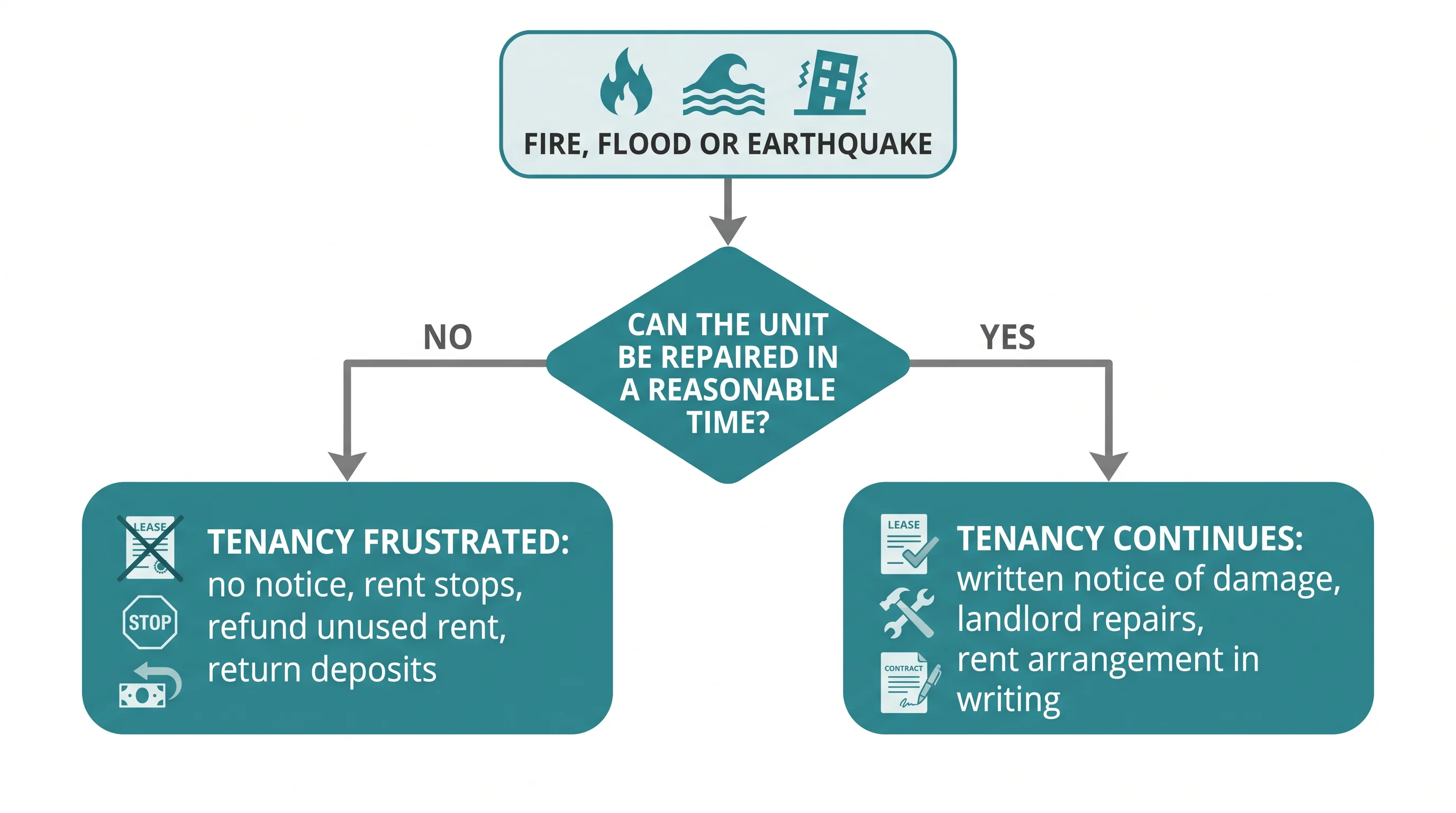
A tenancy agreement is frustrated when, without the fault of either party, an unforeseeable event changes things so radically that the tenancy can no longer be carried out as intended. That is how RTB Policy Guideline 34 puts it, and it stresses that the test is a high one.
| Likely frustrated | Not frustrated |
|---|---|
| A fire destroys the unit | Damage that can be repaired while the tenancy continues |
| A flood or earthquake leaves it uninhabitable with no prospect of a timely repair | Mere hardship, financial or otherwise, while the agreement can still be performed |
| An event neither side caused or could foresee | An event the parties contemplated when they signed, or one caused by a party's own deliberate or negligent act |
Section 44(1)(e) of the Residential Tenancy Act lists frustration as one of the ways a tenancy ends, and section 92 says the Frustrated Contract Act and the doctrine of frustration apply to tenancy agreements. For the other ways a tenancy ends, see ending a tenancy in BC.
Does anyone have to give notice?
No. The Province's special circumstances page says that when a flood, fire or earthquake makes the unit uninhabitable, neither the landlord nor the tenant has to give notice to end the tenancy.
Its natural disasters page adds that if the unit is damaged beyond repair and is unlivable or unsafe, the landlord and tenant should make a written agreement to end the tenancy because of the disaster. A mutual agreement to end a tenancy fixes the end date in writing.
What if the two sides disagree?
Either can apply to the RTB for dispute resolution. Section 56.1 lets a landlord apply for an order ending the tenancy because the unit is uninhabitable or the agreement is otherwise frustrated, together with an order of possession. If the director agrees, the order can deem the tenancy ended on the date performance became impossible. The Province gives the example of a tenant who refuses to leave after a fire damages the unit. See filing a dispute resolution application.
What happens to the rent and deposits?
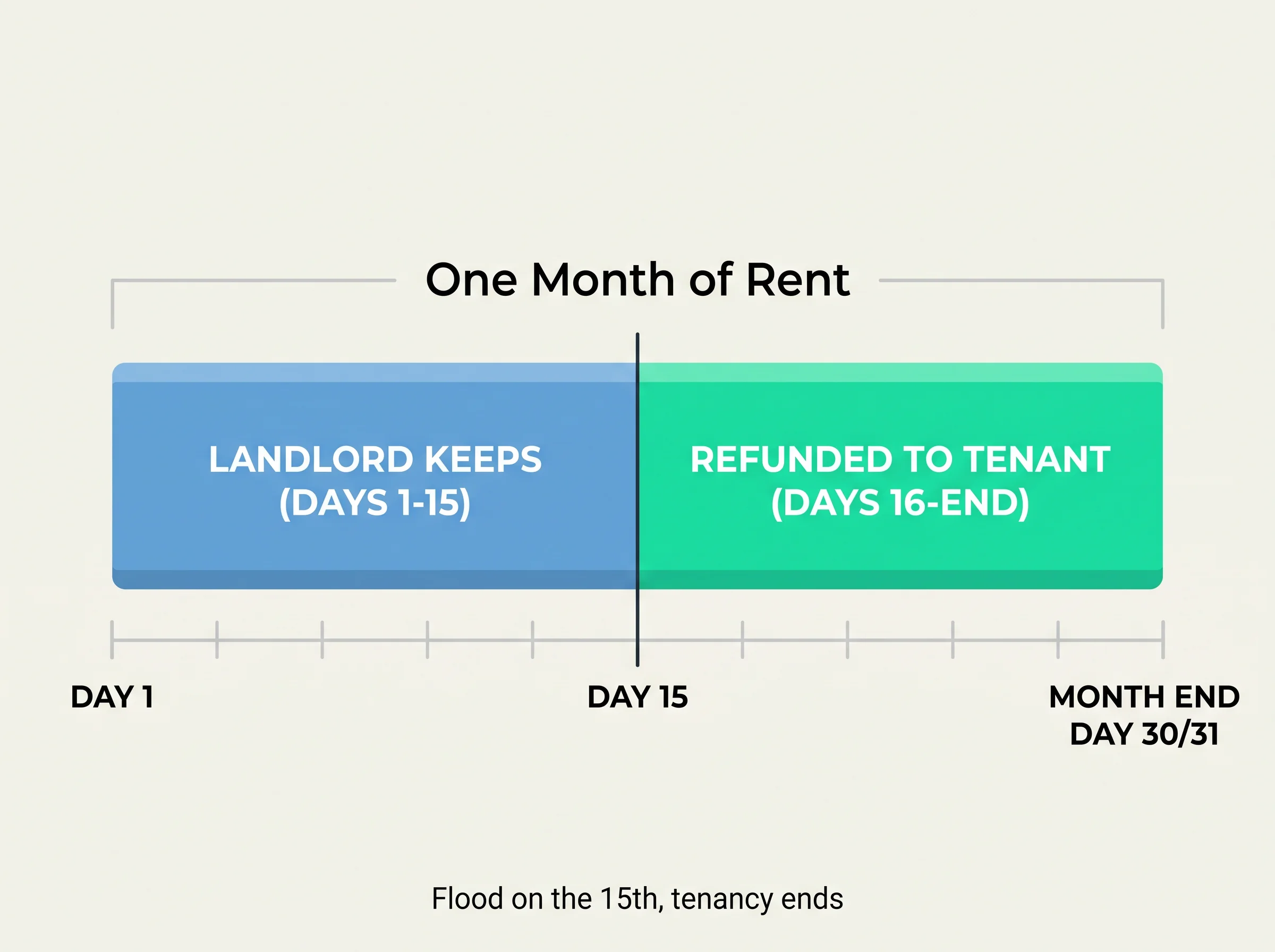
Rent stops, and money paid for the time after the tenancy ended goes back. The special circumstances page says the tenant does not have to pay rent after the event, and if rent was paid the landlord should reimburse the tenant. The natural disasters page says that once both sides agree to end the tenancy, the landlord must return any rent paid for the period after the agreement, plus the security deposit and any pet damage deposit. Its example: rent paid for a full month, a flood, and an agreement to end on the 15th means half the month's rent goes back.
Guideline 34 describes the same split under the Frustrated Contract Act, using a manufactured home site destroyed by a flood on the 15th: the landlord keeps rent up to the date of frustration, and the tenant is entitled to the rent paid for the period after. For the deposit deadline, see the 15-day rule.
What if the unit can be repaired?
Then the tenancy is usually not frustrated and it continues. The Province says the tenant should give the landlord written notice of the damage, should keep paying rent during repairs, and should make a written agreement with the landlord about rent while the work is done. It also says:
- The landlord is responsible for repairs and must make sure the unit meets health, safety and housing standards before the tenant moves back in, as section 32 of the Act requires.
- A landlord who fails to make important repairs after a disaster may be breaching a material term of the tenancy.
- Unless the tenancy agreement says otherwise, tenants find their own temporary accommodation, and should check whether their insurance covers it.
- Tenants are responsible for their own belongings; after a natural disaster the landlord cannot be held responsible for damage to them, which is why the Province suggests tenant's insurance.
- Tenants must pay rent during an evacuation, but can ask the landlord for compensation for the time they could not use the unit and, if that goes nowhere, apply for a temporary rent reduction order.
For urgent fixes such as a burst pipe or failed heating, which are emergency repairs, see a BC landlord's repair duty.
Common mistakes
- Calling every bad repair "frustration". A unit that can be fixed in a reasonable time usually keeps the tenancy alive.
- Keeping rent for the rest of the month. Rent for the time after the end date goes back.
- Holding the deposits. They are returned, subject to the usual end-of-tenancy rules.
- Re-renting before the end is settled. Agree the end in writing, or get an order, first.
- No photos. Without them, damage and timing are hard to prove.
How Tenon10 helps
Tenon10 tracks deposits and their return dates, runs move-in and move-out inspection reports that record the unit's condition, creates the BC tenancy agreement and sends rent reminders. A dated move-in report is your record of the unit before the event.
Frequently asked questions
Do I have to keep paying rent after a fire?
If the unit is uninhabitable and the tenancy is frustrated, no rent is owed after the event. If the unit is being repaired and the tenancy continues, the Province says to keep paying rent and agree in writing how it will be handled during repairs.
Does the landlord have to find me somewhere to live?
Not unless the tenancy agreement says so. The Province says tenants are responsible for alternate accommodation and should check their insurance.
Can the landlord end the tenancy so they can renovate after a flood?
Only if the tenancy is truly frustrated. Otherwise the landlord must repair, and ending a tenancy to renovate follows its own rules.
What if the fire was the tenant's fault?
Guideline 34 says a party cannot rely on frustration caused by their own deliberate or negligent act. That becomes a question of damage and responsibility for the RTB.
Who decides whether the tenancy is frustrated?
If the parties cannot agree, an RTB arbitrator does, on an application for dispute resolution.
After a fire or flood, the first questions are about safety. The tenancy questions can wait a day, and then come down to one: can the unit be repaired in a reasonable time, or is the tenancy over?
After a Fire or Flood: BC Tenancy Checklist
What BC landlords and tenants do when a rental is damaged: decide whether the tenancy is frustrated, settle rent and deposits, and handle repairs.
Get Free PDF →Record the unit's condition
A move-in inspection report is the baseline every later claim starts from.
Free • No signup required