In BC, many rental scams use a real landlord's property: the scammer copies the photos and address, lists the unit cheaply and takes "rent" or a "deposit" from someone who never gets the keys. Landlords can make that harder by showing units in person, saying in the ad that they never take money before a viewing and a signed agreement, and following the Residential Tenancy Act's deposit and fee rules so a fake stands out.
This guide is written for BC landlords and property managers, with a checklist renters can use too. For the renter's side in full, see how tenants spot fake listings in BC.
At a glance
- Scams borrow real listings. A copied ad hurts the landlord as well as the renter who pays.
- No application fees in BC (RTA s.15).
- Deposits: a security deposit only when the tenancy agreement is entered into (s.20(a)), one only (s.20(b)), at most half a month's rent (s.19(1)); the same cap applies to a pet damage deposit.
- A written agreement with the landlord's legal name and address for service (s.13).
- Report to local police and the Canadian Anti-Fraud Centre, 1-888-495-8501.
What does a rental scam in BC look like?
A BC rental scam usually pairs an attractive unit at a low rent with a request for money before the renter has seen the place or met the landlord. A case reported this week in Nanaimo shows how convincing it can be. According to CHEK News, a resident answered an online ad that appeared to include a rental agreement and land title information, sent several payments for rent and deposits by online banking, and lost nearly $4,000. It came to light when they arranged to view the home and the actual owner said the advertisers had no authority to rent it.
Nanaimo RCMP told CHEK that the same property information had been used in earlier scam attempts, and that scammers often target people under pressure to find housing quickly. In other words, the real owner's home was being advertised again and again without their knowledge.
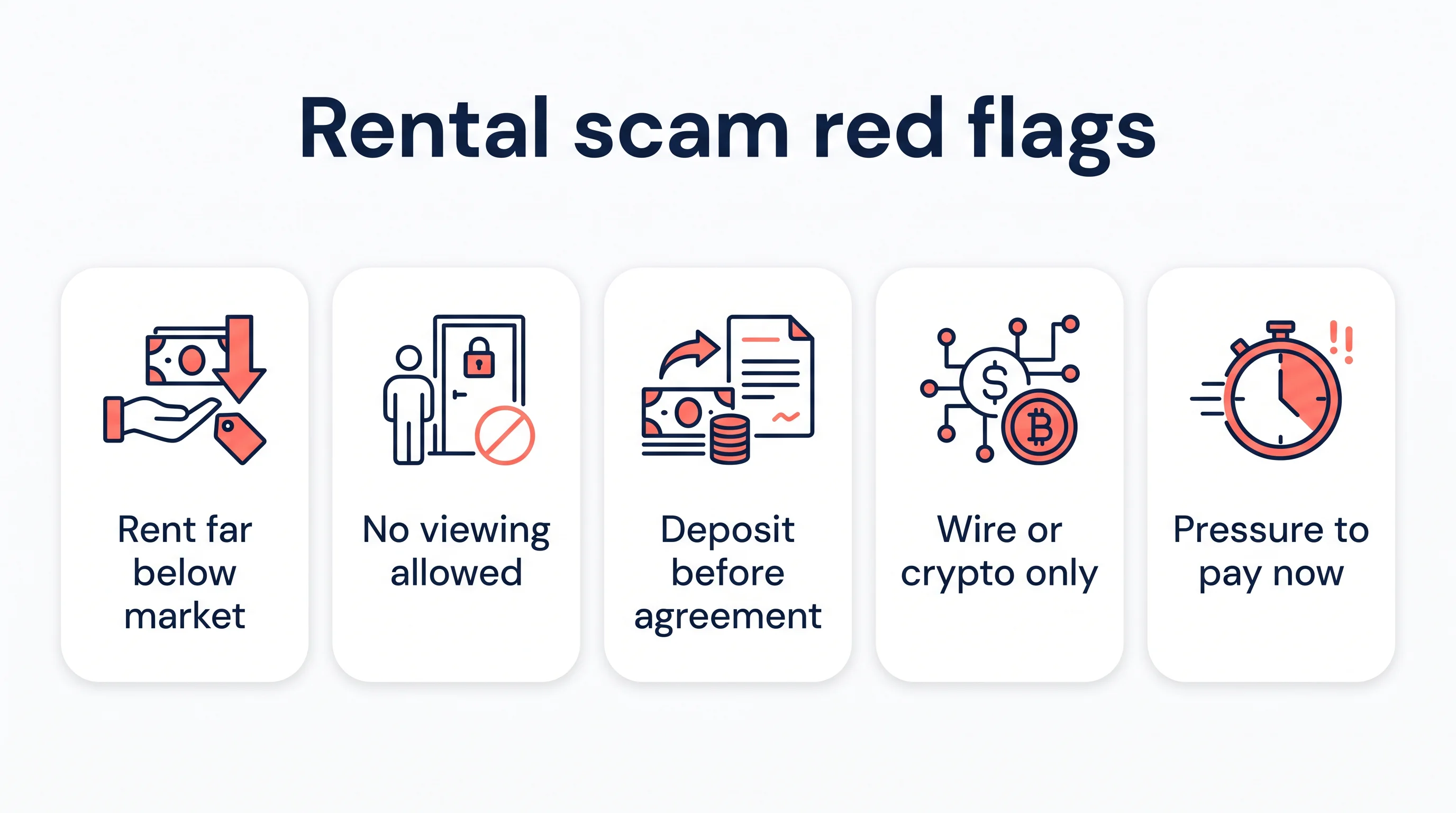
The pattern renters are told to watch for:
- Rent well below similar units nearby.
- A "landlord" who cannot or will not show the unit in person.
- A deposit, "holding fee" or first month's rent requested before a viewing or a signed agreement.
- Payment by wire transfer, cryptocurrency or another method that is hard to trace.
- Pressure to pay today before "other applicants" do.
How can BC landlords protect their listings from being copied?
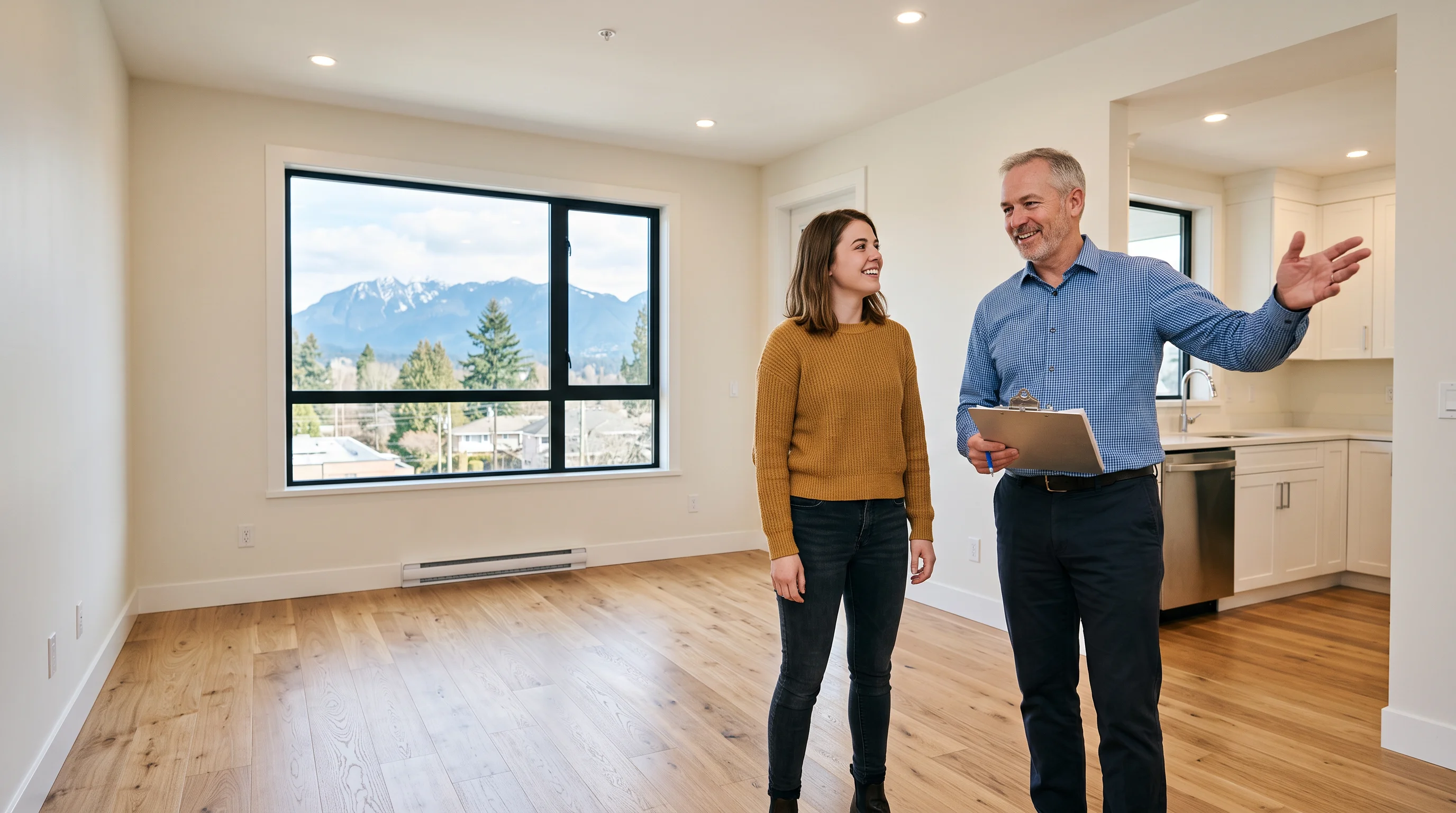
The best defence is a listing a scammer cannot imitate convincingly: in-person showings, a consistent identity, and a clear statement of how you take money. None of these is a legal requirement; they are practical steps that make a copied ad easier for renters to see through.
- Say it in the ad. "We show every unit in person and never take money before a viewing and a signed tenancy agreement." A renter who later sees a copy asking for an e-transfer has a reason to stop.
- Show in person, or through your agent. Nanaimo RCMP's advice to renters, as reported, is never to send money before viewing the property in person. Make that easy for them.
- Use one name and one contact. Use the same legal name on the ad, at the showing and on the agreement, matching what s.13(2)(b) requires the agreement to state.
- Mark your photos. A small watermark with your name or the street does not stop copying, but it makes a reused photo under another "landlord" obviously wrong.
- Tell the neighbours and building staff the unit is listed, and by whom, so a renter who knocks on the door gets a straight answer.
- Take the ad down as soon as the unit is rented. Old listings are the easiest to copy.
How do you find and take down a copied rental listing?

Search for your own unit the way a renter would: by the street address, by the neighbourhood and price, and by your photos. Nanaimo RCMP's advice to renters, as reported, is to search the address for duplicate listings, and a landlord can do the same check first.
If you find a copy:
- Screenshot it, with the date, the account name and any contact details.
- Report it to the platform through its fraud or report-listing button, saying you are the owner or authorised manager.
- Report it to your local police and to the Canadian Anti-Fraud Centre.
- Add a line to your own ad warning that a copy is circulating and naming the only way you can be contacted.
Which BC tenancy rules make a fake listing easier to spot?
The Residential Tenancy Act sets fixed rules on fees, deposits and paperwork that a scammer usually breaks, so a landlord who follows them visibly gives renters a clear test. The key sections of the RTA:
| BC rule | What a real landlord does | What a scam often does |
|---|---|---|
| No charge for accepting or processing an application, checking suitability or accepting a tenant (s.15) | Takes applications free | Asks for an "application" or "processing" fee |
| A security deposit only when the landlord and tenant enter into the tenancy agreement (s.20(a)), and only one (s.20(b)) | Collects the deposit with the signed agreement | Wants a deposit to "hold" a unit nobody has seen |
| Security deposit and pet damage deposit each capped at half of one month's rent (s.19(1)) | Asks for half a month or less | Asks for a full month or more up front |
| A written agreement with the landlord's correct legal name and address for service and phone number (s.13(1), (2)(b), (e)) | Signs a written agreement and gives a copy within 21 days (s.13(3)) | Sends an agreement with no verifiable landlord, or none at all |
| A move-in condition inspection with the tenant and a written report (s.23(1), (4)) | Walks the unit with the tenant on move-in day | Promises to mail the keys instead |
A landlord who takes more than the half-month cap can have it deducted from rent by the tenant (s.19(2)). For the details, see the half-month cap on BC deposits, our guide to the BC Residential Tenancy Agreement (RTB-1) and the rules for move-in and move-out condition inspections.
Where do you report a rental scam in BC?
Report a BC rental scam to your local police and to the Canadian Anti-Fraud Centre, whether you are the renter who paid or the landlord whose listing was copied. The Centre takes reports online at reportcyberandfraud.canada.ca, anonymously if you prefer, or by phone at 1-888-495-8501, Monday to Friday, 10 a.m. to 4:45 p.m. Eastern time, and recommends reporting whether or not you lost money.
A renter who sent money should also contact their bank straight away, and report the listing to the site where it appeared. Keep every message, screenshot and payment record.
More BC guides are in the BC Landlord Resource Center and the BC Tenant Resource Center. For how the same problem plays out in Ontario, see rental listing scams in Ontario.
Frequently asked questions
Can a BC landlord charge a fee to hold a unit?
A landlord must not charge for accepting or processing an application or for accepting someone as a tenant (RTA s.15), and a security deposit can only be required when the tenancy agreement is entered into (s.20(a)). A request for money to "hold" a unit before any agreement is a strong warning sign.
How much deposit can a BC landlord ask for?
No more than half of one month's rent for the security deposit, and no more than half of one month's rent for a pet damage deposit (s.19(1)). A landlord can take only one of each per tenancy agreement (s.20(b), (d)).
Someone copied my listing. Am I liable to the people who paid them?
The RTA governs tenancies between a landlord and a tenant; a person who paid a stranger never had a tenancy with you. Report the copy to the police, the Anti-Fraud Centre and the platform, and keep your records.
Should landlords stop advertising online?
No. Online ads are how most renters search. A clear statement of how you show units and take money, plus a weekly search for copies, does more than avoiding the sites renters use.
What should a renter ask a BC landlord before paying anything?
Ask to see the unit in person, ask for the landlord's legal name and address for service, and ask for the written tenancy agreement before paying the deposit. A real landlord can answer all three.
A copied listing costs the renter money and costs the landlord trust. Showing in person, stating plainly how you take payment and following the RTA's fee and deposit rules gives every honest landlord a listing that is hard to fake.
Rent with paperwork a scammer cannot fake
Free BC landlord forms, from the tenancy agreement to the condition inspection report.
Free • No signup required