In BC, a brokerage that provides rental property management must prepare and keep a record of the tenants at each property and the security, pet damage and other deposits each tenant paid (Real Estate Services Rules s.87(2)). Deposit tracking in Tenon10 puts every deposit, its amount, its date and its return deadline in one place across your portfolio.
This how-to is for BC property managers. It covers what to gather, how to set deposits up, and how to keep the record ready for the 15-day return at the end of each tenancy (Residential Tenancy Act s.38(1)).
At a glance
- The record is required: tenants and their deposits, per property (Rules s.87(2)).
- Keep it 7 years after the tenancy or your management agreement ends, whichever is earlier (s.92(2)).
- Each deposit needs its own date, because interest runs from the day it was paid (Regulation s.4).
- Tenon10 tracks deposits and their return dates, alongside the leases and inspection reports.
BC Portfolio Deposit Tracking Checklist
Keep the deposit record Real Estate Services Rules s.87(2) requires, and return every deposit on time.
Get Free PDF →What do you need before you start?
For each tenancy, you need the deposit amounts, the date each was paid, the rent at the start of the tenancy and the move-in inspection report. In BC, the security deposit and the pet damage deposit are each capped at half of one month's rent (RTA s.19(1)), so the starting rent lets you check every figure.
- The signed tenancy agreement, which states each deposit and the date paid or due (RTA s.13(2)(f)(vii)).
- Receipts or bank records for each deposit.
- The move-in condition inspection report.
- For a portfolio you are taking over: the former brokerage's tenant and deposit records, which it must send on request (Rules s.87(3)-(4)).
How do you set up deposit tracking in Tenon10?
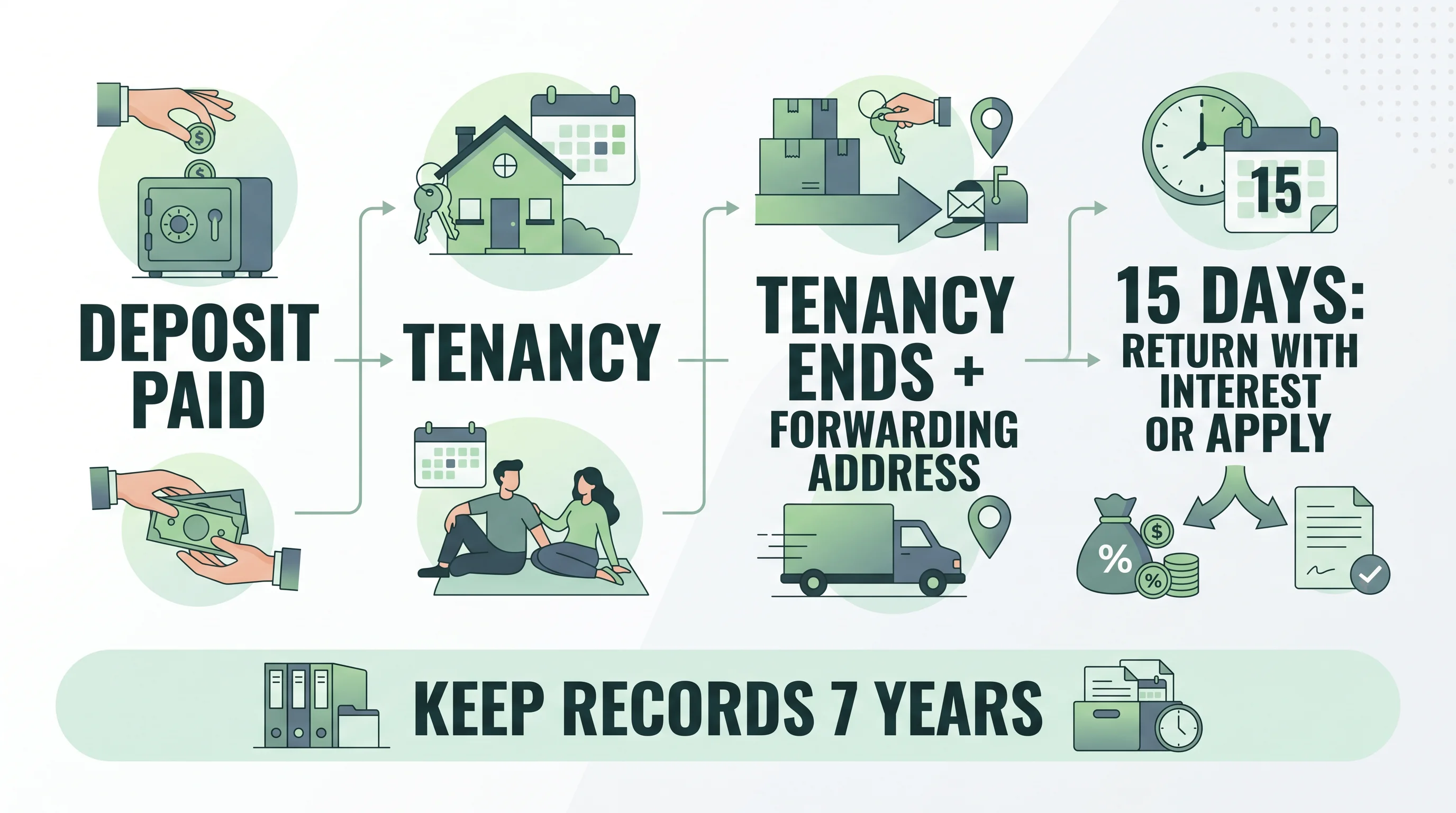
Record each deposit against its lease, with its own amount and payment date, and Tenon10 tracks it through to its return date. Work property by property so nothing is missed.
- Create or open the lease. Tenon10 creates the BC tenancy agreement, so a new tenancy starts with the deposits already stated in it.
- Enter each deposit separately. Security and pet damage deposits are separate amounts, often paid on different dates.
- Attach the move-in inspection. Run the move-in inspection report in Tenon10, or keep the signed report with the tenancy.
- Check the totals. Compare the sum of deposits you hold with your deposit trust account balance.
What happens when a tenancy ends?
In BC, you have 15 days after the later of the end of the tenancy and the day you receive the tenant's forwarding address in writing to repay the deposits with interest or apply for dispute resolution (RTA s.38(1)). Tenon10 tracks that return date, so the deadline is in front of you.
Before you return anything, run the move-out inspection, calculate interest on the full deposit using the RTB's published rates (2026 is 0%; 2025 was 0.95%), then deduct only what the tenant agrees to in writing. Our guide to the 15-day rule covers each option, and when double the deposit is owed explains the cost of missing it.
Troubleshooting
- Deposit total doesn't match the bank. Look for a deposit recorded without its receipt, or one returned but not marked returned.
- Inherited a unit with no deposit date. Ask the former brokerage or owner; deposit obligations pass to the new landlord (RTB Policy Guideline 17).
- A deposit over half a month's rent. It breaches RTA s.19(1), and the tenant may deduct the overpayment from rent (s.19(2)).
Managing the owners' money as well? See Trust Ledgers in Tenon10 for BC Managers.
Frequently asked questions
How long must a BC brokerage keep deposit records?
At least 7 years after the earlier of the end of the tenancy and the end of the rental property management agreement, unless the superintendent authorizes a shorter period (Rules s.92(2)).
Does Tenon10 calculate deposit interest?
Tenon10 tracks each deposit and its return date. Work out the interest from the RTB's published rates for each year the deposit was held; our guide to BC security and pet damage deposits covers the return rules.
Do pet damage deposits need separate tracking?
Yes. A pet damage deposit may be paid later than the security deposit, and when kept it may be used only for pet damage unless the tenant agrees otherwise (RTA s.38(7)).
What if I take over a portfolio mid-tenancy?
Ask the former brokerage for its tenant and deposit records; it must provide them by the later of 2 weeks after the request and 4 weeks after its services end (Rules s.87(4)).
BC Portfolio Deposit Tracking Checklist
Keep the deposit record Real Estate Services Rules s.87(2) requires, and return every deposit on time.
Get Free PDF →Conclusion
A BC deposit record has three jobs: satisfy Rules s.87, tie to your deposit trust account, and get each deposit back to the tenant on time. Set up each deposit with its own date, keep the inspection reports beside it, and let the return dates come to you.
Every deposit, every return date, one place
Tenon10 creates BC tenancy agreements, runs inspection reports, tracks deposits and their return dates, and keeps trust ledgers for BC managers.
Free BC form • Built for Canadian landlords and property managers