Overview
Renting out property in Richmond BC starts with one question: is the stay shorter than 90 days? The City of Richmond treats any paid overnight stay under 90 consecutive days as a short-term rental, which needs a city business licence tied to the operator's own home. Longer tenancies fall under BC's Residential Tenancy Act.
Key Points
What counts as a short-term rental in Richmond?
The city's short-term rentals page defines it as renting part of a dwelling for overnight stays of less than 90 consecutive days for payment. Operators must register with the city, and there are two licence options, each renewed annually.
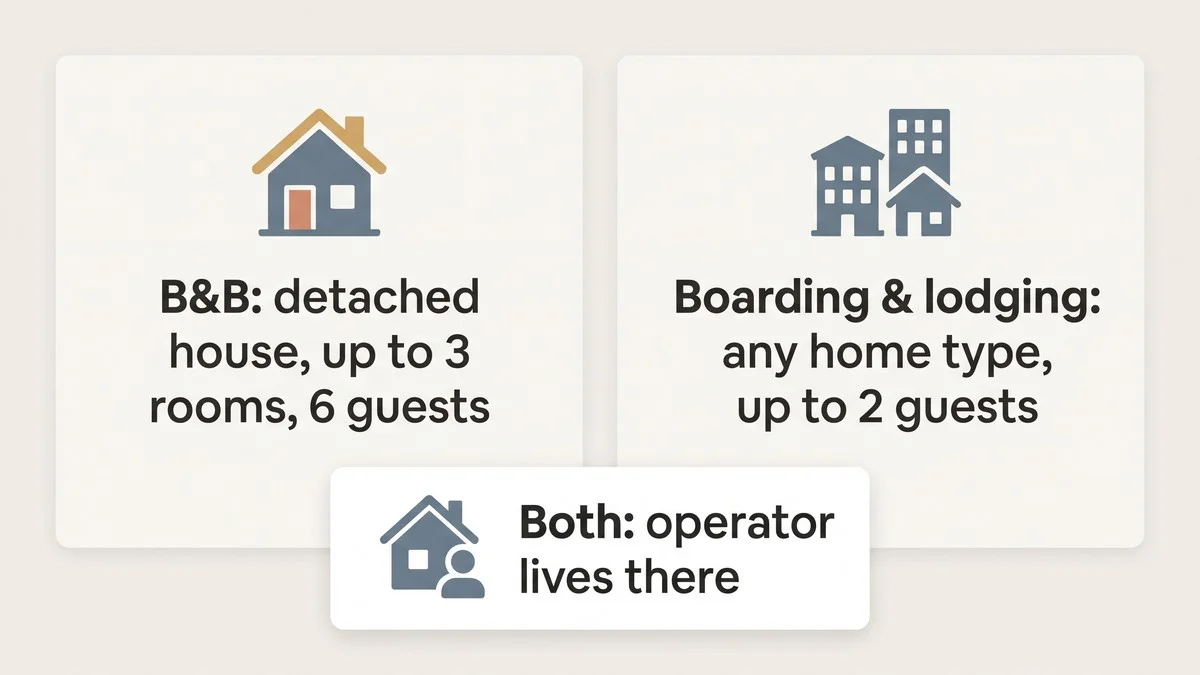
| Bed and Breakfast licence | Boarding and Lodging licence | |
|---|---|---|
| Home type | Single detached house only | House, duplex, apartment or townhouse |
| Operator | Registered owner or immediate family, living there as principal residence | Registered owner (or a director of a corporate owner) or someone with the owner's written permission, living in the home |
| Guests | Up to 3 rooms and 6 guests (2 per room) | Up to 2 guests at a time |
| Other conditions | Notify neighbours; 500 m from existing B&Bs | In a strata, the council's written permission; no separate cooking in guest rooms; not in a secondary suite, coach house or granny flat; cannot also hold a B&B licence |
What Richmond's short-term rental guide adds
The city's Short-term Residential Rentals Guide fills in the details the summary page leaves out:
- The host must live there. For both licences the owner or operator must be living in the home as the host, and renting the entire home or unit for less than 90 days is not allowed under any circumstance.
- Suites rule out a B&B. A B&B licence is not available for a home with a secondary suite, granny flat or coach house, or for rooms with their own cooking facilities.
- Clean files first. No licence is issued while the property has active permits or non-compliant files. The governing bylaws are Business Licence Bylaw 7360, Business Regulation Bylaw 7538 and Richmond Zoning Bylaw 8500; the fee is set in Consolidated Fees Bylaw 8636.
- Show the licence number on every advertisement, listing and platform.
- Enforcement is active. The city investigates complaints and reviews online listings, and fines range up to a maximum of $50,000 depending on the bylaw and the severity of the violation.
What to have ready when you apply
| Bed and Breakfast application | Boarding and Lodging application |
|---|---|
| ID proving principal residence (or immediate family residing there), plus the owner's written permission | ID proving you are the registered owner, a director of a corporate owner, or have the owner's written permission |
| Floor plans, a fire evacuation plan for each guest room, a landscaping and site plan, and a parking plan with a spot per guest | A sample guest registration form under the Hotel Keepers Act |
| A sample neighbour notification letter, a sample guest registration form, and any sign application | Any sign application |
Application packages are available at City Hall or online, and the Business Licence Department is at 604-276-4328.
Do provincial short-term rental rules apply too?
Yes. Richmond is on the province's list of communities where the principal residence requirement applies, and hosts must register with the provincial registry. See BC's principal residence rule and the host registry.
Suites and small-scale multi-unit housing in Richmond

The city's provincial housing legislation page explains how Bill 44 changed what can be built and rented. Richmond already allowed at least one secondary suite or accessory dwelling, such as a coach house or granny flat, per lot. On almost 27,000 lots previously zoned for single-family or duplex use, the province now requires the city to allow:
- at least three units on lots of 280 m² (3,014 sq ft) or less;
- at least four units on larger lots; and
- up to six units on larger lots within 400 m of a bus stop with service every 15 minutes or better.
These Bill 44 minimums do not apply inside a Transit-Oriented Area, and the city applied for an extension for Steveston while its sanitary sewer replacement is completed. Each new unit is another potential long-term rental governed by the RTA, not the short-term rules above.
What BC rules apply to a long-term tenancy?
- Section 13 of the Act requires a written tenancy agreement; read the RTB-1 guide.
- Collect at most 50% of one month's rent as a security deposit (section 19 of the Act).
- Section 42 allows one increase a year, served on the approved form three whole months ahead and capped at 2.2% in 2027.
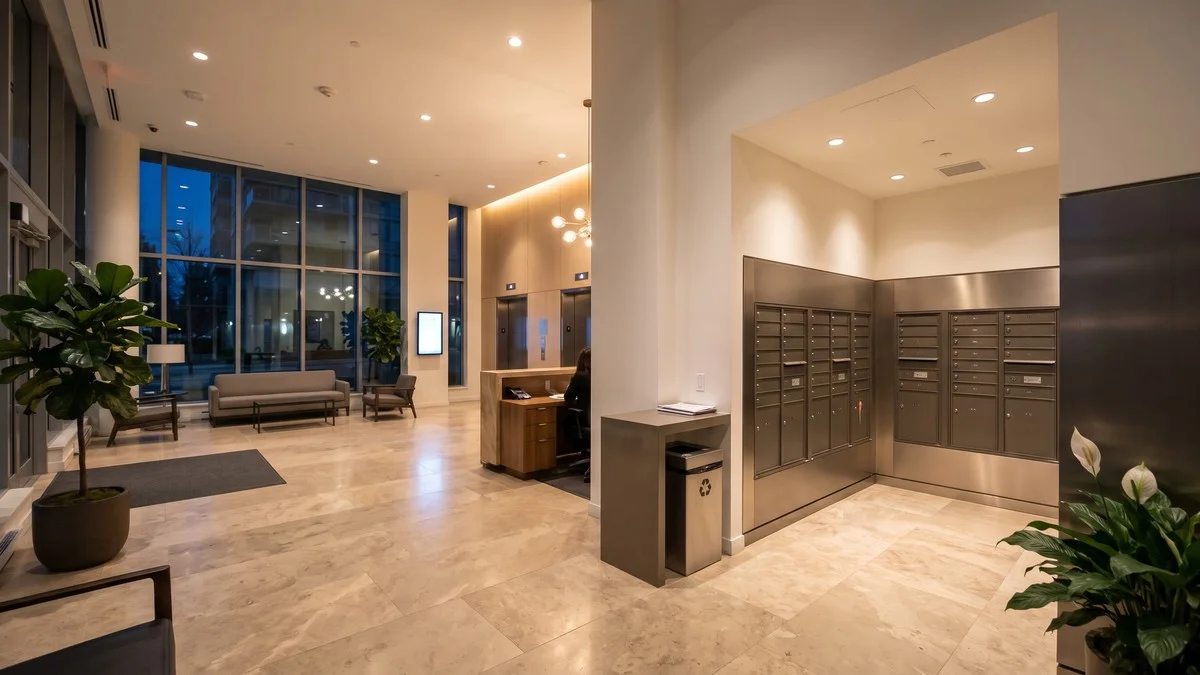
- Many Richmond rentals are condos: hand the tenant the strata's bylaws, rules and Form K before they sign, as section 146 of the Strata Property Act requires; read renting out a strata unit.
- Inspect the unit with the tenant at move-in, offering at least two times, and give them the signed report; see condition inspections in BC.
The strata unit checklist
Under the Strata Property Act, Part 8, a strata corporation cannot screen tenants, require their approval or otherwise restrict renting a strata lot (s.141). The landlord's duties under section 146 are specific:
- Before renting, give the prospective tenant the current bylaws and rules and the Notice of Tenant's Responsibilities (Form K).
- Within two weeks of renting, give the strata corporation a copy of that notice signed by the tenant.
- If either step is missed, the tenant is still bound by the bylaws, but may end the tenancy without penalty within 90 days of learning of the failure, and the landlord must pay their reasonable moving expenses up to one month's rent.
Action Steps
- Decide whether stays will be under or over 90 days.
- For short stays, check which Richmond licence your home qualifies for, then register provincially.
- For long-term tenants, use the RTB-1, keep the deposit within the cap and diarize the first allowed rent increase.
Frequently asked questions
Can I list my whole Richmond condo on a short-term platform while I travel?
No. The city's guide says renting the entire residence or unit for less than 90 days is not allowed under any circumstance; the host must be living in the home.
Where can my Richmond tenants get help?
The city's resources for tenants page points renters to the Residential Tenancy Branch and the Tenant Resource and Advisory Centre (TRAC), the BC Rent Bank for short-term low- or no-interest loans, and SAFER rent supplements for lower-income renters aged 60 and over.
Who do neighbours call about a problem short-term rental?
Richmond's bylaw complaint line, 604-276-4345, or [email protected].
Leasing a Richmond home or condo?
Prepare the RTB-1 agreement your tenant will sign, step by step.
Free • No signup required