Explore the library

Narrow 189 published guides by topic, province, who you are and the kind of help you need. Every filter shows how many guides it leaves.

Pick a province

Shaded tiles have guides written for that province.

20 of 189 guides

Showing for property managers matching “Ontario landlord guide”, newest first.

Results

  • Rent & Payments
    ONArticle

    The N1 Window for 2027 Opens October 3: Serve-Date Math for the 1.9% Year

    Ontario's 2027 rent increase guideline is 1.9% — and the first day a landlord can serve an N1 for a January 1, 2027 increase is October 3, 2026, exactly 90 days out. This is the timing piece: the serve-date math for any 2027 effective date, the 12-month rule check, what the effective date controls (including which year

    15 min read
  • Rights & Legal
    ONArticle

    LTB Orders Are Now Public: What Ontario's Open Data Release Means for Landlords

    As of July 24, 2026, the LTB's final orders are public data: every non-confidential order from January through May 2026 is live on Ontario's Open Data Catalogue, with orders back to 2021 following in phases and new ones publishing monthly — on a disclosed 2-to-3-month lag. This guide covers what's in the release and wh

    15 min read
  • Rights & Legal
    ONArticle

    The LTB Process, End to End: From First Notice to Final Enforcement

    Every LTB journey follows the same road: a notice, an application on the Tribunals Ontario Portal, a queue, a fork at mediation, a hearing, an order — and sometimes the Sheriff. This pillar guide maps the entire process end to end for landlords, tenants, and property managers: which notice starts which application, wha

    16 min read
  • Rights & Legal
    ONArticle

    The AGI Process in Ontario: When Landlords Can Raise Rent Above the Guideline

    Ontario's rent guideline isn't always the ceiling. Through an Above-Guideline Increase, landlords can recover extraordinary tax hikes, major capital work, and security costs — but only on three statutory grounds, under strict caps, with a hearing at the end and an expiry date built in. Here's the full process: grounds,

    11 min read
  • Rights & Legal
    ONArticle

    The N12 120-Day Path: How Landlords Can Skip the Compensation (and the Trap to Avoid)

    Bill 60 gives Ontario landlords a new choice on own-use evictions: serve the N12 the fast way and pay a month's compensation, or give at least 120 days' notice and pay nothing. On a $3,000 unit, that timing choice is worth $3,000. This guide breaks down exactly how the new 120-day path works under RTA s.48.1(2), when i

    13 min read
  • Taxes & Deductions
    CanadaArticle

    CCA for Ontario Landlords: How Rental Depreciation Works (and When Not to Claim It)

    Capital Cost Allowance lets Canadian landlords deduct a slice of their building's cost each year — but it's the most misunderstood line on a rental tax return. It's optional, it can't create a loss, and every dollar you claim can come back to bite you as fully taxed "recapture" when you sell. This guide explains how CC

    10 min read
  • Maintenance & Repairs
    ONArticle

    Heat Bylaws in Toronto, Hamilton, and Ottawa: The Minimum Temperature Rules by City

    There's no single "Ontario heating law" — the minimum temperature your landlord must maintain, the dates it applies, and the fines all come from your city's bylaw. Toronto requires 21°C (Oct 1–May 15); Ottawa requires 20°C by day and 16.67°C overnight; Hamilton requires 20°C (Sept 15–May 15). This guide lays out the ex

    10 min read
  • Maintenance & Repairs
    ONArticle

    Mold in an Ontario Rental: Who's Responsible, and How to Get It Fixed

    There's no "mold law" in Ontario — but there doesn't need to be. Mold caused by a building problem (a leak, bad ventilation, water getting in) is the landlord's to fix under the same duty to keep a unit in a good state of repair. This guide draws the responsibility line clearly: what the landlord must remediate (and pa

    10 min read
  • Maintenance & Repairs
    ONArticle

    Maintenance Standards in Ontario: The Landlord's Duty to Repair (and How Tenants Enforce It)

    In Ontario, keeping a rental in good repair isn't optional or negotiable — it's a legal duty that a landlord can't sign away, and that applies even if the tenant knew about the problem before moving in. This is the complete guide to maintenance standards under the RTA: what "good state of repair and fit for habitation"

    11 min read
  • Screening & Applications
    CanadaArticle

    Income Verification for Self-Employed Tenants: A Landlord's Guide

    No pay stub doesn't mean no proof. Self-employed applicants — freelancers, contractors, gig workers, small-business owners — are a fast-growing share of Ontario renters, and screening them out for lacking a T4 is both bad business and a legal risk. This guide shows landlords which documents actually verify self-employe

    10 min read
  • Screening & Applications
    ONArticle

    How to Screen Tenants in Ontario: A Landlord's Complete Guide

    Screening the right tenant is the single best way to avoid problems later — but in Ontario you have to do it within strict Human Rights Code limits. This complete guide walks landlords and property managers through a legal, effective screening process: applications, credit and reference checks, income verification, wha

    13 min read
  • Rights & Legal
    ONArticle

    The N13 Notice in Ontario: Demolition, Conversion, and Major Repairs Explained

    The N13 is the notice an Ontario landlord uses to end a tenancy to demolish, convert, or do major repairs that need the unit empty. This guide walks through the three grounds, the 120-day notice rules, the compensation and right-to-return, and exactly how the process works — for both landlords serving one and tenants w

    12 min read
  • Rights & Legal
    ONArticle

    Ontario Renovictions: A Complete Guide for Landlords and Tenants

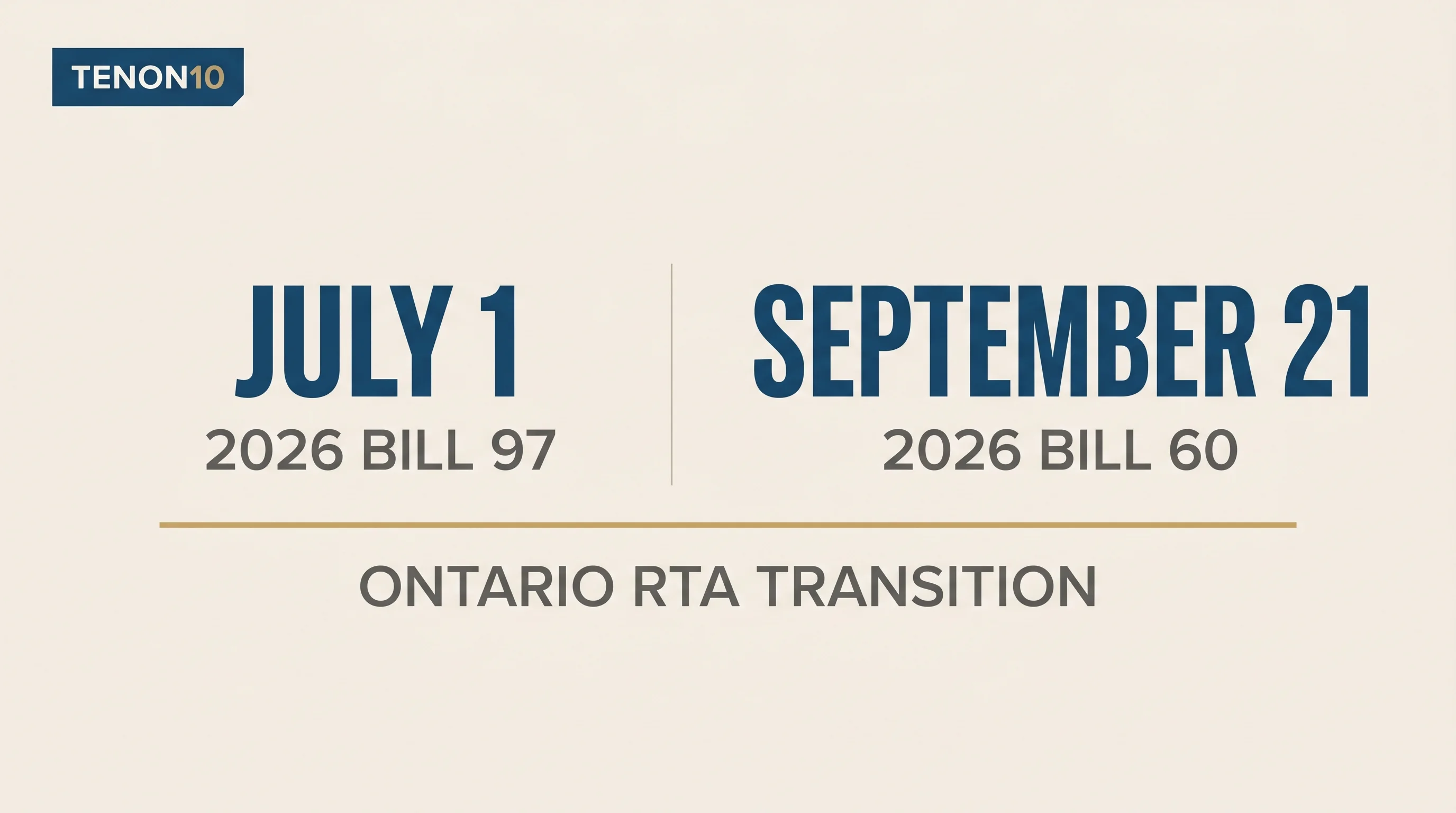
    "Renoviction" is when a landlord uses renovations to end a tenancy — sometimes legitimately, sometimes not. This complete guide explains how the N13 process actually works, the compensation and right-to-return rules, the new licensing crackdown under Bill 60/97, and how both landlords and tenants can stay on the right

    13 min read
  • Rights & Legal
    ONArticle

    N7 Notice in Ontario: A Landlord's Guide to Ending a Tenancy for Serious Problems

    The N7 is Ontario's notice for ending a tenancy when a tenant causes serious problems — safety threats, wilful damage, or dangerous misuse. Here's when landlords can use it, the strict 10-day timeline, why it can't be voided, and the mistakes that get applications thrown out at the LTB.

    13 min read
  • Rights & Legal
    ONArticle

    N5 Notices in Ontario: A Complete Guide to Addressing Disturbances

    The N5 is Ontario's most-used notice for tenancy issues that aren't about money — interference, damage, or overcrowding. This 2026 guide explains the unique two-N5 rule, what tenants can do to void the notice, and what landlords must document to make an N5 stand up at the LTB.

    18 min read
  • Rights & Legal
    ONArticle

    L1 vs L2 LTB Applications: Understanding the Difference

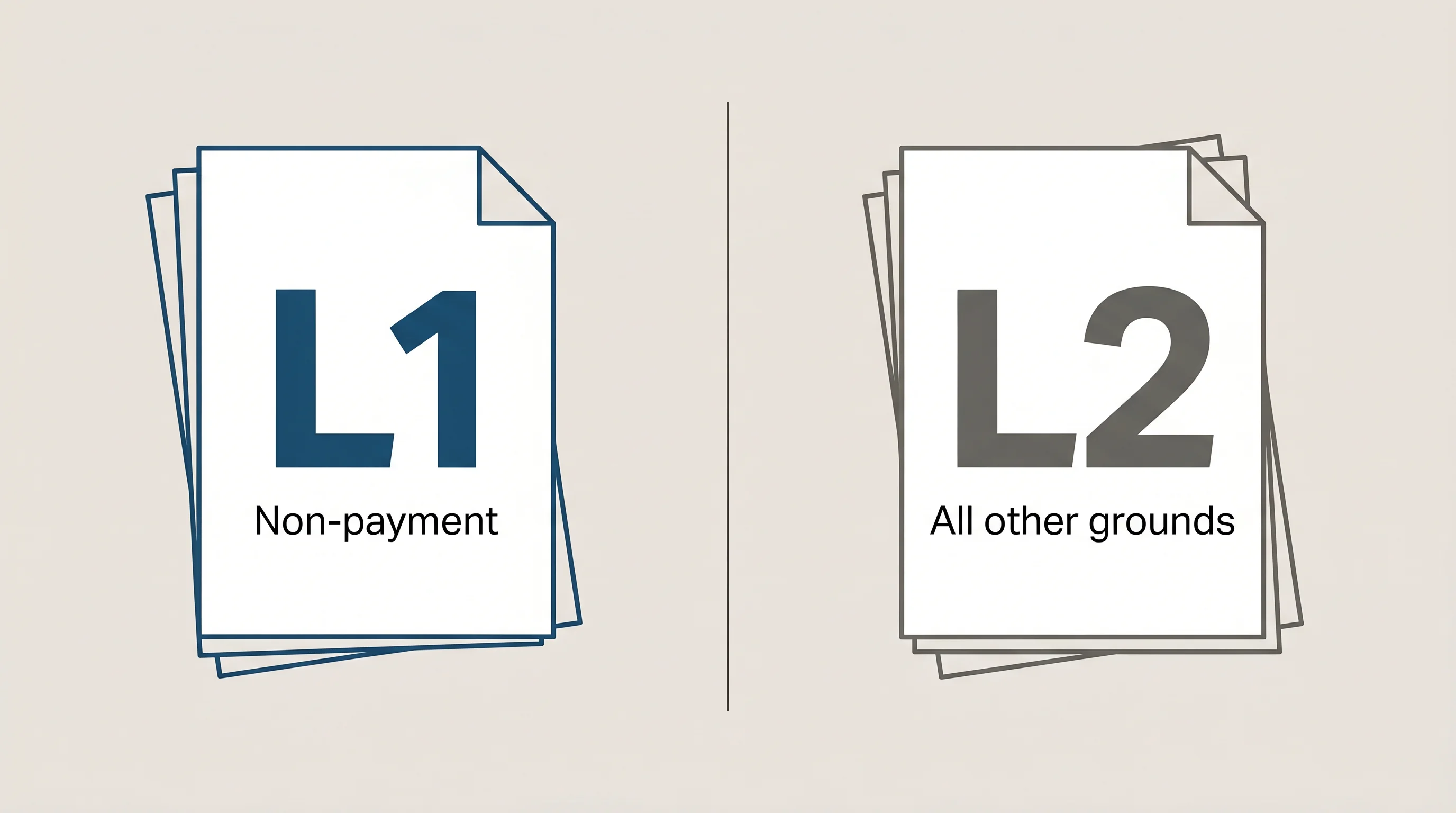
    Confused about whether to file an L1 or L2 at the Ontario LTB? This 2026 guide breaks down when each application applies, what notices they follow, how hearings differ, and what documentation landlords need to win.

    16 min read
  • Rights & Legal
    ONArticle

    Becoming a Landlord in Ontario: The Complete First-Timer's Guide

    Thinking about renting out your property in Ontario? A complete 2026 guide to becoming a landlord — from your first legal obligations under the RTA to setting rent, screening tenants, collecting rent, and avoiding the mistakes that catch first-timers off guard.

    22 min read
  • Rights & Legal
    ONArticle

    Ontario N12 Notices: A Complete Guide to Own-Use Tenancy Endings

    A complete 2026 guide to Ontario N12 notices. Understand when own-use ends a tenancy, the compensation rules under Bill 60, the good faith requirement, and how the process works for landlords, property managers, and tenants receiving an N12.

    17 min read
  • Rights & Legal
    ONArticle

    Ontario Rent Increases 2026: The Complete N1 Guide

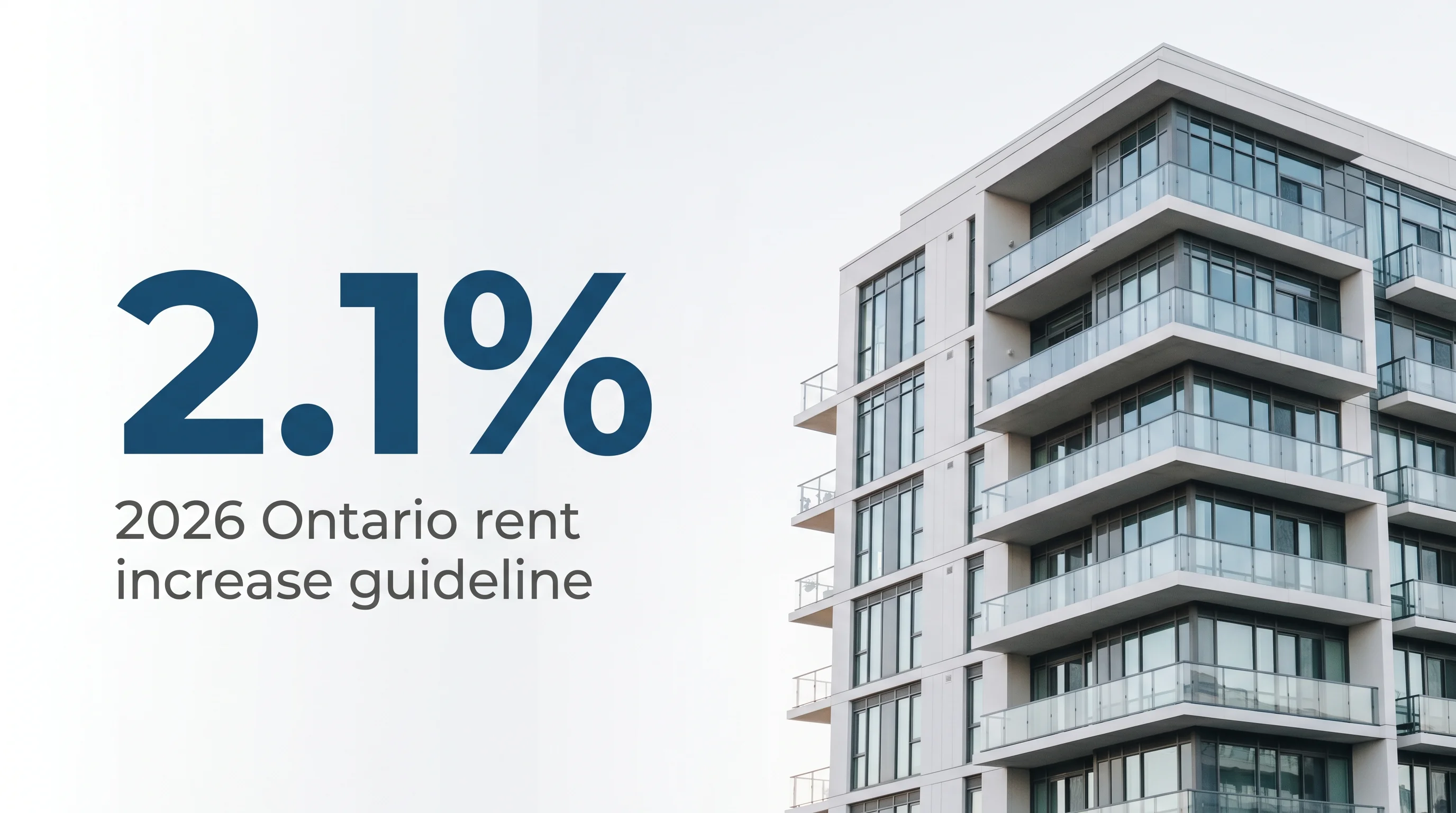
    A complete 2026 guide to rent increases in Ontario. Understand the 2.1% provincial guideline, the 90-day N1 notice requirement, when rent increases apply, what voids them, and how the process works for landlords, property managers, and tenants alike.

    16 min read