

Two years ago, students in Waterloo signed leases sight-unseen to beat the September queue. Today, landlords near the same campuses are advertising one to three months of free rent. Ottawa cut Ontario's study-permit allocation about 42% this year — the third straight annual cut — and it is reshaping every university town in the province.
That makes student rentals one of the most interesting asset classes in Ontario right now, and one of the easiest to get wrong. Student rentals are their own business: a different tenant, a different lease (per-room, joint-and-several, or a hybrid), a different regulatory overlay of licensing hotspots, and now the sharpest exposure to a single federal policy. But the softening is uneven, and that unevenness is the whole opportunity — the permit cap hit colleges far harder than universities, so a building's resilience depends on which institution, and which permit stream, it actually serves. This guide runs the three markets an Ontario investor actually shortlists — Waterloo, London, and Kingston — with the neighbourhoods, the per-room math, the licensing traps, and the one lesson that separates the winners. Figures are dated July 2026 and refreshed quarterly; this is market data, not investment advice.
The Student-Rental Underwriting & Licensing Checklist: Waterloo, London & Kingston
The step-by-step checklist that matches your building to the right permit stream, nails the licence class before you offer, and underwrites the summer — so your student rental cash-flows in 2026's tighter market.
Get Free PDF →Student Rentals Are Their Own Asset Class — And 2026 Is an Inflection
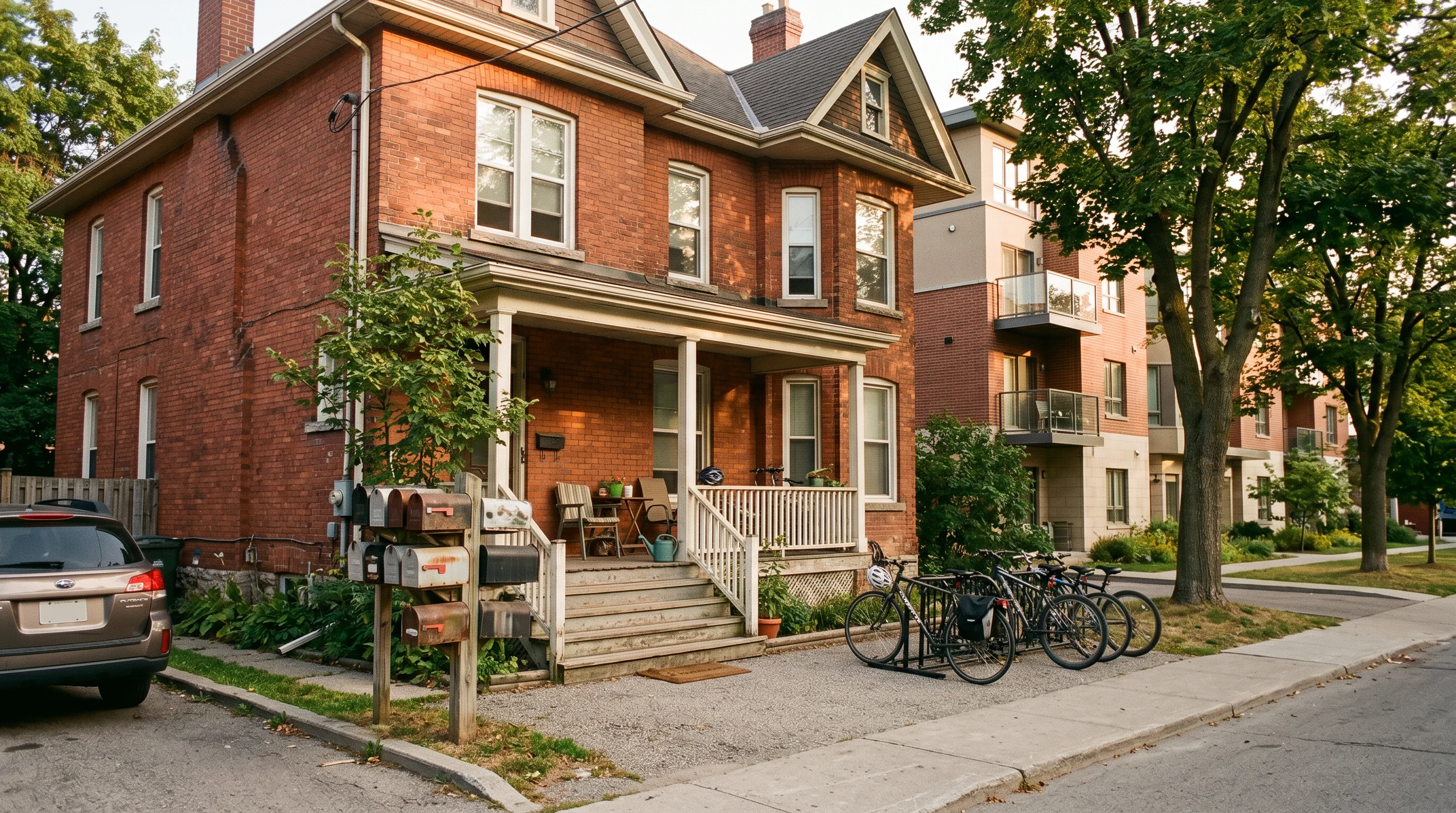
The appeal of a student rental is simple: rented by the room, one house can out-earn what a single family would pay for the whole unit. But everything else is different — the tenant turns over on an academic calendar, the lease can take one of three forms, and a layer of municipal licensing can decide whether your plan is even legal. We'll get to all three. First, the force reshaping the whole asset class.
The national study-permit cap is 408,000 for 2026 — down about 7% year-over-year and 16% below 2024. Ontario's share is roughly 70,074, a 42% cut from 2025 and the third straight annual reduction. This is the single biggest variable in every university town, and because federal immigration policy can shift quickly, you should verify the current numbers before you underwrite anything.
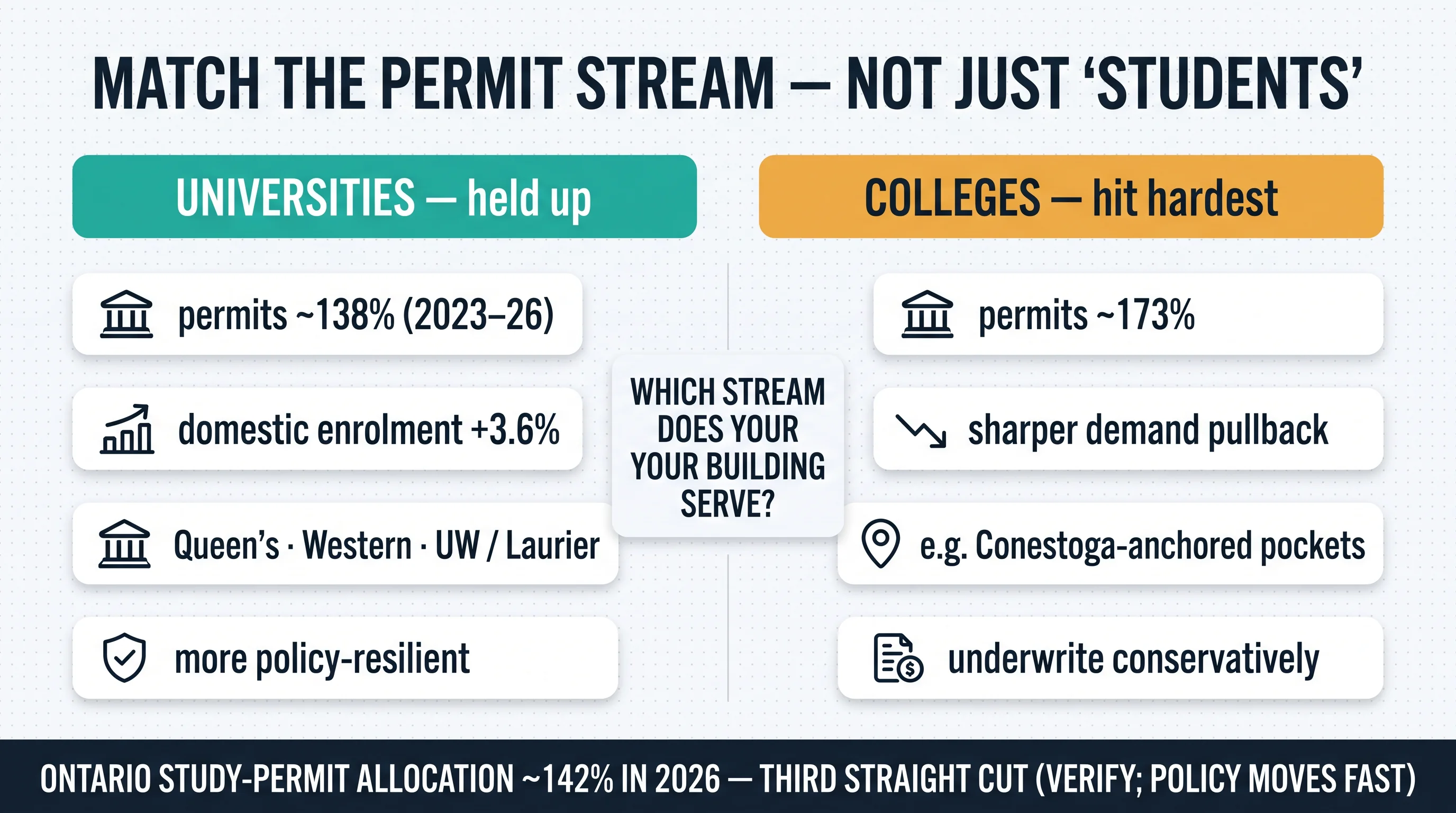
Here's the signature lesson, and it's the whole game: match the permit stream, not just "students." The cap didn't land evenly. College study permits fell about 73% from 2023-24 to 2025-26; university permits fell about 38%, and Ontario universities actually held, growing domestic enrolment 3.6% and largely offsetting the international decline. So a building anchored to a university — Queen's, Western, the University of Waterloo, or Laurier — is materially more policy-resilient than one anchored to a college. The smart question isn't "are student rentals softening." They are, everywhere. It's "which institution, and which permit stream, does this specific building serve?"
There's a tension running underneath all of this. Even as demand softens, a record 6,313 purpose-built student beds are set to deliver in Ontario in 2026 — about 2.5 times the prior decade's average — with more than 70,000 additional beds proposed. Supply is rising into softer demand. That's great news for tenants and a reason for discipline for investors: it's exactly the environment where the honest-cap thinking from our cheap-cities cash-flow guide earns its keep, and where the campus-matching lesson from our London neighbourhoods guide sharpens into permit-stream matching.
The Three Markets, Three Roles
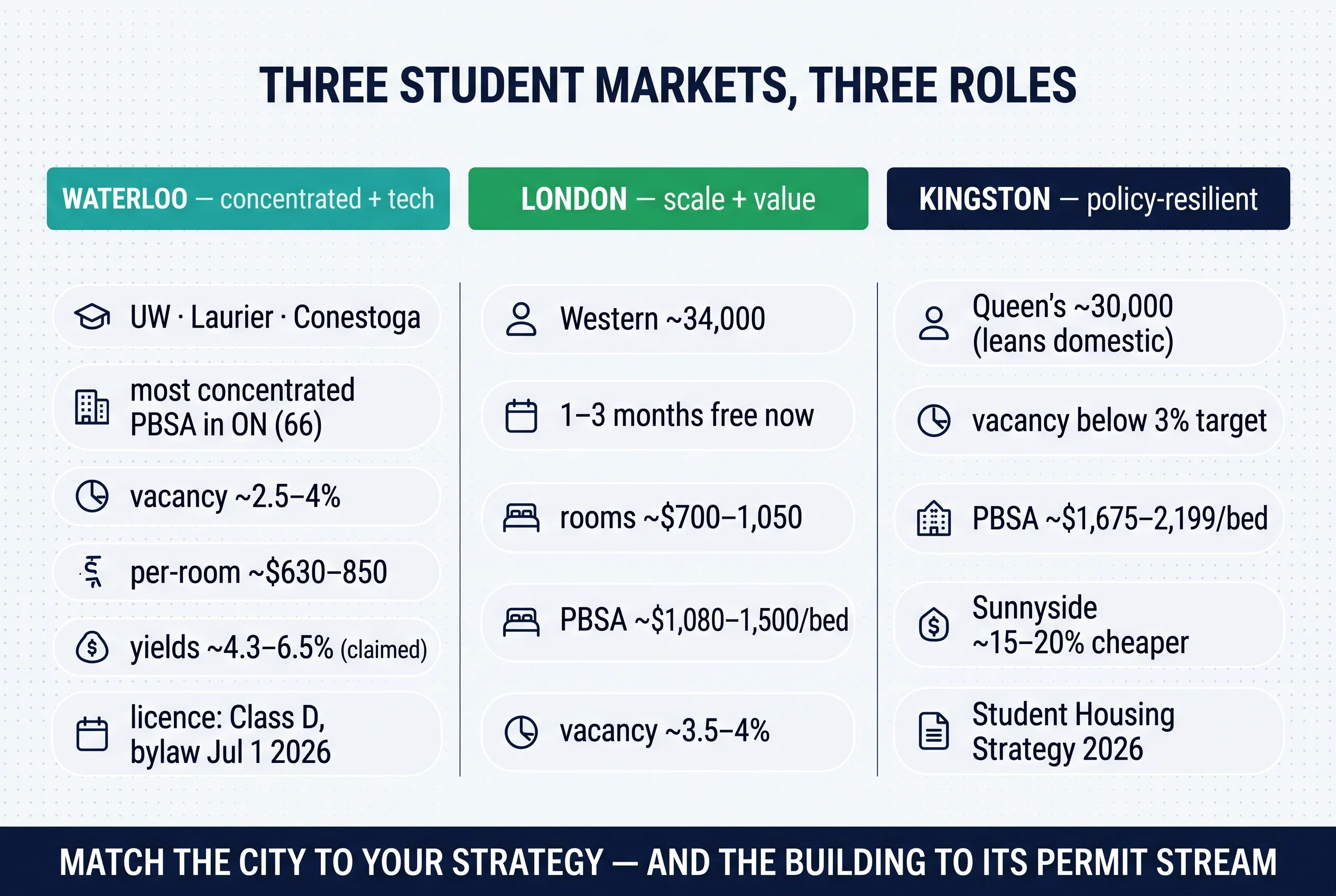
Waterloo — the concentrated, tech-backfilled market. Three institutions (the University of Waterloo, Wilfrid Laurier, and Conestoga College) make this the most concentrated purpose-built student market in the province, with 66 properties. Vacancy runs about 2.5–4% — it hit 3.6% in late 2024, the highest since 1993, but that's healthy and balanced, not a crisis. Per-room rents run roughly $630–850, though summer sublets on University Avenue and Phillip Street have collapsed to about $495–600. The structural edge: UW's co-op program fills units year-round, and a recovering tech sector backfills the professional segment downtown. The catch: the Conestoga (college) pocket carries the sharper permit-stream risk.
London — Western's scale, incentives live. Western University's roughly 34,000 students anchor the largest single-source demand of the three. Buildings near campus are already offering one to three months free, rooms run about $700–1,050, and purpose-built suites on Richmond Street run $1,080–1,500 per bed, with vacancy around 3.5–4%. Our London neighbourhoods guide is the deep-dive on Old North, Masonville, and the Western-versus-Fanshawe split — the same permit-stream logic at the neighbourhood level.
Kingston — the policy-resilient market. Queen's University's roughly 30,000 students are majority-from-away and less international-dependent, so demand held even as other markets softened — vacancy sits below the city's 3% target despite record building. The neighbourhoods sort cleanly: the University District (the walkable "Student Ghetto," 5–10 minutes to campus), Williamsville and Downtown (modern, purpose-built), and Sunnyside (about 15–20% cheaper, a slightly longer commute). Purpose-built beds run $1,675–2,199 furnished; older stock runs $1,400–2,300 for a one-bedroom. In February 2026 the city approved developing a formal Student Housing Strategy.
The Lease Model Is the Business — Per-Room vs Joint vs Hybrid
How you structure the lease decides your revenue, your turnover, and your legal obligations. There are three models, and experienced operators are deliberate about which one they run.
Per-room (individual leases) generates the highest total revenue, but you manage more leases, rooms can turn over every year, and vacancy and turnover costs rise with them. This is the standard student model — and in Ontario, renting rooms to unrelated tenants means individual leases and, in many municipalities, a lodging-house licence. Joint-and-several (one lease, all liable) is common in Kingston's University District, where a formed group rents a multi-bed unit one-student-to-one-bed and everyone is jointly responsible. It means less turnover and simpler management, but a lower total than the sum of room rates — and if one tenant leaves mid-year, the rest must still cover the rent.
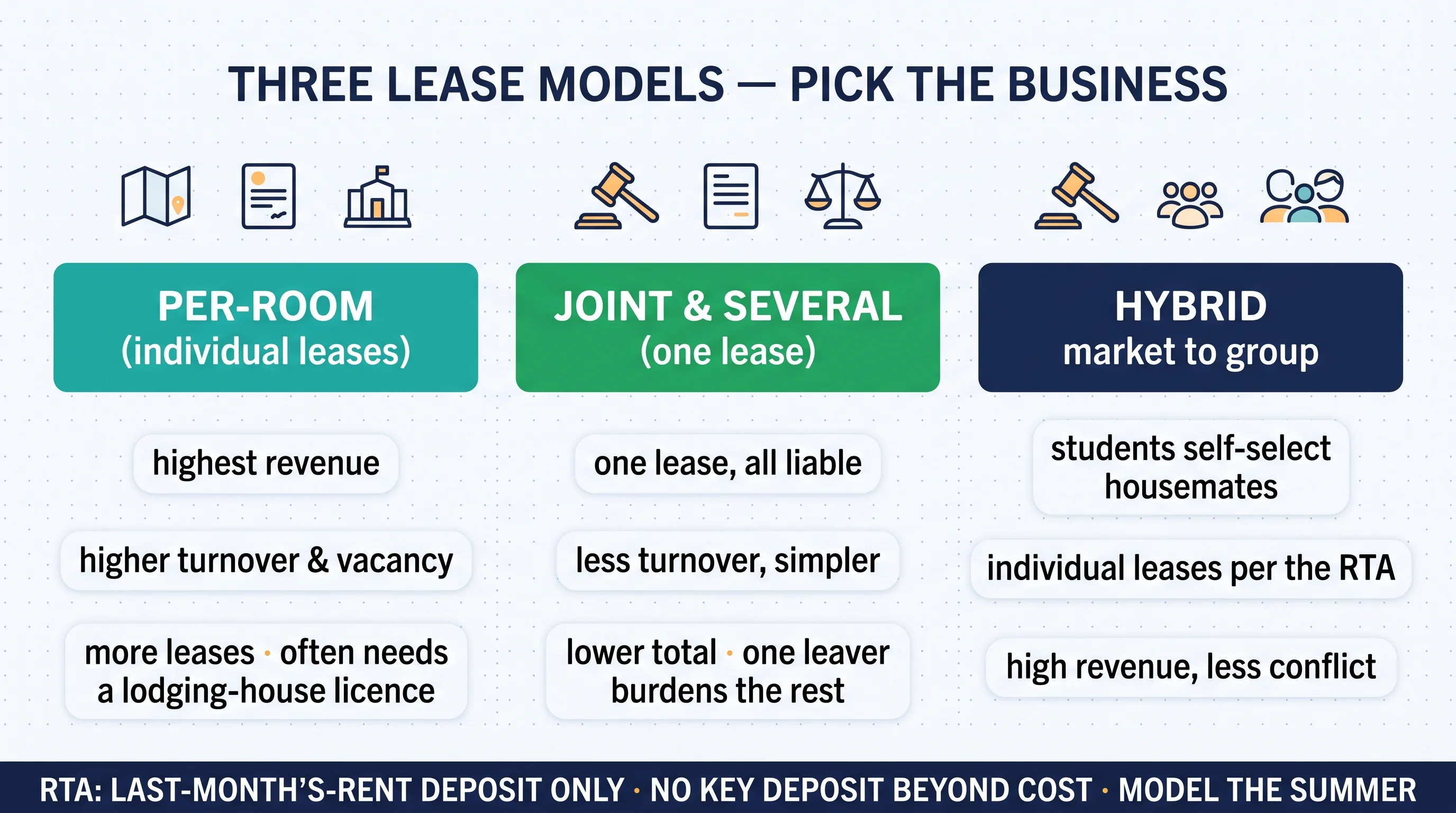
The hybrid most experienced operators use captures the best of both: market the property to a self-selected group so students pick their own housemates and conflict drops, but sign individual leases, which the Residential Tenancies Act requires when you rent rooms to unrelated tenants. Higher per-room revenue, lower conflict, still compliant.
Whichever model you choose, the RTA rules always apply. The deposit is one month's rent, applied as the last month — no damage deposit, no key deposit beyond the actual cost of a key, and no required post-dated cheques. Rent control applies to units first occupied before November 15, 2018; newer units are exempt, which is Form N2 territory rather than N1. And model the calendar honestly: serious groups look in November, most leases sign between January and April, so market by January and aim to sign by March — using the Ontario Standard Lease for every one.
Licensing and the Rules That Decide If You Can Even Operate
Waterloo is the licensing headliner. The city requires a residential rental licence for all rentals, and renting rooms to unrelated tenants falls under the lodging-house (Class D) category, which is limited and non-transferable. An updated bylaw takes effect July 1, 2026, with enhanced tenant protections, safety standards, and enforcement — so confirm your licence class with the City of Waterloo's bylaw division before you offer, not after you own it. (Short-term rentals are a separate Class B licence, permitted only in a principal residence, and college or university residences are exempt.) One related opening: Kitchener now permits up to four units on a residential lot, which can make a legal multi-unit student conversion viable — subject to permits and Ontario Building Code compliance.
Kingston: in February 2026 council approved developing a Student Housing Strategy focused on densification and purpose-built supply along corridors, so confirm current rental-housing rules with the city before you buy. London: there's no broad city-wide room-rental licensing regime, but student-heavy areas draw property-standards attention — confirm at london.ca. The through-line across all three: licensing, permits, and fire-separation requirements decide whether your room-rental plan is legal at all. Verify at each city, and again at each renewal.
Practical Takeaways
- Match the permit stream first — a university anchor (Queen's, Western, UW/Laurier) is more policy-resilient than a college anchor.
- Confirm the licence class before you offer — Waterloo's room-rentals need a Class D lodging-house licence, and the bylaw changes July 1, 2026.
- Choose your lease model deliberately — per-room for revenue, joint-and-several for simplicity, or the hybrid for both.
- Sign individual leases per the RTA even when you market to a group, and keep deposits to last-month's-rent only.
- Underwrite the summer, not just September — model the May-to-August sublet discount.
- Run the honest cap with a realistic vacancy and turnover allowance, because supply is rising into softer demand.
- Re-check the permit cap and each city's rules next quarter, because both move fast.
Quick win: run one candidate address through the underwriting-and-licensing checklist tonight, permit stream and licence class included. Long-term: the operator who matches the stream and underwrites the summer keeps the yield.
The Student-Rental Underwriting & Licensing Checklist: Waterloo, London & Kingston
The step-by-step checklist that matches your building to the right permit stream, nails the licence class before you offer, and underwrites the summer — so your student rental cash-flows in 2026's tighter market.
Get Free PDF →Match the Stream, Confirm the Licence, Model the Summer
Student rentals are their own asset class, and 2026 is the year the study-permit cap sorted the winners. Universities held where colleges didn't, so the first question is always which institution — and which permit stream — your building serves. Waterloo is the concentrated, tech-backfilled market with new licensing rules landing July 1; London brings Western's scale with incentives already live; Kingston held up because Queen's leans domestic. The lease model is the business — per-room, joint-and-several, or the hybrid — and the RTA, the licence class, and the summer calendar decide whether the numbers are real. None of that makes student rentals a bad asset. It makes them an asset you underwrite deliberately: match the stream, confirm the licence, model the summer, and use your own comps. Figures July 2026, refreshed quarterly; market data, not investment advice.
Run a Student Rental Without Losing the Thread
Per-room leases, individual rent tracking, last-month's-rent deposits handled correctly, and Ontario's rules built into every workflow — free for up to 3 units on Tenon10.
Free plan available • Tenants always free • Ontario compliance in code
Related Resources
The Cities & Markets series: Best Ontario Cities to Buy a Rental Property — where these markets sit in the provincial picture · Best London Neighbourhoods — the Western-and-Fanshawe deep-dive that this guide extends · Do Cheap Ontario Cities Actually Cash-Flow? — the honest-cap discipline in another dialect · Best Hamilton Neighbourhoods — the McMaster student-quarter analogue · Average Rents by Bedroom — the two-rents method behind your comps.
The rules underneath: the Ontario Standard Lease guide · Ontario Rent Increases 2026: The Complete N1 Guide · the N1 and N2 forms · the rent increase calculator · the Ontario LTB forms hub.
Getting started: Buying Your First Rental Property in Ontario · Becoming a Landlord in Ontario: The First-Timer's Guide · Landlord Insurance in Ontario.
Frequently Asked Questions
Are student rentals still a good investment in Ontario in 2026?
They can be, but the bar is higher than it was two years ago. The federal study-permit cap — 408,000 nationally for 2026, with Ontario's allocation down about 42% — has softened demand in every university town, so the September bidding wars are gone and landlords are offering incentives. The opportunity is that the softening is uneven: the cap hit colleges far harder (permits down about 73%) than universities (down about 38%, with Ontario universities holding domestic enrolment up 3.6%). So a building anchored to a university like Queen's, Western, or Waterloo is far more resilient than one anchored to a college. Student rentals still offer strong per-room revenue and, in markets like Waterloo, gross yields operators quote above what a downtown Toronto condo returns — but you have to match the permit stream, choose the right lease model, confirm the licence, and underwrite the summer. Market data, not investment advice.
Which is the best city to buy a student rental: Waterloo, London, or Kingston?
They serve different strategies. Waterloo is the most concentrated student market in the province, with three institutions, a co-op program that fills units year-round, and operator-quoted gross yields of roughly 4.3–6.5% — but it carries new licensing rules from July 1, 2026, and a college (Conestoga) pocket with sharper permit-stream risk. London offers Western's scale and the lowest entry of the three, with incentives already on the table (our London guide is the neighbourhood deep-dive). Kingston is the most policy-resilient, because Queen's leans domestic and vacancy has stayed below the city's 3% target — but it's also the tightest and priciest to enter, with purpose-built beds up to about $2,200. Match the city to your strategy and risk tolerance, run the honest numbers on your own comps, and confirm each city's rules before you offer.
Do I need a licence to rent to students in Waterloo?
In most cases, yes. The City of Waterloo requires a residential rental licence for rental properties, and renting individual rooms to unrelated tenants — the standard student model — falls under the lodging-house (Class D) category, which is limited and non-transferable. An updated bylaw takes effect July 1, 2026, with enhanced tenant protections, safety standards, and enforcement, so you should confirm exactly which licence class your property requires with the City of Waterloo's bylaw division before you write an offer, not after you own it. Short-term rentals are a separate Class B licence, permitted only in your principal residence, and college or university residences are exempt. London and Kingston don't run the same broad room-rental licensing regime, but both have property-standards rules and Kingston is developing a Student Housing Strategy — so confirm the current rules at each city before you buy.
What's the difference between per-room and joint leases for student rentals?
They're different businesses. With per-room (individual) leases, each student signs their own lease and pays their own rent — this generates the highest total revenue, but you manage more leases, and rooms can turn over every year, raising vacancy and turnover costs. With a joint-and-several lease, a formed group signs one lease for the whole unit and all are jointly responsible — common in Kingston's University District, it means less turnover and simpler management, but a lower total than the sum of room rates, and if one tenant leaves the rest must still cover the rent. Many experienced operators use a hybrid: they market the property to a self-selected group (so students pick their own housemates and conflict drops) but sign individual leases, which the Residential Tenancies Act requires when renting rooms to unrelated tenants. That captures the higher per-room revenue with lower conflict.
How has the international student cap affected student rental demand?
Substantially, and unevenly. Ottawa's study-permit cap cut Ontario's 2026 allocation about 42% — the third straight annual reduction — and national post-secondary enrolment has slipped from its 2023-24 peak. The effect shows up as rising vacancy in student hubs (running about 1.1–1.6 points above the national average), summer-sublet price collapses, longer lease-ups, and incentives like one to three months free that were almost unheard of 18 months ago. But the pullback landed mainly on colleges, where permits fell about 73%; universities fell about 38%, and Ontario universities actually grew domestic enrolment 3.6%, largely offsetting the international decline. That's why the smart question isn't "are student rentals softening" — they are — but "which institution and permit stream does this specific building serve," because a university anchor has held up far better than a college one. Since federal policy can change quickly, re-check the cap before you underwrite.
This article presents Ontario rental market data current as of July 14, 2026 and is refreshed quarterly. It provides market information for educational purposes, not investment, legal, or tax advice. Figures are drawn from CMHC (2025 Rental Market Survey; 2026 Outlook), Urbanation's purpose-built student accommodation reporting, and local market participants; rents, per-room and purpose-built rates, gross yields, incentive levels, and "cash-flow positive" claims are operator or market-participant claims, presented as such — verify against your own comps. Study-permit policy is federal and can change quickly, and municipal licensing rules vary by city and change on their own timelines; confirm the current study-permit allocation, each city's rental-housing and licensing rules (Waterloo's bylaw takes effect July 1, 2026; Kingston is developing a Student Housing Strategy), and CMHC vacancy data at the source before relying on them, and consult licensed professionals — realtor, accountant, lawyer — before making investment decisions.


