The BC speculation vacancy tax declaration is due by March 31 every year from each owner on title of residential property in a designated taxable area, even when the home is rented, lived in or otherwise exempt. You declare once your letter arrives, and a home rented to a qualifying tenant for at least six months of the year is exempt.
At a glance
- Who declares: every person on title, separately, for residential property in a taxable area.
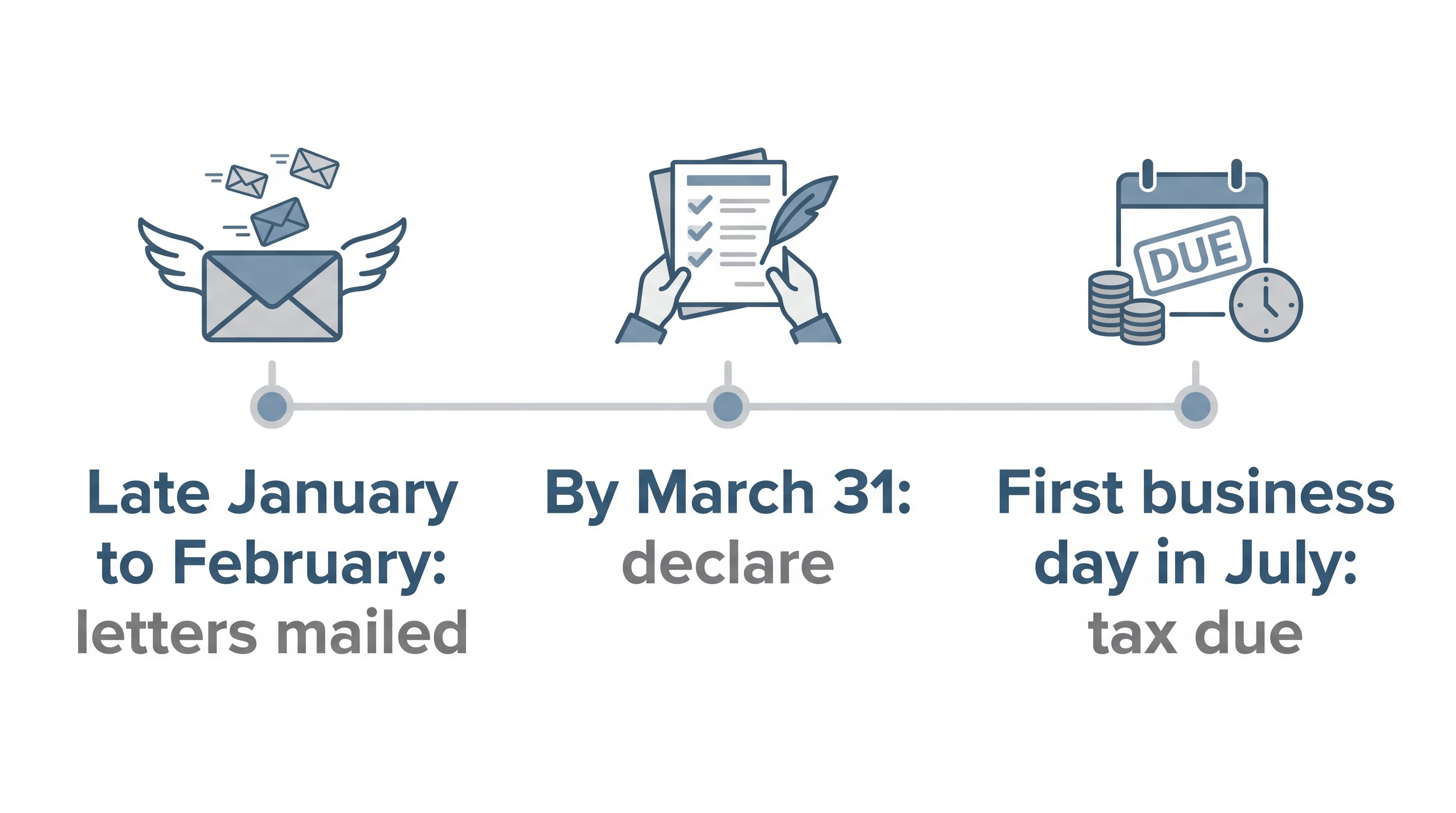
- When: letters go out from late January; declare by March 31; tax is due the first business day in July.
- 2026 rates: 1% for Canadian citizens and permanent residents, 3% for foreign owners and untaxed worldwide earners.
- 2027 rates: 1% and 4%.
- Rental exemption: tenants occupy the home at least six months of the year, in one-month or longer periods.
BC Speculation and Vacancy Tax Checklist
The yearly SVT steps for a BC rental owner: check the area, keep the tenancy months, declare by March 31 and pay if you owe.
Get Free PDF →Who has to declare for the speculation and vacancy tax?
Every owner on title of residential property in a designated taxable area has to declare, every year, even if nothing has changed. The Province's how to declare page says that when a property has more than one owner, each person on title makes a separate declaration, even when the other owner is a spouse or relative.
The taxable areas cover most of the places BC landlords rent: the City of Vancouver and most of Metro Vancouver, the City of Victoria and most of the Capital Regional District, Kelowna, West Kelowna, Kamloops, Nanaimo, Abbotsford, Mission, Chilliwack, Squamish and others. The Province's taxable areas page has the full list and an address map.
When does the declaration letter arrive?
The Province mails letters in phases by postal code, from the last two weeks of January through the first three weeks of February, and says all letters should arrive by the end of February. Letters go to your mailing address on file with BC Assessment, and you cannot declare until you have one: it carries your Letter ID and Declaration Code. If yours has not arrived by the end of February, contact the Province.
What will you pay if no exemption applies?
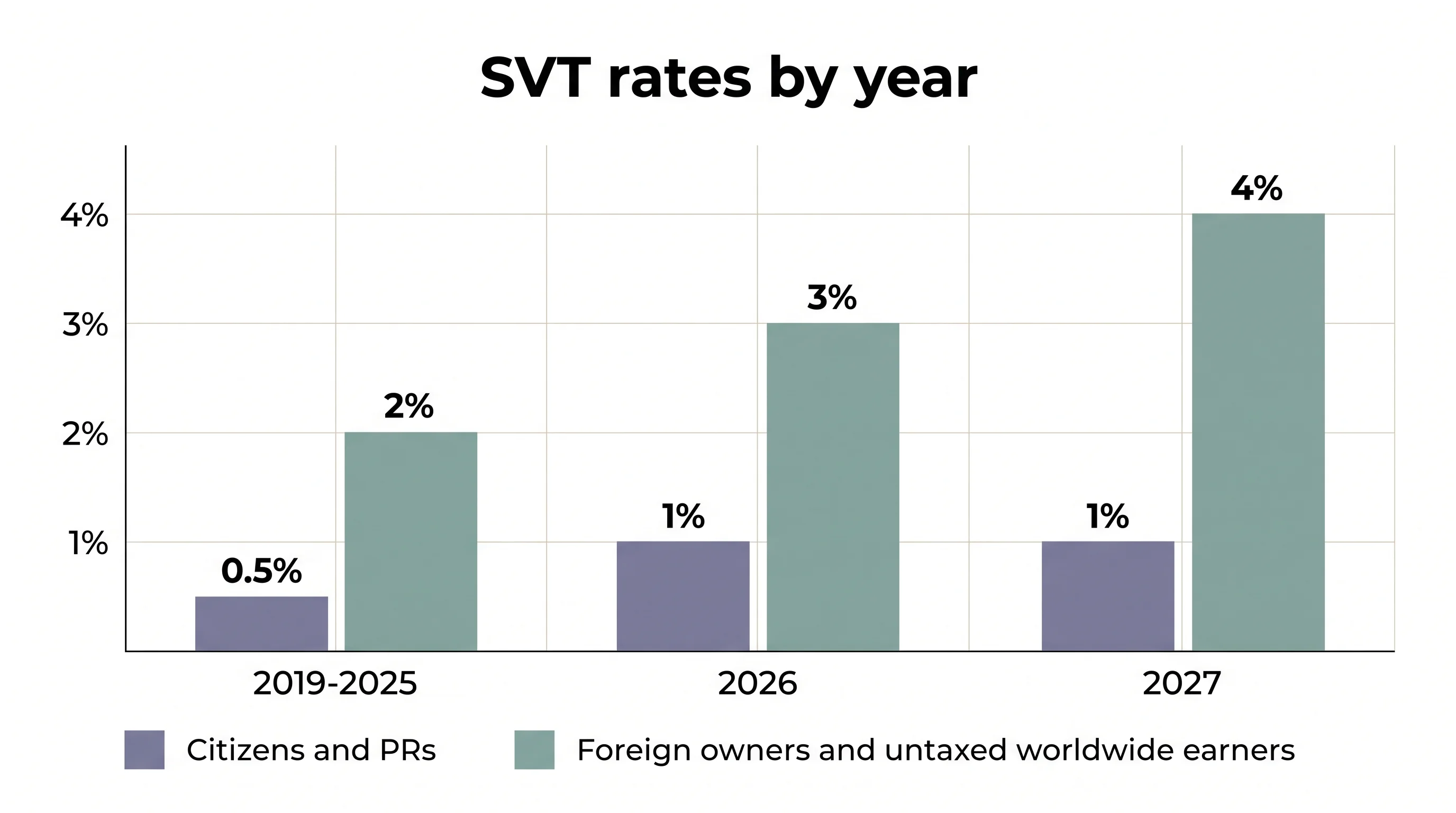
The tax is a percentage of the property's assessed value, and the rate depends on who you are. The Province's tax rates page, updated July 3, 2026, sets these rates:
| Calendar year of use | Canadian citizens and permanent residents | Foreign owners and untaxed worldwide earners |
|---|---|---|
| 2019 to 2025 | 0.5% | 2% |
| 2026 | 1% | 3% |
| 2027 | 1% | 4% |
Each year's rate applies to how the property was used in that calendar year, based on ownership on December 31, and the tax is due the following July. Co-owners each owe tax on their ownership share. A corporation, trustee or business partner pays the highest rate that would apply to any of its interest holders, beneficial owners or partners.
If you do not qualify for an exemption, a tax credit may reduce the bill. For BC residents who are citizens, permanent residents or confirmed BC Provincial Nominees and not untaxed worldwide earners, the maximum credit is $4,000 from the 2026 tax year, applied automatically. The Province's FAQ says unpaid tax attracts a 10% penalty.
How does a rental qualify for the tenancy exemption?
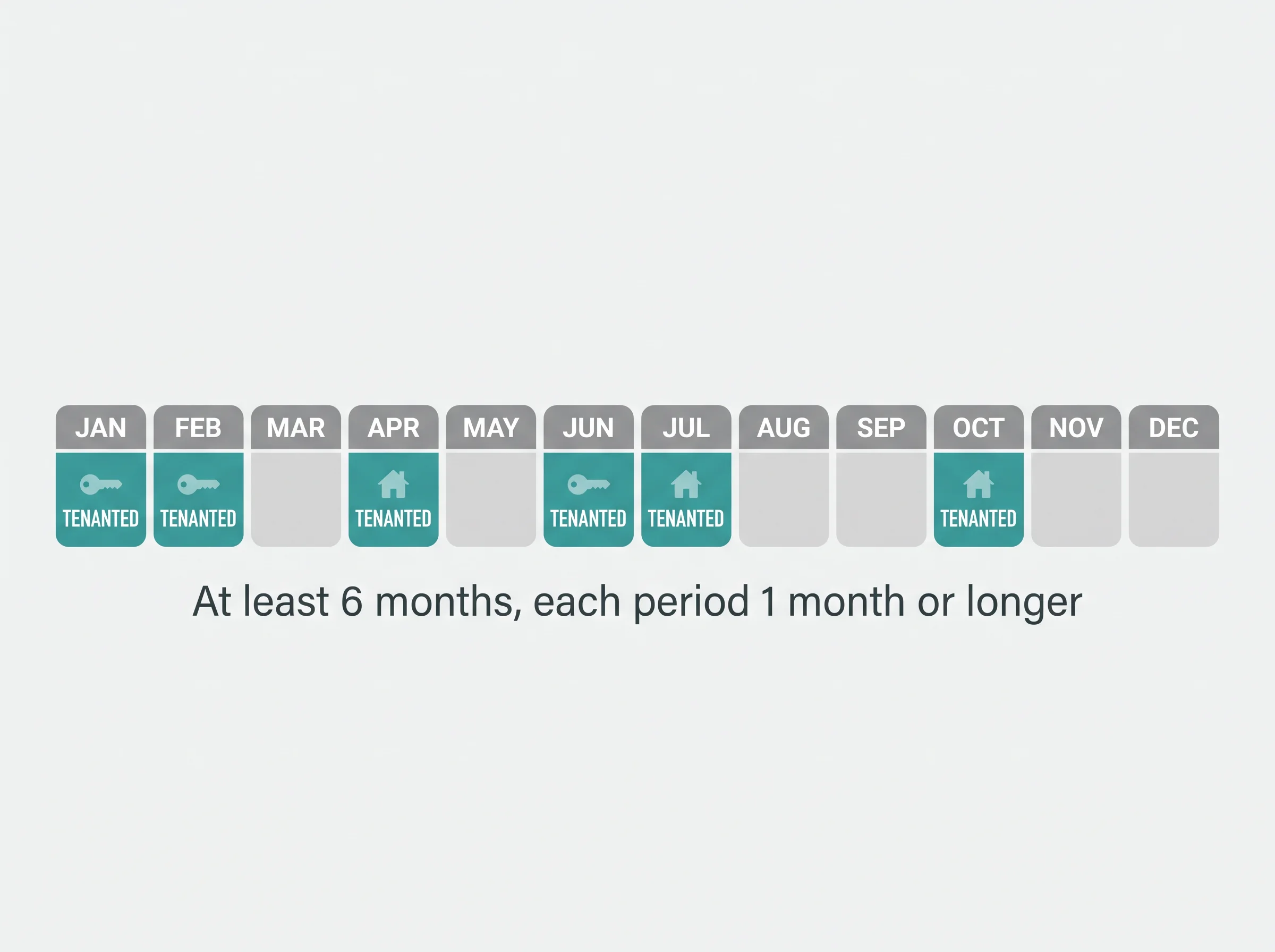
A rental is exempt when tenants occupy it for at least six months of the calendar year and every tenancy counted meets the Province's tenancy requirements. The months do not have to be consecutive, and you can combine arm's-length and non-arm's-length tenancies, but each period must be at least one month long.
| Arm's-length tenant | Non-arm's-length tenant (for example, a family member) |
|---|---|
| No advantage taken of a relationship | No written agreement or rent required |
| A written tenancy agreement under the Residential Tenancy Act | For Canadian owners: lives there with your permission for most of each month |
| The tenant makes the home their home | For foreign owners: also a BC resident on December 31 with BC income at least three times the annual fair market rent |
One rule catches families: an owner's spouse, or the owner's minor child living with their parent or guardian, can never be considered a tenant.
Our guide to the BC residential tenancy agreement covers the written agreement, and fixed-term versus month-to-month explains how the term affects the months you can count.
What other exemptions might apply?
The Province lists more than twenty exemptions. For individuals, the ones landlords meet most are the principal residence exemption, the tenanted exemption, an uninhabitable residence (for example, a disaster or hazard that made the home uninhabitable for at least 60 consecutive days), a separation, and a recently bought or inherited home, each with its own conditions on the exemptions page. Short-term rentals are a different question; see BC's principal residence requirement.
Common mistakes on the SVT declaration
- Not declaring because the home is exempt. The exemption is claimed in the declaration; skip it and you can be taxed.
- Only one spouse declaring. Each person on title declares separately.
- Counting a listing as a tenancy. Months when the unit was advertised but empty are not tenanted months.
- Short stays. Each rental period must be at least one month.
- Forgetting the City of Vancouver. Vancouver's Empty Homes Tax is a separate declaration to the City; the Province lists it, the federal Underused Housing Tax and the home owner grant as different programs.
How Tenon10 helps
Tenon10 creates the BC tenancy agreement, the written agreement the arm's-length exemption asks for, and keeps it with the tenancy's dates. It runs move-in and move-out inspection reports, tracks deposits and their return dates, and sends rent reminders. If you manage rentals for owners, see trust ledgers in Tenon10 for BC managers.
Frequently asked questions
Do I have to declare if my tenant was there all year?
Yes. Every owner on title in a taxable area declares each year. A tenanted home is claimed as exempt in the declaration.
Can I declare before my letter arrives?
No. The Province says you cannot declare until you get your letter, which carries the Letter ID and Declaration Code you need.
My adult son rents my condo below market. Does that count?
It can, as a non-arm's-length tenancy, if he lives there with your permission for most of each month. A spouse, or a minor child living with their parent or guardian, never counts.
What rate applies to a 2026 vacancy?
For the 2026 calendar year, 1% for Canadian citizens and permanent residents and 3% for foreign owners and untaxed worldwide earners, on the assessed value of your share, declared in 2027 and due that July.
Is there a tax credit if I owe the tax?
Yes. BC residents who are citizens, permanent residents or confirmed BC Provincial Nominees, and not untaxed worldwide earners, get a credit of up to $4,000 from the 2026 tax year, applied automatically. Other owners may claim a credit based on their BC income.
The declaration takes minutes; the exemption is earned through the year. Rent the home under a written agreement, keep the dates, and declare once the letter arrives.
BC Speculation and Vacancy Tax Checklist
The yearly SVT steps for a BC rental owner: check the area, keep the tenancy months, declare by March 31 and pay if you owe.
Get Free PDF →Start the tenancy in writing
A written BC tenancy agreement is the record the SVT tenancy exemption looks for.
Free • No signup required