

Who can change the locks in a BC rental? A landlord can change them only if the tenant agrees and gets new keys, and a tenant can change them only with the landlord's written agreement or an order from the Residential Tenancy Branch (RTB). At the start of a new tenancy, the tenant can ask the landlord to rekey at the landlord's cost.
Locks are one of the few places where the Residential Tenancy Act (RTA) gives a short, exact rule for each side. The rules sit mainly in RTA sections 25 and 31, are repeated in standard term 10 of the standard terms the Residential Tenancy Regulation writes into BC tenancy agreements, and are explained in RTB Policy Guideline 7: Locks and Access. This guide walks through each situation: a new tenancy, a mid-tenancy change, a broken lock, a landlord who will not stop coming in, and the one thing a landlord can never use a lock change for.
Who decides when the locks change in a BC rental?
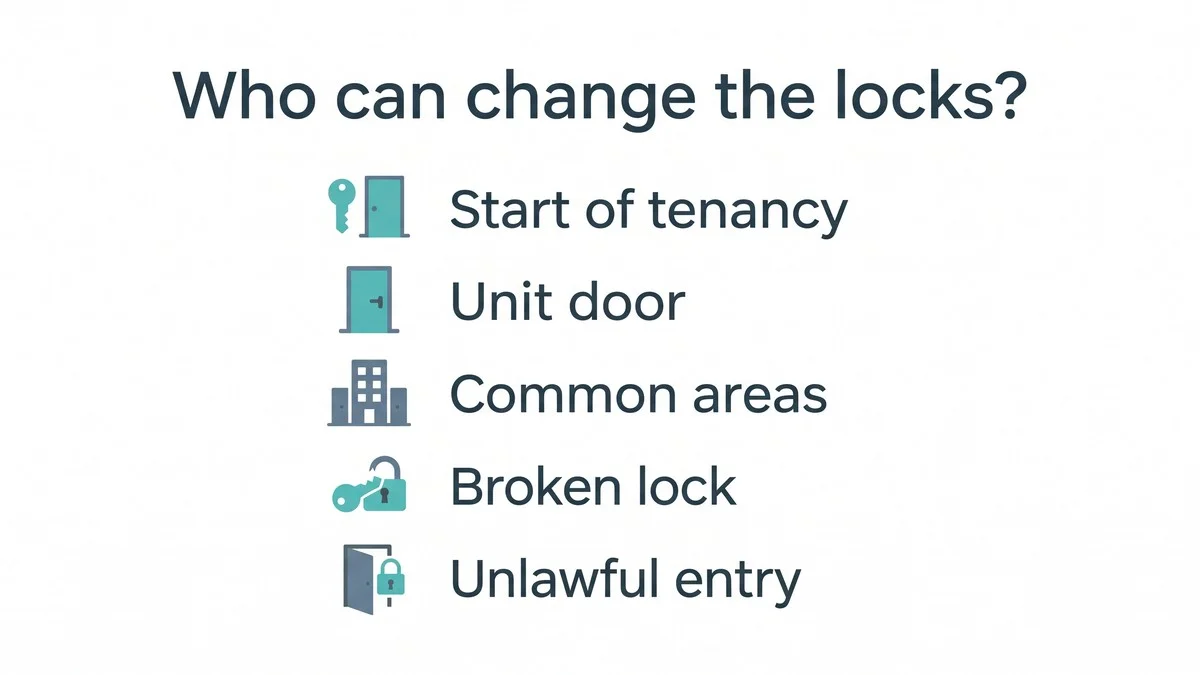
In BC, neither side can change the locks to the rental unit alone. Under RTA s.31(1.1), the landlord must not change the locks or other means of access to a rental unit unless the tenant agrees and the landlord gives the tenant new keys. Under s.31(3), the tenant must not change a lock to their own unit unless the landlord agrees in writing or the RTB director has ordered it.
Common areas follow a slightly different rule. A landlord may change the locks or fobs to the building or other common areas, but only if every tenant gets new keys or access devices (s.31(1)). A tenant must not change a lock to a common area without the landlord's consent (s.31(2)).
| Situation | Landlord | Tenant | Source |
|---|---|---|---|
| Start of a new tenancy | Must rekey on the tenant's request and pay for it, unless already done after the last tenant left | May ask for a rekey | RTA s.25 |
| Rental unit door, mid-tenancy | Only with the tenant's agreement and new keys | Only with the landlord's written agreement or an RTB order | RTA s.31(1.1), (3) |
| Building entry and common areas | Allowed if every tenant gets new keys | Only with the landlord's consent | RTA s.31(1), (2) |
| Broken or defective unit lock | Must repair; it is an emergency repair | May have it repaired after two calls to the emergency contact and reasonable time | RTA s.33 |
| Landlord entering without notice | Can be ordered not to replace the new locks | Can apply for an order to change the locks | RTA s.70(2) |
Can a new BC tenant make the landlord rekey the locks?
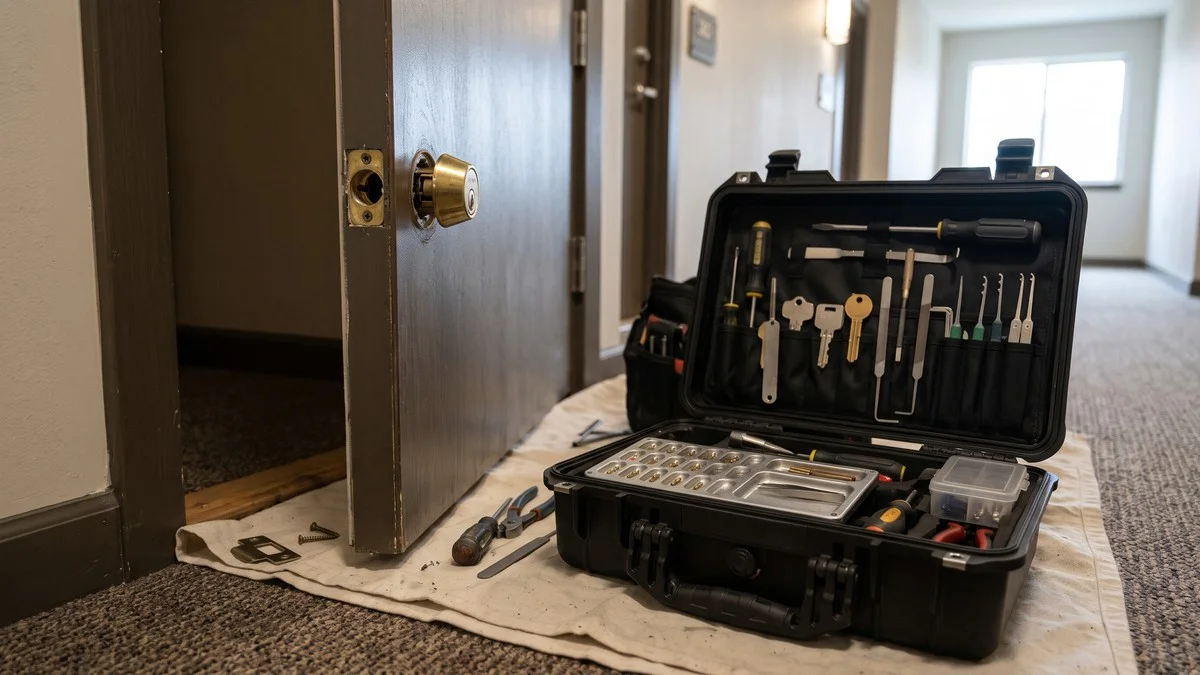
Yes. In BC, at the start of a new tenancy and at the tenant's request, the landlord must rekey or otherwise alter the locks so that keys given to the previous tenant no longer open the unit, and the landlord pays all the costs (RTA s.25(1)). The only exception is where the landlord already rekeyed at the end of the previous tenancy (s.25(2)).
The duty is triggered by the tenant asking. A landlord who rekeys between every tenancy as a matter of routine has already met it and does not have to do it twice.
Can a BC landlord change the locks during a tenancy?
Only with the tenant's agreement. In BC, a landlord who wants to replace a rental unit's lock mid-tenancy, for example to upgrade hardware, must get the tenant's agreement first and hand over new keys (RTA s.31(1.1); standard term 10(2) in the Residential Tenancy Regulation Schedule).
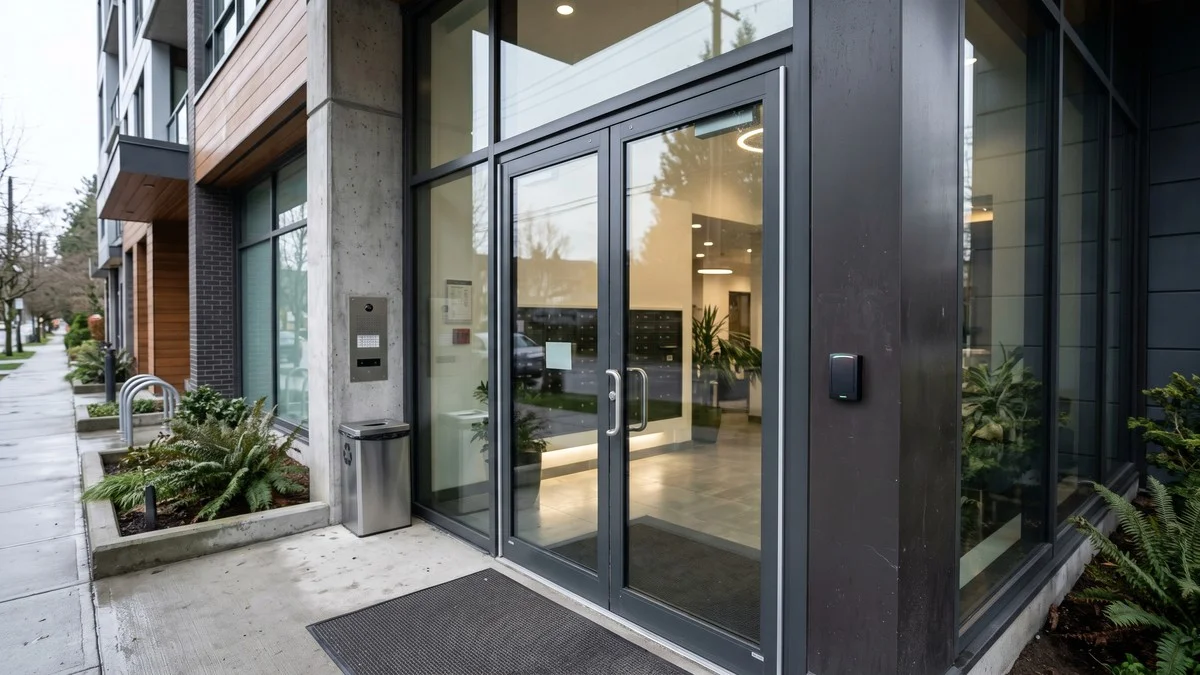
Building-wide changes are easier: a landlord can change the front-door lock or switch to a new fob system without each tenant's agreement, as long as every tenant gets a working key or fob (s.31(1)). Policy Guideline 7 adds that where a strata council changes the building locks and does not give the tenant a key, the landlord must get one for the tenant, and failing to do so can support a claim for damages.
Can a landlord charge for the new keys?
No, not when the landlord made the change. The Residential Tenancy Regulation s.5(2) bars a fee for replacement keys or access devices when the replacement is needed because the landlord changed the locks. A landlord may charge the direct cost of replacing a key the tenant lost, or of extra keys the tenant asks for (Regulation s.7(1)(a) and (b)), and may take a refundable key deposit no greater than the direct replacement cost, but not for the tenant's sole means of access (s.6).
Can a BC landlord lock out a tenant who owes rent?
No. In BC, changing the locks is never a way to end a tenancy or collect rent. The RTB's serve and enforce orders page says that even a landlord holding an order of possession may not change the locks without an order from the RTB, physically evict the tenant or take the tenant's property; only a BC court can enforce the order, through a writ of possession carried out by a court bailiff. The same page says a landlord who illegally evicts a tenant may face a penalty of up to $5,000 and may have to repay the tenant's costs.
The rent rule points the same way: RTA s.26(3) says that whether or not the tenant has paid, the landlord must not seize the tenant's property or interfere with the tenant's access to it. The lawful route for unpaid rent is the 10 Day Notice, covered in our guide to giving a 10 Day Notice for unpaid rent in BC, and, if the tenant stays, enforcing an order of possession through the court.
What if the lock on a BC rental unit breaks?
In BC, a damaged or defective lock that gives access to a rental unit is an emergency repair under RTA s.33(1)(c)(iv), so the landlord must fix it promptly. The landlord must post or give the tenant the name and phone number of an emergency repair contact (s.33(2)).
If the landlord does not act, the tenant may have the lock repaired only after making at least two attempts to phone that contact and then giving the landlord reasonable time (s.33(3)). The landlord must reimburse the tenant on a written account with receipts (s.33(5)), and if it does not, the tenant may deduct the amount from rent (s.33(7)). Reimbursement can be refused where the tenant skipped those steps, the cost was unreasonable, or the tenant caused the damage (s.33(6)). Our guide to emergency repairs in BC covers the process in full.
Can a BC tenant change the locks if the landlord keeps entering?
Yes, but only with an RTB order. In BC, if the RTB director is satisfied that a landlord is likely to enter a rental unit other than as section 29 allows, it can authorise the tenant to change the locks and prohibit the landlord from replacing them or getting a key (RTA s.70(2)). Standard term 11(4) of the prescribed standard terms says the same, and adds that the tenant must give the key to the landlord at the end of the tenancy.
Policy Guideline 7 says an arbitrator considering such an order will weigh, among other things, whether changing a particular suite lock could endanger the safety of nearby tenants, and that the order applies only to areas the tenant has exclusive possession of. Damages for unlawful entry can be awarded as well as, or instead of, a lock change. The entry rules themselves (24 hours' written notice, between 8 a.m. and 9 p.m., a reasonable purpose) are explained in our guide to BC landlord entry rules.
What should a tenant do with the keys when the tenancy ends?
In BC, a tenant must return all keys and other means of access in their possession to the landlord when they vacate. RTA s.37(2)(b) sets that duty alongside leaving the unit reasonably clean. Unreturned keys or fobs can be part of the landlord's claim for costs at the end of the tenancy, which is one reason the move-out condition inspection is a good moment to hand everything back and have it recorded.
Frequently asked questions
Can my landlord change the locks without telling me in BC?
No. A BC landlord must have the tenant's agreement before changing the locks to a rental unit and must give the tenant new keys (RTA s.31(1.1)). For a building entrance or other common area, the landlord does not need each tenant's agreement but must give every tenant a new key or fob.
Can I add a deadbolt to my apartment in BC?
Only with your landlord's written agreement or an RTB order. RTA s.31(3) treats any new lock or means of access to the unit as a change that needs one or the other. Without it, adding a lock breaches the Act and the tenancy agreement.
Who pays to rekey the locks for a new tenant in BC?
The landlord. If a new tenant asks, the landlord must rekey so the previous tenant's keys no longer work and must pay all the costs (RTA s.25(1)). The landlord does not have to do it again if it already rekeyed after the previous tenant moved out.
Can a co-tenant or roommate's keys be taken away in BC?
Not by a lock change. A tenant named on the agreement keeps the right to possession until the tenancy ends lawfully. How a tenancy ends when co-tenants fall out is covered in our guide to co-tenants, roommates and occupants in BC.
Can a BC landlord charge a key deposit?
Yes, within limits. Regulation s.6 allows a refundable fee for a key or access device, no greater than its direct replacement cost, but not for the tenant's only means of access to the property.
The bottom line on locks in a BC rental
BC's rule is consent on both sides: the landlord needs the tenant's agreement to change the unit's lock, and the tenant needs the landlord's written agreement or an RTB order. A new tenant can ask for a free rekey, a broken lock is an emergency repair, and a lock change is never a substitute for an RTB order and a court bailiff. For the wider picture, see the BC Landlord Resource Center and the BC Tenant Resource Center.
Get the BC tenancy forms you need
Free BC landlord and tenant forms, from the tenancy agreement to the condition inspection report.
Free • No signup required


