Getting Your Deposit Back in BC: A Tenant's Step-by-Step Guide
A step-by-step guide for BC tenants: protect your deposit at move-in, give your forwarding address the right way, and claim it through the RTB if it does not come back.
Narrow 209 published guides by topic, province, who you are and the kind of help you need. Every filter shows how many guides it leaves.
Shaded tiles have guides written for that province.
26 of 209 guides
Showing Rights & Legal matching “Tenants”, newest first.
A step-by-step guide for BC tenants: protect your deposit at move-in, give your forwarding address the right way, and claim it through the RTB if it does not come back.
A BC 10 Day Notice for unpaid rent gives you 5 days to act. Here is how to count your deadline, your options to pay or dispute, and where to get help.
How B.C. tenants can check whether a rent increase is lawful, what to do if it is not, and how to recover an overpayment.
Yes — and almost everything attached to that yes is where landlords get into trouble and tenants overpay. First month's rent is just rent; last month's is Ontario's only legal deposit, capped at one rental period, earning interest every year at that year's guideline rate. Damage, security, cleaning, and pet deposits ar
Every property management relationship is decided twice — once in the service agreement, and once in the thirty days after it's signed. Onboarding a new owner client is where the custody inventory arrives, the lease files get audited, the deposits get reconciled, the tenants get one calm letter, and the working rhythm
A housing co-op looks like a rental building and runs like a small democracy: members instead of tenants, occupancy charges instead of rent, by-laws instead of a lease, and a board — not a landlord — in charge. For property managers, that changes the client, the money, and the eviction machinery entirely: the Co-operat
Not every tenancy has to end at the Landlord and Tenant Board. Ontario law gives landlords and tenants several legal ways to part company without an eviction hearing — the N11 mutual agreement and cash-for-keys deal, the tenant's own N9 notice, assignment, and negotiated moves — each faster than the queue when done rig
Every LTB journey follows the same road: a notice, an application on the Tribunals Ontario Portal, a queue, a fork at mediation, a hearing, an order — and sometimes the Sheriff. This pillar guide maps the entire process end to end for landlords, tenants, and property managers: which notice starts which application, wha
An LTB eviction order is not possession — only the Sheriff can enforce it, and the Sheriff has a queue of their own. This guide covers the whole after-the-order world for landlords and tenants: the filing package and the six-month deadline, the fees and the regional wait, the Notice to Vacate, what actually happens on
Most tenants at the LTB appear without a lawyer — and unlike landlords, tenants get free help: Duty Counsel on hearing day, community legal clinics before it. But the help only works if you claim it, the s. 82 counter-issue lane closes behind a 50% pay-in gate in September, and a missed hearing proceeds without you. Th
Your landlord's duty to repair is absolute — but it enforces itself exactly never. The T6 is the application that turns ignored repair requests into orders: rent abatements, deadlines, reimbursements, even a freeze on rent increases until the work is done. It costs $48, runs on a one-year clock, and lives or dies on da
In Ontario, a lease that ends doesn't end anything — it converts. So "renewal" is really a strategy question: stay month-to-month or sign a new fixed term? The answer is different for landlords (retention economics, flexibility), tenants (no-fault eviction protection, leverage you didn't know you had), and property man
Ontario's right of first refusal used to fail at the follow-through: tenants left, renovations dragged, and nobody wrote. The new rules change the physics — missed updates or a skipped 60-day window are now deemed a denial of the right itself. Here's the complete lifecycle: the letter before you leave, the notices the
Ontario's renoviction rules now run on paperwork: a qualified professional's report, building permits, written timeline estimates, update obligations, a completion notice, and a 60-day window for the tenant to come back. Here's the full document trail — what landlords must produce, what tenants can demand, and where mu
When a landlord won't fix a serious problem, tenants have a route many don't know about: the municipal property standards officer. These bylaw inspectors can order repairs, set deadlines, and even bill the landlord for work the city does itself — and their orders are powerful evidence at the Landlord and Tenant Board.
You moved out because your landlord "needed the unit" — then it went back on the market at a higher rent. That's a bad-faith eviction, and the T5 is how you fight back. This complete guide covers what counts as bad faith, the deadlines that split by reason (one year for an N12, up to two for an N13 renovation), the evi
When a landlord enters without notice, harasses, changes the locks, or shuts off a vital service, the T2 is how an Ontario tenant fights back. This guide covers exactly what the T2 covers, the strict one-year deadline, the remedies you can ask for — rent abatement, compensation, an order to stop — and the mistakes that
The N13 is the notice an Ontario landlord uses to end a tenancy to demolish, convert, or do major repairs that need the unit empty. This guide walks through the three grounds, the 120-day notice rules, the compensation and right-to-return, and exactly how the process works — for both landlords serving one and tenants w
"Renoviction" is when a landlord uses renovations to end a tenancy — sometimes legitimately, sometimes not. This complete guide explains how the N13 process actually works, the compensation and right-to-return rules, the new licensing crackdown under Bill 60/97, and how both landlords and tenants can stay on the right
The N9 is the form Ontario tenants use to end their own tenancy — and getting the notice period and termination date right is what makes it valid. Here's how much notice you need to give, how to calculate the correct end date, and the mistakes that leave you on the hook for another month's rent.
The N5 is Ontario's most-used notice for tenancy issues that aren't about money — interference, damage, or overcrowding. This 2026 guide explains the unique two-N5 rule, what tenants can do to void the notice, and what landlords must document to make an N5 stand up at the LTB.
Thinking about renting out your property in Ontario? A complete 2026 guide to becoming a landlord — from your first legal obligations under the RTA to setting rent, screening tenants, collecting rent, and avoiding the mistakes that catch first-timers off guard.
A complete 2026 guide to Ontario N12 notices. Understand when own-use ends a tenancy, the compensation rules under Bill 60, the good faith requirement, and how the process works for landlords, property managers, and tenants receiving an N12.
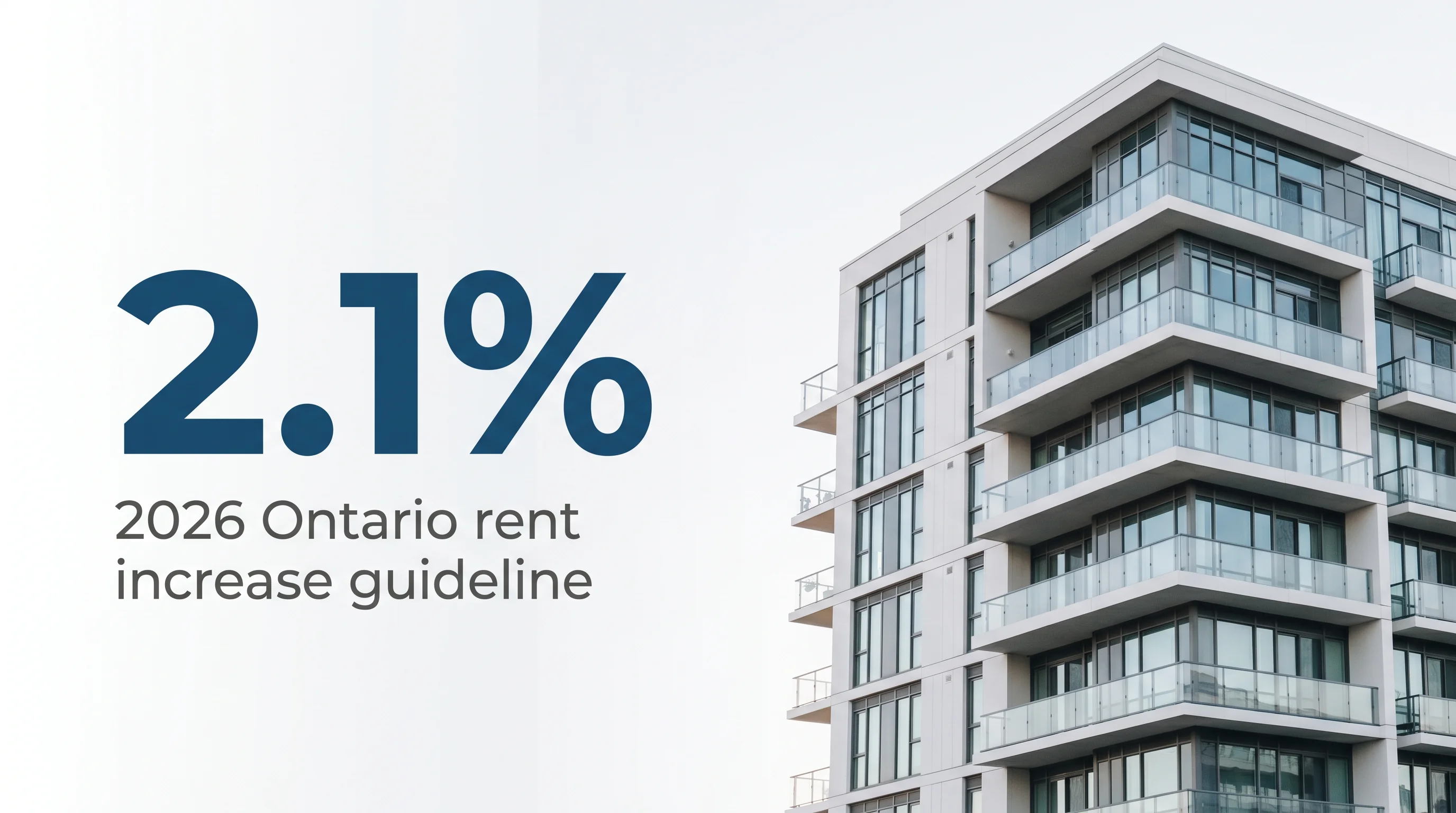
A complete 2026 guide to rent increases in Ontario. Understand the 2.1% provincial guideline, the 90-day N1 notice requirement, when rent increases apply, what voids them, and how the process works for landlords, property managers, and tenants alike.
Showing 24 of 26
Load more guides