 Rights & Legal
The 2027 BC Rent Increase Limit: A Renter's Guide
Your B.C. rent can rise by at most 2.2% in 2027. Here is what that means in dollars, when it can start, and how to check your notice.
8 min read
Narrow 209 published guides by topic, province, who you are and the kind of help you need. Every filter shows how many guides it leaves.
Shaded tiles have guides written for that province.
34 of 209 guides
Showing article format matching “how to guide”, newest first.
Rights & LegalYour B.C. rent can rise by at most 2.2% in 2027. Here is what that means in dollars, when it can start, and how to check your notice.
 General
A single landlord loses a fortnight and feels it. A property manager running eighty units loses a fortnight per turnover and calls it normal — because nobody has ever put a portfolio number on it. This is the operator's guide to vacancy days: where they actually accumulate across a portfolio (rarely where owners think)
 Safety & Scam Prevention
A name is not an identity. Every rental application arrives with one attached, and almost none of them get checked — which is why fake pay stubs, borrowed credit files, and applicants who are not who the form says they are keep reaching the lease-signing table. This guide is the verification layer: what an Ontario land
 Safety & Scam Prevention
Rental scams run in both directions, and most guides only warn one side. Tenants get burned by cloned listings, phantom units, and deposit-wire pressure; landlords get burned by their own photos scamming their own applicants, fake pay stubs, and overpayment cheques. Here's the two-sided defence: the scam patterns by na
 Screening & Applications
A rental listing has one job: get the right people to enquire and the wrong fits to self-select out — honestly and lawfully. This guide is the writing method: the headline formula, the specifics-beat-adjectives rule, the facts tenants filter by, the response promise that signals a professional process, and the language
 Rights & Legal
Advertising a rental in Ontario is a five-step craft with a legal layer at every step: confirm the unit can lawfully be listed, price it to the market that exists, write and shoot a listing that works, choose platforms deliberately (only one major site is agent-gated), and run enquiries without drowning. This pillar co
 Platform & Product
Landlording is a mobile job that most software treats as a desk job — showings, move-in photos, the furnace invoice in your hand, the e-Transfer that arrives while you're in line for coffee. Tenon10's iOS and Android apps are officially coming soon, and this guide is honest about exactly that: what the platform publicl
 Rights & Legal
Virtual tours, video walkthroughs, and lockbox self-showings promise to fill vacancies faster — but Ontario's entry rules didn't get the memo. This guide maps where showing tech is genuinely legal and useful (vacant units, video pre-screening), where it collides with the RTA (self-showings in occupied units, filming a
 Rights & Legal
Every guide in this series ends the same way: "…and then you wait." This one measures the wait. Arrears cases now schedule in about three months; most other applications take five to seven; some tenant applications have taken years. How Ontario's busiest tribunal fell from 32-day orders to a 53,000-case backlog, what t
 Rights & Legal
You've confirmed your AGI grounds — now comes the paperwork. The L5 is the LTB's most unusual filing: it skips the portal entirely, runs on an Excel form with strict naming rules, demands every receipt up front, and bills $233-plus before anyone reads a word. Here's the complete filing walkthrough — schedules, RUI, fee
 Rights & Legal
Bill 60 gives Ontario landlords a new choice on own-use evictions: serve the N12 the fast way and pay a month's compensation, or give at least 120 days' notice and pay nothing. On a $3,000 unit, that timing choice is worth $3,000. This guide breaks down exactly how the new 120-day path works under RTA s.48.1(2), when i
 Rights & Legal
If your rental was first occupied after November 15, 2018, the annual guideline doesn't cap your rent increases — but using the N1 instead of the N2, skipping the 90-day notice, or failing to prove the exemption can void the increase entirely. Here's how the N2 actually works.
 Finances & Budgeting
Rental income can qualify you for a much bigger mortgage — but only a fraction of it usually counts, and how much depends on the method your lender uses. This guide explains the two ways lenders treat rental income (offset vs add-back), how the debt-service ratios and the stress test actually work, what the 2026 OSFI c
 Taxes & Deductions
Capital Cost Allowance lets Canadian landlords deduct a slice of their building's cost each year — but it's the most misunderstood line on a rental tax return. It's optional, it can't create a loss, and every dollar you claim can come back to bite you as fully taxed "recapture" when you sell. This guide explains how CC
 Maintenance & Repairs
There's no "mold law" in Ontario — but there doesn't need to be. Mold caused by a building problem (a leak, bad ventilation, water getting in) is the landlord's to fix under the same duty to keep a unit in a good state of repair. This guide draws the responsibility line clearly: what the landlord must remediate (and pa
 Maintenance & Repairs
In Ontario, keeping a rental in good repair isn't optional or negotiable — it's a legal duty that a landlord can't sign away, and that applies even if the tenant knew about the problem before moving in. This is the complete guide to maintenance standards under the RTA: what "good state of repair and fit for habitation"
 Rights & Legal
You moved out because your landlord "needed the unit" — then it went back on the market at a higher rent. That's a bad-faith eviction, and the T5 is how you fight back. This complete guide covers what counts as bad faith, the deadlines that split by reason (one year for an N12, up to two for an N13 renovation), the evi
 Rights & Legal
When a landlord enters without notice, harasses, changes the locks, or shuts off a vital service, the T2 is how an Ontario tenant fights back. This guide covers exactly what the T2 covers, the strict one-year deadline, the remedies you can ask for — rent abatement, compensation, an order to stop — and the mistakes that
 Rent & Payments
The last month's rent deposit is the most common — and most misunderstood — deposit in Ontario. It can only be used for the last month's rent, never for damage, and you owe your tenant interest on it every year. This guide shows landlords exactly what you can collect, how the annual interest and top-up work, and why al
 Taxes & Deductions
Good bookkeeping is the difference between a rental that runs like a business and one that costs you at tax time. This complete guide shows Ontario landlords what records to keep, how to track income and expenses, which costs are deductible, how long the CRA expects you to keep everything, and how clean books flow stra
 Lease & Agreements
A guarantor can turn a borderline applicant into a safe one — but only if the agreement is set up properly and offered fairly. This guide shows Ontario landlords what a guarantor actually does, how to put a guarantee in place that holds up, how to screen and verify one, and the human-rights line you can't cross by dema
 Screening & Applications
No pay stub doesn't mean no proof. Self-employed applicants — freelancers, contractors, gig workers, small-business owners — are a fast-growing share of Ontario renters, and screening them out for lacking a T4 is both bad business and a legal risk. This guide shows landlords which documents actually verify self-employe
 Screening & Applications
A reference call is only as good as the questions you ask — and most landlords ask the wrong ones. This guide gives Ontario landlords the specific previous-landlord and employer questions that reveal real risk, the ones that catch coached or fake references, and how to ask them without straying into Human Rights Code t
 Screening & Applications
A credit check is one of the few screening tools Ontario law actually permits — but only if you do it right. This guide shows landlords how to get consent, run the check, read the report, and use it lawfully under the Human Rights Code, including the 2026 rules that make rental credit checks a no-score-impact soft inqu
 Screening & Applications
A clean-looking application can still hide trouble. This guide walks Ontario landlords through the real red flags on a rental application — refusal to consent, inconsistent details, references that don't check out, gaps in rental history — and, just as importantly, how to act on them lawfully without crossing into Huma
 Screening & Applications
Screening the right tenant is the single best way to avoid problems later — but in Ontario you have to do it within strict Human Rights Code limits. This complete guide walks landlords and property managers through a legal, effective screening process: applications, credit and reference checks, income verification, wha
 Rights & Legal
The N13 is the notice an Ontario landlord uses to end a tenancy to demolish, convert, or do major repairs that need the unit empty. This guide walks through the three grounds, the 120-day notice rules, the compensation and right-to-return, and exactly how the process works — for both landlords serving one and tenants w
 Rights & Legal
"Renoviction" is when a landlord uses renovations to end a tenancy — sometimes legitimately, sometimes not. This complete guide explains how the N13 process actually works, the compensation and right-to-return rules, the new licensing crackdown under Bill 60/97, and how both landlords and tenants can stay on the right
 Taxes & Deductions
A plain-language guide to Form T776, Statement of Real Estate Rentals — what counts as rental income, which expenses you can deduct, how capital cost allowance (CCA) works and when to skip it, and how to file it with your personal tax return.
 Rights & Legal
Both parties want to end the tenancy peacefully? The N11 is Ontario's cooperative path — no LTB hearing, no notice periods, no penalties. This 2026 guide explains when N11 makes sense, how to negotiate fair terms, and the protections both sides need to understand before signing.
 Rights & Legal
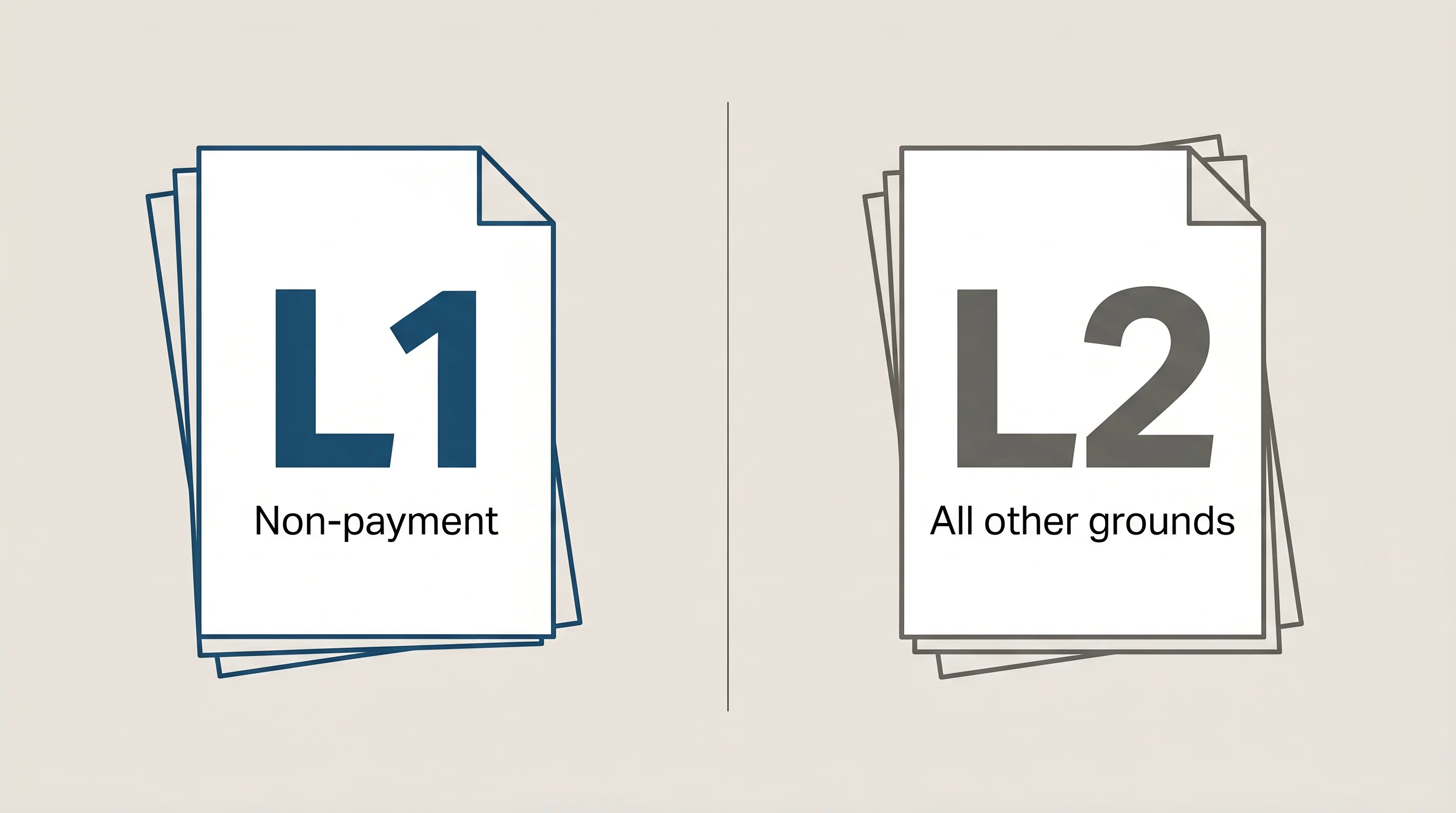
Confused about whether to file an L1 or L2 at the Ontario LTB? This 2026 guide breaks down when each application applies, what notices they follow, how hearings differ, and what documentation landlords need to win.
 Rights & Legal
A complete 2026 guide to Ontario N12 notices. Understand when own-use ends a tenancy, the compensation rules under Bill 60, the good faith requirement, and how the process works for landlords, property managers, and tenants receiving an N12.
 Rights & Legal
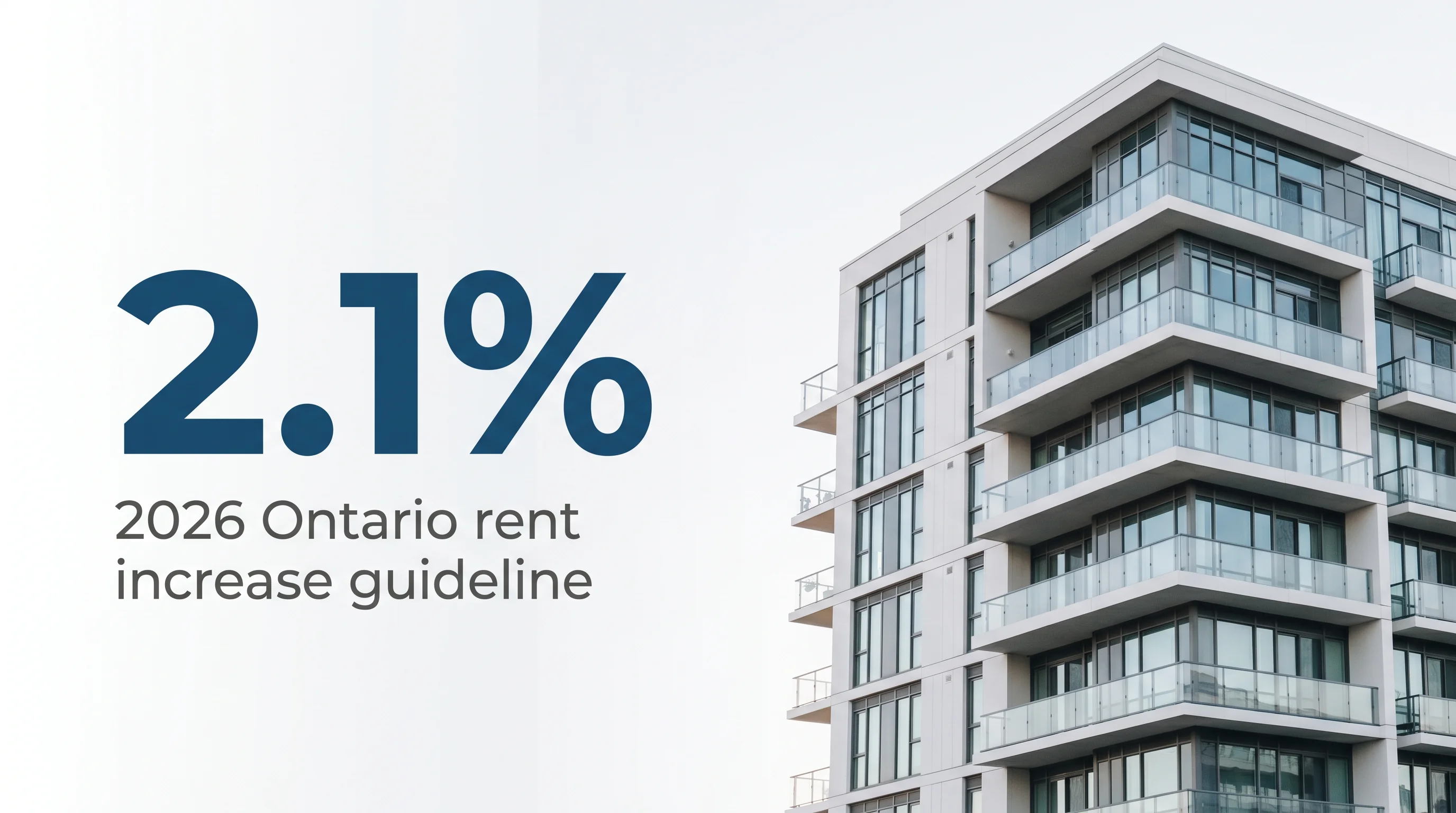
A complete 2026 guide to rent increases in Ontario. Understand the 2.1% provincial guideline, the 90-day N1 notice requirement, when rent increases apply, what voids them, and how the process works for landlords, property managers, and tenants alike.
 Lease & Agreements
Everything Ontario landlords need to know about the Standard Lease in 2026. Learn what's required, what you can add, common mistakes to avoid, and how to create a legally compliant lease under the new Bill 60 rules.