
Explore the library

Narrow 189 published guides by topic, province, who you are and the kind of help you need. Every filter shows how many guides it leaves.

Pick a province

Shaded tiles have guides written for that province.

35 of 189 guides

Showing guides matching “N1”, newest first.

Results

  • Rights & Legal
    ONArticle

    The Renoviction Paper Trail: N13 Documents and the Right of First Refusal After September 21

    An N13 renoviction runs on paper, and from September 21, 2026 there's more of it: Bill 97 amends the RTA's right-of-first-refusal rules, adding written-notification duties for landlords once a tenant has preserved the right — including keeping the tenant updated when the completion date slips, which it usually does. Th

    12 min read
  • Rights & Legal
    ONArticle

    Mississauga's Renoviction Licence Starts September 1: What Landlords Need to Know

    From September 1, 2026, serving an N13 in Mississauga starts a second clock the province doesn't run: within seven days, the landlord must apply to the City for a Rental Repairs and Renovations Licence — and no work starts, and no tenant leaves, until both the building permit and the licence are in hand. Here's the mun

    12 min read
  • Rent & Payments
    ONArticle

    The N1 Window for 2027 Opens October 3: Serve-Date Math for the 1.9% Year

    Ontario's 2027 rent increase guideline is 1.9% — and the first day a landlord can serve an N1 for a January 1, 2027 increase is October 3, 2026, exactly 90 days out. This is the timing piece: the serve-date math for any 2027 effective date, the 12-month rule check, what the effective date controls (including which year

    15 min read
  • News & Policy Updates
    ONArticle

    The September 21 Checklist: Getting Ready for Ontario's Second Wave of Tenancy Changes

    Eight weeks from now, Ontario's second wave of tenancy-law changes takes effect: the 7-day N4, the 120-day no-compensation N12 route, the renoviction documentation rules, and the fixed-term changes — all on September 21, 2026, per the LTB's own operational update. This is the preparation checklist: what changes, what d

    15 min read
  • Rights & Legal
    ONArticle

    Renoviction Licensing by Ontario City: Toronto, Hamilton and Ottawa Compared

    Three Ontario cities now license renovation evictions, and a pattern has emerged: all three give landlords seven days from the N13 to apply, and almost everything else differs — Hamilton charges $715 per unit with annual renewals, Toronto $700 with compensation proven before approval, and Ottawa (from January 1, 2027)

    15 min read
  • Rights & Legal
    ONArticle

    Ottawa's Renoviction Bylaw: What Landlords Must Do Before January 1, 2027

    Ottawa city council passed its Rental Renovation Licence bylaw 21–5 on July 15, 2026, and it takes effect January 1, 2027: a municipal licence within 7 days of issuing an N13, a building permit secured before the notice goes out, and a city-produced tenant rights guide served alongside it. Here's what the bylaw actuall

    15 min read
  • Tools & Evaluations
    CanadaArticle

    Tenon10 vs Propertyware: Which Fits Canadian Landlords?

    This is the last comparison in our series, and it's about a kinship: both of these tools care about single-family rentals — the scattered houses, duplexes, and townhomes that make up most Canadian landlords' portfolios. Propertyware has spent almost twenty years serving that segment at company scale: it's built, in its

    15 min read
  • Tools & Evaluations
    CanadaArticle

    Tenon10 vs Yardi Breeze: Which Fits Canadian Landlords?

    Yardi Breeze is the friendliest door into one of the oldest names in property software — per-unit pricing, no onboarding fees, and a product line that runs from Breeze through Premier to Voyager, the enterprise platform that costs more per year than most small portfolios gross. That's the honest frame for this comparis

    15 min read
  • Tools & Evaluations
    CanadaArticle

    Tenon10 vs Landlord Studio: Which Fits Canadian Landlords?

    Here's a comparison between twins of a different kind: both of these tools give a 1-to-3-unit landlord a genuinely free plan — not a trial, a product. Landlord Studio pairs its free tier with the deepest DIY bookkeeping stack at this end of the market: live bank feeds, receipt scanning, smart rules that sort your trans

    15 min read
  • Tools & Evaluations
    CanadaArticle

    Tenon10 vs Rentec Direct: Which Fits Canadian Landlords?

    Here's the strangest comparison in our series: these two tools chose almost the same shape. Rentec Direct's entry plans run $45–$55 USD a month covering up to 25 units; Tenon10's Pro runs $49 CAD for the same twenty-five. Both price flat. Both publish their numbers. Neither requires a contract. Both get praised by revi

    15 min read
  • Tools & Evaluations
    CanadaArticle

    Tenon10 vs TenantCloud: Which Fits Canadian Landlords?

    This is the closest price matchup in our comparison series: TenantCloud's entry plan runs $15–$17 USD a month, unlimited units on every tier, with a genuinely devoted small-landlord following — and Tenon10's Essentials runs $9.99 CAD for up to ten. No sales floors, no enterprise minimums, no assembled-bill shock: two s

    15 min read
  • Tools & Evaluations
    CanadaArticle

    Tenon10 vs liv.rent: Which Fits Canadian Landlords?

    For the first time in this series, the comparison isn't decided before it starts. liv.rent is Canadian — Vancouver-built, CAD-priced, genuinely liked — so the two arguments that carried our Buildium, AppFolio, and DoorLoop pages simply don't apply. What's left is a better question than "which is cheaper in whose curren

    15 min read
  • Tools & Evaluations
    CanadaArticle

    Tenon10 vs DoorLoop: Which Fits Canadian Landlords?

    This is the first comparison in our series without an easy answer built in. DoorLoop names Canada in its own positioning, starts at a price a small landlord can say out loud, offers a real free trial, and earns reviews in the 4.5-to-5-star range. So this page does the two jobs a genuine comparison requires: it assemble

    15 min read
  • Tools & Evaluations
    CanadaArticle

    Tenon10 vs AppFolio: Which Fits Canadian Landlords?

    Here's the shortest honest comparison on the internet: AppFolio doesn't sell to portfolios under 50 units — so if you're a Canadian landlord with a duplex, a fourplex, or anything under two dozen doors, one of these platforms won't take you as a customer, and the other was built for you. This page covers the rest prope

    15 min read
  • Tools & Evaluations
    CanadaArticle

    Tenon10 vs Buildium: Which Fits Canadian Landlords?

    Buildium is excellent software — for a US property management company running 50 to 1,000 doors. If that's you, close this tab and go demo it. But if you're a Canadian landlord with a basement suite, a triplex, or a growing portfolio under 25 units, you'd be paying US-company prices in US dollars for US workflows — and

    16 min read
  • Platform & Product
    CanadaArticle

    Tenon10 on Your Phone: What Works Today, What's Coming, and the Mobile-First Landlord Workflow

    Landlording is a mobile job that most software treats as a desk job — showings, move-in photos, the furnace invoice in your hand, the e-Transfer that arrives while you're in line for coffee. Tenon10's iOS and Android apps are officially coming soon, and this guide is honest about exactly that: what the platform publicl

    13 min read
  • Platform & Product
    CanadaArticle

    Keya, Explained: Inside Tenon10's AI Copilot for Landlords

    Every property platform now claims an AI. The honest questions are: what can it actually see, what can it actually do, and what happens when it's wrong? This deep-dive walks through Keya, Tenon10's AI copilot, the way a landlord meets it — plain-English answers drawn from your own ledger ("What's my collection rate thi

    14 min read
  • Platform & Product
    CanadaArticle

    Tenon10 Feature Deep-Dive: The Accounting Module

    Most landlords don't have an accounting problem in April — they have a records problem all year that becomes visible in April. This deep-dive walks through Tenon10's accounting module the way a landlord actually meets it: the ledger that builds itself as rent comes in (card, bank, e-Transfer, even cash — one ledger), t

    14 min read
  • Platform & Product
    CanadaArticle

    Owner Sub-Accounts: How They Work in Tenon10

    The moment a property manager takes on a second owner, one question decides whether the business scales or unravels: whose money is this? This guide walks through how Tenon10 keeps every owner's world separate — per-owner properties and books, team and organization structure for multi-user firms, and trust-accounting c

    14 min read
  • Rights & Legal
    ONArticle

    Removing a Tenant Without Eviction: The Legal Alternatives to the LTB Queue

    Not every tenancy has to end at the Landlord and Tenant Board. Ontario law gives landlords and tenants several legal ways to part company without an eviction hearing — the N11 mutual agreement and cash-for-keys deal, the tenant's own N9 notice, assignment, and negotiated moves — each faster than the queue when done rig

    14 min read
  • Rights & Legal
    ONArticle

    Bad-Faith N12: How the LTB Decides

    The landlord said they needed the unit for family. You moved out. A week later it was on the market at $500 more. Ontario law presumes what that looks like: an own-use eviction followed by re-listing within 12 months is presumed bad faith — and suddenly the landlord must prove innocence. Here's the T5 application from

    13 min read
  • Rights & Legal
    ONArticle

    The T1 Application: Getting Money Back From Your Landlord

    Key deposits. Pet fees. An unreturned last month's rent. Interest nobody ever paid. N12 compensation that never arrived. Ontario law makes all of it recoverable — through one application with eight grounds and a filing fee under $60. But the T1 runs on a strict one-year lookback, and unchallenged rent increases become

    12 min read
  • Rights & Legal
    ONArticle

    The L3 Application: When a Tenant Gave Notice or Agreed to Leave — but Didn't

    The tenant handed you an N9 — or signed an N11 — and then simply stayed. The L3 converts their own paperwork into an eviction order, often without a hearing. But it runs on a 30-day fuse that voids the notice entirely, and an affidavit with five required elements the LTB will refuse the file over. Here's the complete w

    13 min read
  • Rights & Legal
    ONArticle

    The N13 Paper Trail: Ontario's New Renoviction Documentation Rules

    Ontario's renoviction rules now run on paperwork: a qualified professional's report, building permits, written timeline estimates, update obligations, a completion notice, and a 60-day window for the tenant to come back. Here's the full document trail — what landlords must produce, what tenants can demand, and where mu

    12 min read
  • Rights & Legal
    ONArticle

    The N12 120-Day Path: How Landlords Can Skip the Compensation (and the Trap to Avoid)

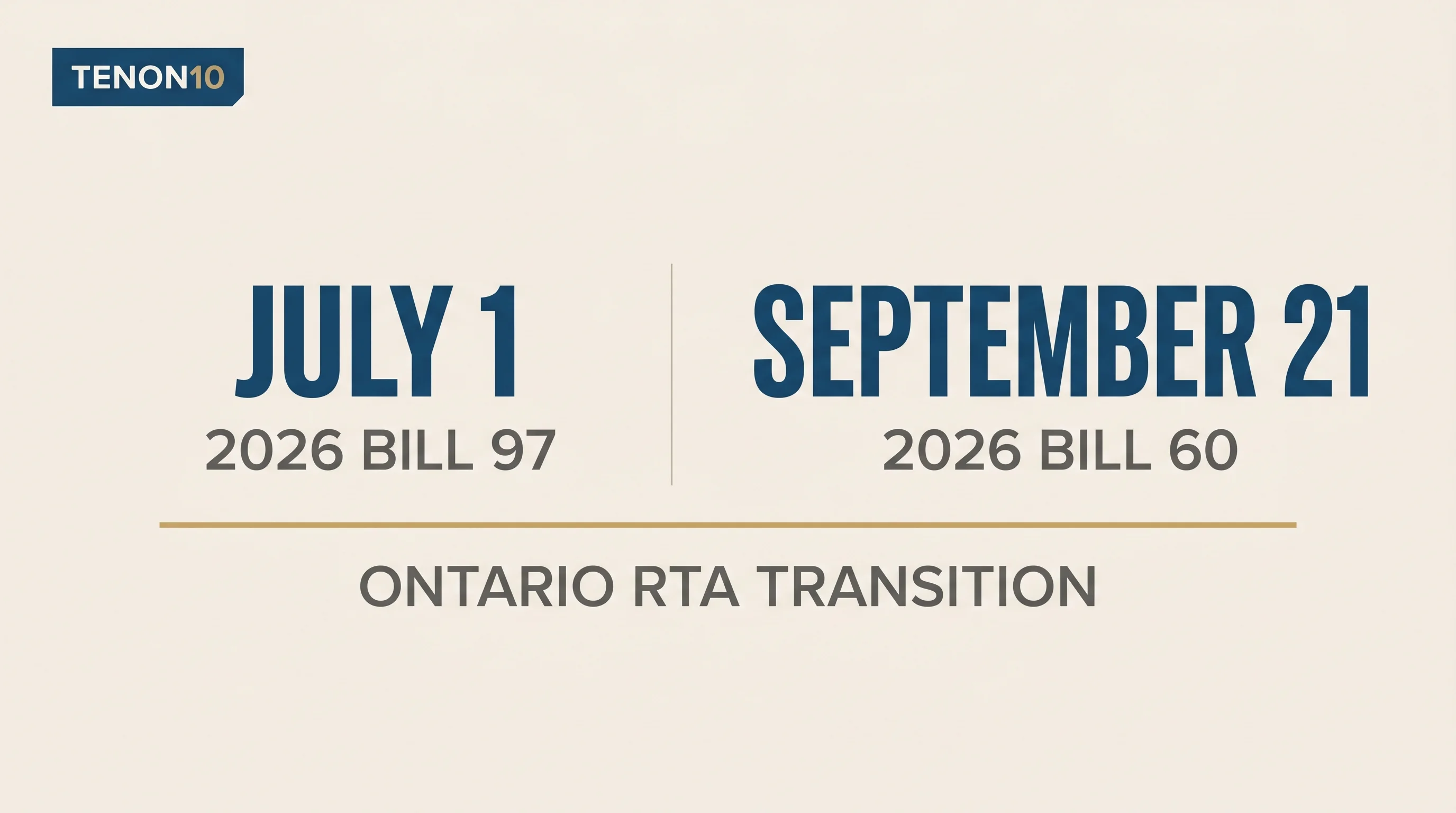
    Bill 60 gives Ontario landlords a new choice on own-use evictions: serve the N12 the fast way and pay a month's compensation, or give at least 120 days' notice and pay nothing. On a $3,000 unit, that timing choice is worth $3,000. This guide breaks down exactly how the new 120-day path works under RTA s.48.1(2), when i

    13 min read
  • Rights & Legal
    ONArticle

    The N2 Notice in Ontario: Rent Increases for Rent-Control-Exempt Units

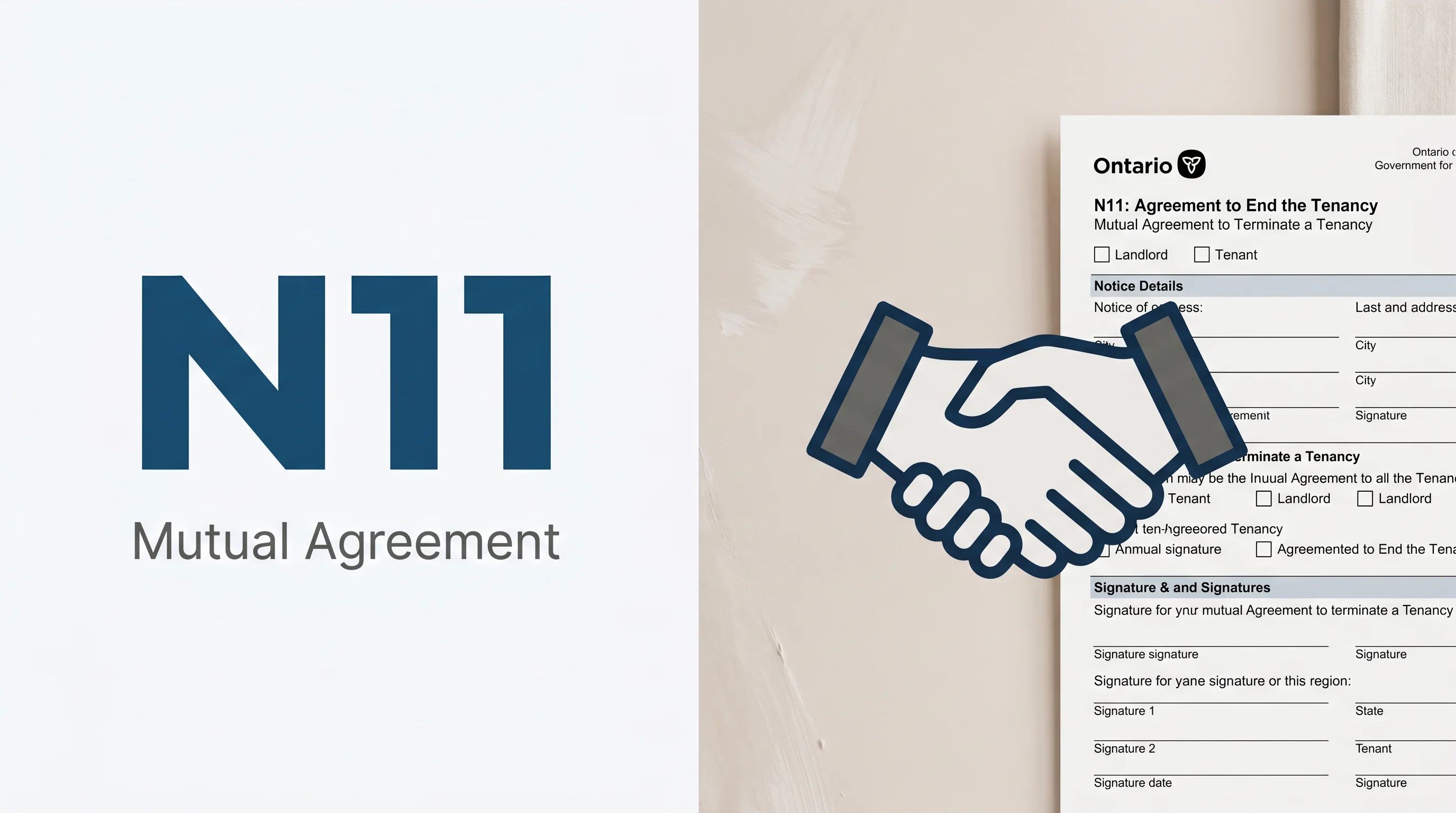
    If your rental was first occupied after November 15, 2018, the annual guideline doesn't cap your rent increases — but using the N1 instead of the N2, skipping the 90-day notice, or failing to prove the exemption can void the increase entirely. Here's how the N2 actually works.

    13 min read
  • Rent & Payments
    ONArticle

    Ontario Rent Increases 2027: The Complete N1 Guide

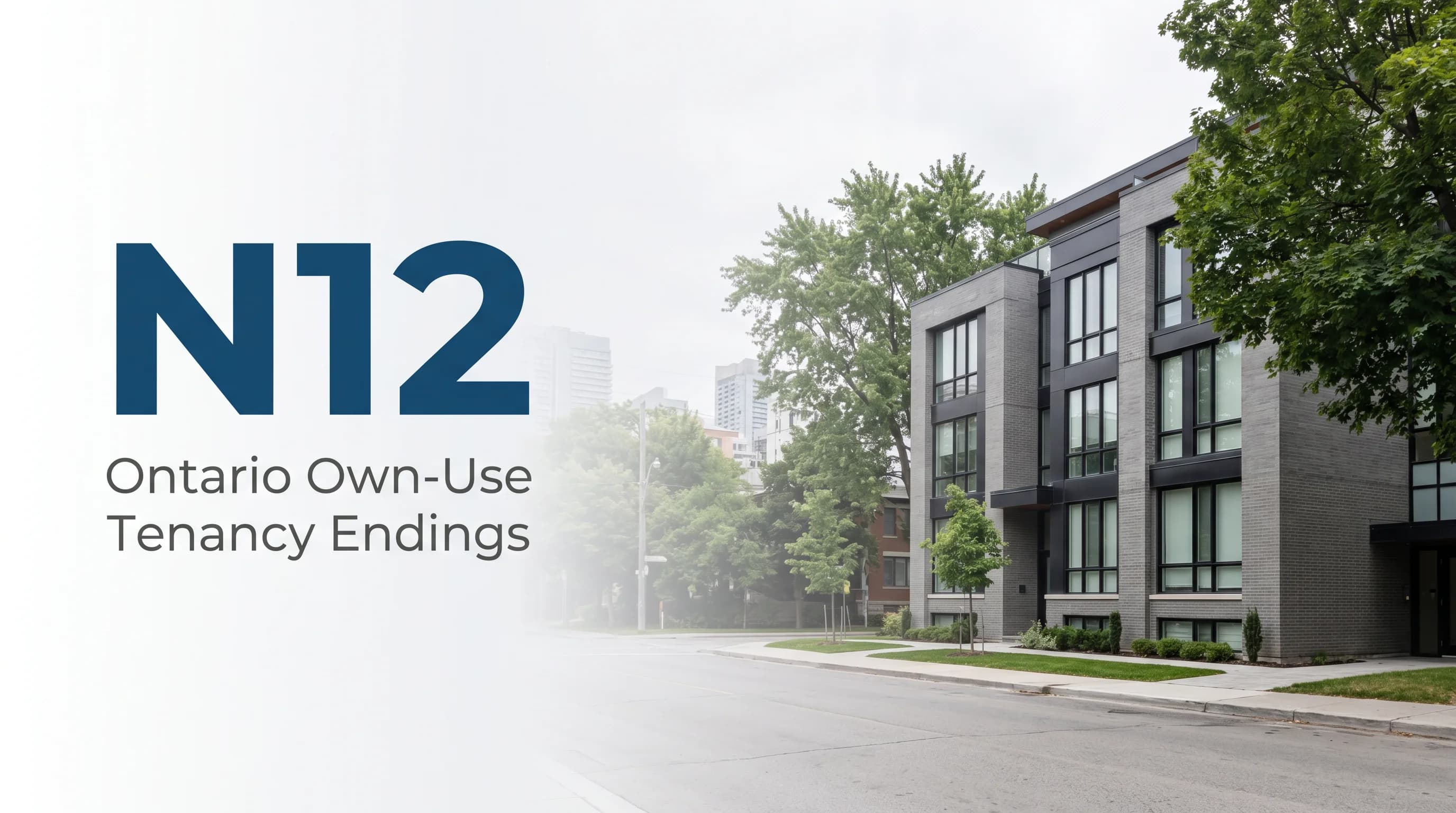
    Ontario's 2027 rent increase guideline is 1.9% — the maximum most landlords can raise rent without going to the LTB. This complete guide covers the 1.9% cap, the exact N1 notice rules, the 90-day timing (you can serve as early as October 2026 for a January 2027 increase), who's exempt, and the mistakes that quietly voi

    13 min read

  • Rights & Legal
    ONArticle

    The T5 Application: How Ontario Tenants Fight a Bad-Faith Eviction

    You moved out because your landlord "needed the unit" — then it went back on the market at a higher rent. That's a bad-faith eviction, and the T5 is how you fight back. This complete guide covers what counts as bad faith, the deadlines that split by reason (one year for an N12, up to two for an N13 renovation), the evi

    13 min read
  • Rights & Legal
    ONArticle

    The N13 Notice in Ontario: Demolition, Conversion, and Major Repairs Explained

    The N13 is the notice an Ontario landlord uses to end a tenancy to demolish, convert, or do major repairs that need the unit empty. This guide walks through the three grounds, the 120-day notice rules, the compensation and right-to-return, and exactly how the process works — for both landlords serving one and tenants w

    12 min read
  • Rights & Legal
    ONArticle

    Ontario Renovictions: A Complete Guide for Landlords and Tenants

    "Renoviction" is when a landlord uses renovations to end a tenancy — sometimes legitimately, sometimes not. This complete guide explains how the N13 process actually works, the compensation and right-to-return rules, the new licensing crackdown under Bill 60/97, and how both landlords and tenants can stay on the right

    13 min read
  • Rights & Legal
    ONArticle

    N11 Mutual Agreements: How Parties Reach Fair End-of-Tenancy Terms

    Both parties want to end the tenancy peacefully? The N11 is Ontario's cooperative path — no LTB hearing, no notice periods, no penalties. This 2026 guide explains when N11 makes sense, how to negotiate fair terms, and the protections both sides need to understand before signing.

    17 min read
  • Rights & Legal
    ONArticle

    Ontario N12 Notices: A Complete Guide to Own-Use Tenancy Endings

    A complete 2026 guide to Ontario N12 notices. Understand when own-use ends a tenancy, the compensation rules under Bill 60, the good faith requirement, and how the process works for landlords, property managers, and tenants receiving an N12.

    17 min read
  • Rights & Legal
    ONArticle

    Ontario Rent Increases 2026: The Complete N1 Guide

    A complete 2026 guide to rent increases in Ontario. Understand the 2.1% provincial guideline, the 90-day N1 notice requirement, when rent increases apply, what voids them, and how the process works for landlords, property managers, and tenants alike.

    16 min read
  • Rights & Legal
    CanadaGuide

    How to Pay Rent on Tenon10 — Complete Guide

    Learn about all the ways you can pay rent through Tenon10 — free options like Interac e-Transfer and cash, plus credit card and bank transfer.

    6 min read