Explore the library

Narrow 189 published guides by topic, province, who you are and the kind of help you need. Every filter shows how many guides it leaves.

Pick a province

Shaded tiles have guides written for that province.

52 of 189 guides

Showing article format matching “Ontario landlords”, newest first.

Results

  • Tools & Evaluations
    ONArticle

    Free Rental Listing Tools for Ontario Landlords

    The listing process is full of jobs a free tool does better than willpower — pricing sanity checks, photo prep, description drafting, deposit math, scam checks, and the paperwork around a signed lease. Here's the honest toolkit for Ontario landlords: the free tools worth bookmarking for each job in the listing workflow

    12 min read
  • Rights & Legal
    ONArticle

    The Human Rights Code and Rental Advertising: What Ontario Landlords Can't Say

    Rental ad discrimination rarely looks like discrimination — it looks like friendliness: "perfect for young professionals," "ideal for a quiet couple," "great family neighbourhood." Under Ontario's Human Rights Code, the ad is where compliance starts, and warmly-phrased tenant preferences are the same violation as blunt

    14 min read
  • Safety & Scam Prevention
    ONArticle

    Rental Listing Scams in Ontario: How Landlords and Tenants Both Get Burned

    Rental scams run in both directions, and most guides only warn one side. Tenants get burned by cloned listings, phantom units, and deposit-wire pressure; landlords get burned by their own photos scamming their own applicants, fake pay stubs, and overpayment cheques. Here's the two-sided defence: the scam patterns by na

    13 min read
  • Screening & Applications
    ONArticle

    How to Run a Tenant Credit Check in Ontario

    The tenant credit check is the most misunderstood step in Ontario screening — landlords fear it's complicated, applicants fear it hurts their score, and both fears are out of date. Here's the whole process: the written consent that must come first, where to actually run the check (and what each route costs), why rental

    13 min read
  • Tools & Evaluations
    ONArticle

    Rental Listing Description Templates for Ontario Landlords

    Five ready-to-use rental listing templates — basement suite, condo one-bedroom, family house, student unit, and executive rental — each built on the six-part method: a factual headline, a lede that proves you've met the unit, the complete facts block, specifics instead of adjectives, a response promise, and Ontario's l

    13 min read
  • Rights & Legal
    ONArticle

    Can You Ask for First and Last Month's Rent in Ontario?

    Yes — and almost everything attached to that yes is where landlords get into trouble and tenants overpay. First month's rent is just rent; last month's is Ontario's only legal deposit, capped at one rental period, earning interest every year at that year's guideline rate. Damage, security, cleaning, and pet deposits ar

    12 min read
  • Tools & Evaluations
    ONArticle

    Where to List a Rental in Ontario: 9 Sites Compared

    Nine places Ontario landlords actually list rentals — Kijiji, Facebook Marketplace, Craigslist, Rentals.ca, Zumper, PadMapper, ViewIt.ca, RentSeeker, and the agent-gated Realtor.ca — compared honestly on cost, audience, posting friction, scam exposure, and where each one earns its place. Dated cells, no pay-to-play, an

    14 min read
  • Rights & Legal
    ONArticle

    Renoviction Licensing by Ontario City: Toronto, Hamilton and Ottawa Compared

    Three Ontario cities now license renovation evictions, and a pattern has emerged: all three give landlords seven days from the N13 to apply, and almost everything else differs — Hamilton charges $715 per unit with annual renewals, Toronto $700 with compensation proven before approval, and Ottawa (from January 1, 2027)

    15 min read
  • Rights & Legal
    ONArticle

    LTB Orders Are Now Public: What Ontario's Open Data Release Means for Landlords

    As of July 24, 2026, the LTB's final orders are public data: every non-confidential order from January through May 2026 is live on Ontario's Open Data Catalogue, with orders back to 2021 following in phases and new ones publishing monthly — on a disclosed 2-to-3-month lag. This guide covers what's in the release and wh

    15 min read
  • Rights & Legal
    ONArticle

    Handling Tenant Complaints in Ontario: The System That Turns Problems Into Trust

    Every complaint a tenant brings you is two things at once: a problem to fix and a test of whether your word means anything. Ontario landlords who handle complaints well run a system — acknowledgment inside a day, categories that route urgent from routine, one written record per issue, and a close-the-loop message when

    22 min read
  • Rights & Legal
    ONArticle

    Tenant Screening in Ontario: What the Human Rights Code Actually Lets You Ask

    Most Ontario landlords screen on income first — three times the rent, or a 30% cut-off. The Human Rights Commission says that rule is illegal, and the regulation makes income the one tool you can't use on its own. Credit and rental history can stand alone. Income can't. Here's what you may actually ask.

    24 min read
  • Market Trends
    ONArticle

    Best Neighbourhoods to Buy Student Rentals: Waterloo, London & Kingston

    Student rentals are their own asset class — different tenant, different lease, different rules — and in 2026 they're at an inflection point. Ottawa cut Ontario's study-permit allocation 42% this year, and the pullback is reshaping every university town: landlords who once had September bidding wars are now offering one

    16 min read
  • Finances & Budgeting
    ONArticle

    Landlord Insurance in Ontario: What's Standard, What It Costs, and Where the Gaps Are

    A homeowner policy does not cover a rental — most Ontario landlords learn that one the expensive way. This guide covers what standard landlord insurance actually includes (structure, liability, lost rental income), what the common endorsements add (sewer backup, overland flood, legal expenses), what a typical policy co

    15 min read
  • Rights & Legal
    ONArticle

    Removing a Tenant Without Eviction: The Legal Alternatives to the LTB Queue

    Not every tenancy has to end at the Landlord and Tenant Board. Ontario law gives landlords and tenants several legal ways to part company without an eviction hearing — the N11 mutual agreement and cash-for-keys deal, the tenant's own N9 notice, assignment, and negotiated moves — each faster than the queue when done rig

    14 min read
  • Rights & Legal
    ONArticle

    The LTB Process, End to End: From First Notice to Final Enforcement

    Every LTB journey follows the same road: a notice, an application on the Tribunals Ontario Portal, a queue, a fork at mediation, a hearing, an order — and sometimes the Sheriff. This pillar guide maps the entire process end to end for landlords, tenants, and property managers: which notice starts which application, wha

    16 min read
  • Rights & Legal
    ONArticle

    Lease Renewal Strategies in Ontario: What to Do When the Term Ends

    In Ontario, a lease that ends doesn't end anything — it converts. So "renewal" is really a strategy question: stay month-to-month or sign a new fixed term? The answer is different for landlords (retention economics, flexibility), tenants (no-fault eviction protection, leverage you didn't know you had), and property man

    12 min read
  • Rights & Legal
    ONArticle

    The AGI Process in Ontario: When Landlords Can Raise Rent Above the Guideline

    Ontario's rent guideline isn't always the ceiling. Through an Above-Guideline Increase, landlords can recover extraordinary tax hikes, major capital work, and security costs — but only on three statutory grounds, under strict caps, with a hearing at the end and an expiry date built in. Here's the full process: grounds,

    11 min read
  • Rights & Legal
    ONArticle

    The N13 Paper Trail: Ontario's New Renoviction Documentation Rules

    Ontario's renoviction rules now run on paperwork: a qualified professional's report, building permits, written timeline estimates, update obligations, a completion notice, and a 60-day window for the tenant to come back. Here's the full document trail — what landlords must produce, what tenants can demand, and where mu

    12 min read
  • Rights & Legal
    ONArticle

    The N12 120-Day Path: How Landlords Can Skip the Compensation (and the Trap to Avoid)

    Bill 60 gives Ontario landlords a new choice on own-use evictions: serve the N12 the fast way and pay a month's compensation, or give at least 120 days' notice and pay nothing. On a $3,000 unit, that timing choice is worth $3,000. This guide breaks down exactly how the new 120-day path works under RTA s.48.1(2), when i

    13 min read
  • Rights & Legal
    ONArticle

    Bill 60's Doubled Fines: What Section 238 of the RTA Now Costs Ontario Landlords

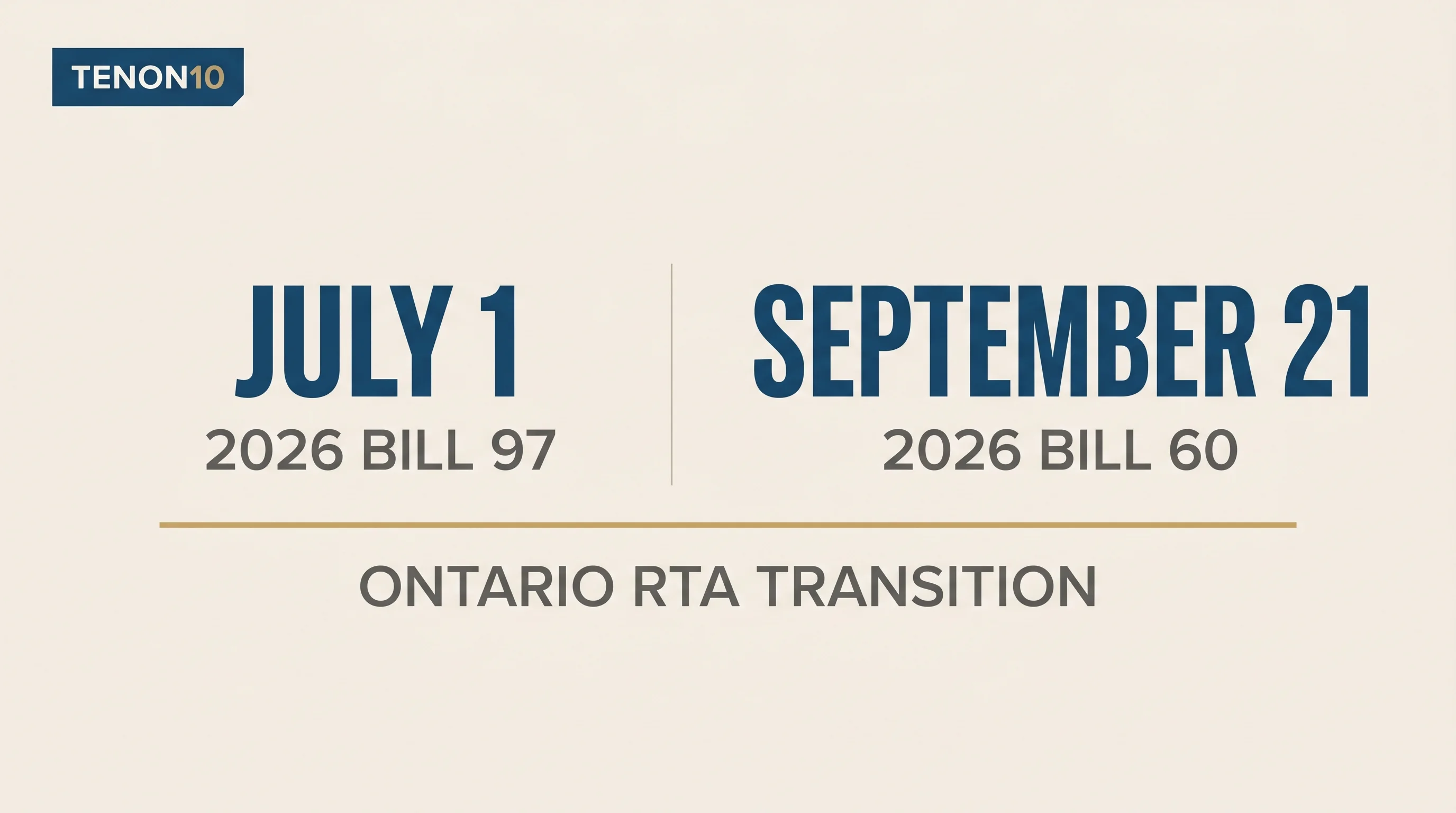
    As of July 1, 2026, the maximum fine for an RTA offence is $100,000 for individuals and $500,000 for corporations — double the old caps. Here's which offences carry that exposure, why directors and officers can be personally liable, and the compliance file that keeps the new numbers theoretical.

    12 min read
  • Rights & Legal
    ONArticle

    Tenant Insurance in Ontario: What's Required and What's Smart

    Tenant insurance isn't required by Ontario law — but your lease can require liability coverage, and skipping it can put your tenancy at risk. Here's what landlords can and can't demand under the standard lease, what coverage actually protects you, and how to get insured for less than a dollar a day.

    14 min read
  • Screening & Applications
    ONArticle

    Background Checks Beyond Credit: What Ontario Landlords Can (and Can't) Legally Check

    A credit check is just one piece of tenant screening — and the moment you go beyond it, the legal lines get sharp. Criminal record checks, references, employment and income verification, eviction history, even a social-media search: each is governed by the Human Rights Code, Ontario's screening regulation, and privacy

    9 min read
  • Taxes & Deductions
    ONArticle

    The T776 Expense Deep-Dive: Every Rental Deduction Ontario Landlords Can Actually Claim

    The expense section is where a T776 is won or lost — it's the largest part of the form and where landlords both overpay (by missing deductions) and get audited (by claiming the wrong ones). This deep-dive walks every T776 expense line, the one distinction that governs all of them — current vs. capital — and the traps t

    10 min read
  • Taxes & Deductions
    CanadaArticle

    CCA for Ontario Landlords: How Rental Depreciation Works (and When Not to Claim It)

    Capital Cost Allowance lets Canadian landlords deduct a slice of their building's cost each year — but it's the most misunderstood line on a rental tax return. It's optional, it can't create a loss, and every dollar you claim can come back to bite you as fully taxed "recapture" when you sell. This guide explains how CC

    10 min read
  • Rent & Payments
    ONArticle

    Ontario Rent Increases 2027: The Complete N1 Guide

    Ontario's 2027 rent increase guideline is 1.9% — the maximum most landlords can raise rent without going to the LTB. This complete guide covers the 1.9% cap, the exact N1 notice rules, the 90-day timing (you can serve as early as October 2026 for a January 2027 increase), who's exempt, and the mistakes that quietly voi

    13 min read
  • Moving & Settling
    ONArticle

    Move-In and Move-Out Inspections in Ontario: The Right Way to Document a Rental

    Ontario doesn't legally require a move-in or move-out inspection — but skipping one is how landlords lose damage claims and tenants lose deposits. Because Ontario bans damage deposits, an inspection report isn't a deduction tool; it's your evidence at the Landlord and Tenant Board. Here's how to document a rental prope

    10 min read
  • Rent & Payments
    ONArticle

    The Last Month's Rent Deposit Rules in Ontario: A Landlord's Guide

    The last month's rent deposit is the most common — and most misunderstood — deposit in Ontario. It can only be used for the last month's rent, never for damage, and you owe your tenant interest on it every year. This guide shows landlords exactly what you can collect, how the annual interest and top-up work, and why al

    12 min read
  • Taxes & Deductions
    ONArticle

    Bookkeeping for Ontario Landlords: The Complete Guide

    Good bookkeeping is the difference between a rental that runs like a business and one that costs you at tax time. This complete guide shows Ontario landlords what records to keep, how to track income and expenses, which costs are deductible, how long the CRA expects you to keep everything, and how clean books flow stra

    13 min read
  • Lease & Agreements
    ONArticle

    Guarantor Agreements in Ontario: A Landlord's Guide

    A guarantor can turn a borderline applicant into a safe one — but only if the agreement is set up properly and offered fairly. This guide shows Ontario landlords what a guarantor actually does, how to put a guarantee in place that holds up, how to screen and verify one, and the human-rights line you can't cross by dema

    11 min read
  • Screening & Applications
    CanadaArticle

    Income Verification for Self-Employed Tenants: A Landlord's Guide

    No pay stub doesn't mean no proof. Self-employed applicants — freelancers, contractors, gig workers, small-business owners — are a fast-growing share of Ontario renters, and screening them out for lacking a T4 is both bad business and a legal risk. This guide shows landlords which documents actually verify self-employe

    10 min read
  • Screening & Applications
    ONArticle

    Reference Check Questions That Actually Work: A Landlord's Guide

    A reference call is only as good as the questions you ask — and most landlords ask the wrong ones. This guide gives Ontario landlords the specific previous-landlord and employer questions that reveal real risk, the ones that catch coached or fake references, and how to ask them without straying into Human Rights Code t

    11 min read
  • Screening & Applications
    ONArticle

    Credit Checks for Ontario Landlords: How to Run One Legally

    A credit check is one of the few screening tools Ontario law actually permits — but only if you do it right. This guide shows landlords how to get consent, run the check, read the report, and use it lawfully under the Human Rights Code, including the 2026 rules that make rental credit checks a no-score-impact soft inqu

    10 min read
  • Screening & Applications
    ONArticle

    Tenant Application Red Flags: What Ontario Landlords Should Watch For

    A clean-looking application can still hide trouble. This guide walks Ontario landlords through the real red flags on a rental application — refusal to consent, inconsistent details, references that don't check out, gaps in rental history — and, just as importantly, how to act on them lawfully without crossing into Huma

    12 min read
  • Screening & Applications
    ONArticle

    How to Screen Tenants in Ontario: A Landlord's Complete Guide

    Screening the right tenant is the single best way to avoid problems later — but in Ontario you have to do it within strict Human Rights Code limits. This complete guide walks landlords and property managers through a legal, effective screening process: applications, credit and reference checks, income verification, wha

    13 min read
  • Rights & Legal
    ONArticle

    The N13 Notice in Ontario: Demolition, Conversion, and Major Repairs Explained

    The N13 is the notice an Ontario landlord uses to end a tenancy to demolish, convert, or do major repairs that need the unit empty. This guide walks through the three grounds, the 120-day notice rules, the compensation and right-to-return, and exactly how the process works — for both landlords serving one and tenants w

    12 min read
  • Rights & Legal
    ONArticle

    Ontario Renovictions: A Complete Guide for Landlords and Tenants

    "Renoviction" is when a landlord uses renovations to end a tenancy — sometimes legitimately, sometimes not. This complete guide explains how the N13 process actually works, the compensation and right-to-return rules, the new licensing crackdown under Bill 60/97, and how both landlords and tenants can stay on the right

    13 min read
  • Rights & Legal
    ONArticle

    The L10 Application: How Ontario Landlords Collect Money a Former Tenant Owes

    When a tenant moves out still owing you money, the L10 lets you take them to the LTB to collect — rent arrears, NSF charges, and utility costs. Here's who can use it, the one-year deadline that catches landlords out, what you can claim, and how to file and actually get paid.

    10 min read
  • Rights & Legal
    ONArticle

    The L9 Application: How Ontario Landlords Collect Rent Without Evicting

    The L9 lets an Ontario landlord ask the LTB for an order that a current tenant pay the rent they owe — without ending the tenancy. Here's when to use the L9 instead of an L1, how to file it, what the LTB can order, and how to actually collect once you win.

    10 min read
  • Rights & Legal
    ONArticle

    N7 Notice in Ontario: A Landlord's Guide to Ending a Tenancy for Serious Problems

    The N7 is Ontario's notice for ending a tenancy when a tenant causes serious problems — safety threats, wilful damage, or dangerous misuse. Here's when landlords can use it, the strict 10-day timeline, why it can't be voided, and the mistakes that get applications thrown out at the LTB.

    13 min read
  • Rights & Legal
    ONArticle

    N5 Notices in Ontario: A Complete Guide to Addressing Disturbances

    The N5 is Ontario's most-used notice for tenancy issues that aren't about money — interference, damage, or overcrowding. This 2026 guide explains the unique two-N5 rule, what tenants can do to void the notice, and what landlords must document to make an N5 stand up at the LTB.

    18 min read
  • Rights & Legal
    ONArticle

    L1 vs L2 LTB Applications: Understanding the Difference

    Confused about whether to file an L1 or L2 at the Ontario LTB? This 2026 guide breaks down when each application applies, what notices they follow, how hearings differ, and what documentation landlords need to win.

    16 min read
  • Rights & Legal
    ONArticle

    Ontario N12 Notices: A Complete Guide to Own-Use Tenancy Endings

    A complete 2026 guide to Ontario N12 notices. Understand when own-use ends a tenancy, the compensation rules under Bill 60, the good faith requirement, and how the process works for landlords, property managers, and tenants receiving an N12.

    17 min read
  • Rights & Legal
    ONArticle

    Ontario Rent Increases 2026: The Complete N1 Guide

    A complete 2026 guide to rent increases in Ontario. Understand the 2.1% provincial guideline, the 90-day N1 notice requirement, when rent increases apply, what voids them, and how the process works for landlords, property managers, and tenants alike.

    16 min read
  • Lease & Agreements
    ONArticle

    Fixed-Term Leases in Ontario: Why They All Convert to Month-to-Month

    Think your tenant's lease "expires" when the term ends? Think again. In Ontario, fixed-term leases automatically convert to month-to-month tenancies—and landlords can't force tenants to leave or sign a new lease. Learn how this works and what your options really are.

    14 min read

Showing 48 of 52

Load more guides