Calgary Landlord and Tenant Guide: Provincial Rules Plus City Rules
Calgary tenancies follow Alberta's Residential Tenancies Act, plus city rules for secondary suites and short-term rentals. The suite amnesty is set to end December 31, 2026.
Narrow 276 published guides by topic, province, who you are and the kind of help you need. Every filter shows how many guides it leaves.
Shaded tiles have guides written for that province.
62 of 276 guides
Showing Rights & Legal matching “Rent”, newest first.
Calgary tenancies follow Alberta's Residential Tenancies Act, plus city rules for secondary suites and short-term rentals. The suite amnesty is set to end December 31, 2026.
Owning a BC rental while living in Ontario: the BC duties that need someone on site, how to serve notices from a distance, and when paid help must be licensed.
Vancouver limits short-term rentals to the unit the host lives in, and the Province's registry sits on top. What long-term landlords need to know when a tenant asks to host.
Alberta announced on October 8, 2026 that Edmonton must return high-density infill rules to pre-2024 settings and restore pre-2020 parking minimums. The City says its current bylaw stays in effect until January 2027.
Your rights as an Alberta renter, in the order a tenancy runs: the lease, the deposit cap, the inspection report, entry, rent increases, repairs, notices and getting your deposit back.
Breaking a BC lease does not automatically cost the rest of the term. Here is what a landlord can claim, the landlord's duty to re-rent, and the lawful ways to leave early.
A BC landlord may enter a rental unit only in six situations, most often with 24 hours' written notice. Here is what the notice must say, how to time it, and what each side can do when rules are broken.
Ontario's 2027 guideline is 1.9%; BC's limit is 2.2%. Rent increases, deposits, entry and unpaid-rent notices compared side by side for owners with rentals in both provinces.
If your BC landlord will not fix a problem, you do not have to withhold rent or do it yourself. Here is the path from a written request to an RTB order for repairs, a rent reduction and compensation.
BC tenants must give written notice that reaches the landlord a full rental month before they leave. Here is how to count it, what to include, and what to do before move-out.
Helping a parent or friend with their BC rental needs no licence if it is truly free. Paid or in-kind help usually does, unless an exemption fits.
A BC 10 Day Notice for unpaid rent gives you 5 days to act. Here is how to count your deadline, your options to pay or dispute, and where to get help.
Your B.C. rent can rise by at most 2.2% in 2027. Here is what that means in dollars, when it can start, and how to check your notice.
How B.C. tenants can check whether a rent increase is lawful, what to do if it is not, and how to recover an overpayment.
Since July 24, 2026, the Landlord and Tenant Board's final orders have been publishing to Ontario's Open Data Catalogue — free, no login, monthly updates, with history filling back to December 2021 in phases. It's the biggest transparency shift the rental market has seen in years, and the most misused tool of the fall:
Rights & LegalOn September 21, 2026, "persistent late payment" stops being a judgment call and becomes a statutory test: under O. Reg. 516/06, rent counts as late only if it's unpaid more than seven days after the due date, and a tenant is persistently late after at least three late payments within any six-month period — a floor, no
From September 1, 2026, serving an N13 in Mississauga starts a second clock the province doesn't run: within seven days, the landlord must apply to the City for a Rental Repairs and Renovations Licence — and no work starts, and no tenant leaves, until both the building permit and the licence are in hand. Here's the mun
Rent control in Ontario doesn't limit what rent you can advertise — and that surprise cuts both ways. Vacancy decontrol means a new tenancy's rent is set freely, so the number in your ad is yours to choose; but the moment a tenant signs at that number, the control regime takes over, and the advertised rent becomes the
Rental ad discrimination rarely looks like discrimination — it looks like friendliness: "perfect for young professionals," "ideal for a quiet couple," "great family neighbourhood." Under Ontario's Human Rights Code, the ad is where compliance starts, and warmly-phrased tenant preferences are the same violation as blunt
The short answer: Ontario has no provincial licence for renting out residential property. The complete answer is why the question stays confusing — licensing is municipal, and three different licence types now share the word: ordinary rental licensing in some cities, renoviction licensing in Hamilton, Toronto, and Otta
Ontario pet law does something almost nobody expects, and both sides routinely get it backwards: at the application stage, a landlord may generally choose not to rent to someone because they have a pet — but once the tenancy exists, a "no pets" lease clause is void, and a tenant who gets a pet after moving in usually c
Yes — and almost everything attached to that yes is where landlords get into trouble and tenants overpay. First month's rent is just rent; last month's is Ontario's only legal deposit, capped at one rental period, earning interest every year at that year's guideline rate. Damage, security, cleaning, and pet deposits ar
Advertising a rental in Ontario is a five-step craft with a legal layer at every step: confirm the unit can lawfully be listed, price it to the market that exists, write and shoot a listing that works, choose platforms deliberately (only one major site is agent-gated), and run enquiries without drowning. This pillar co
Ottawa city council passed its Rental Renovation Licence bylaw 21–5 on July 15, 2026, and it takes effect January 1, 2027: a municipal licence within 7 days of issuing an N13, a building permit secured before the notice goes out, and a city-produced tenant rights guide served alongside it. Here's what the bylaw actuall
Compliance doesn't scale smoothly with your portfolio — it steps. A purchaser's own-use notice works at three units and fails at four. Fire alarm obligations change character the day a building has a monitored system. Toronto's RentSafeTO program switches on at three storeys and ten units, the multi-residential tax cla
A housing co-op looks like a rental building and runs like a small democracy: members instead of tenants, occupancy charges instead of rent, by-laws instead of a lease, and a board — not a landlord — in charge. For property managers, that changes the client, the money, and the eviction machinery entirely: the Co-operat
Every rental file is a privacy file: applications, credit checks, IDs, camera footage, smart-entry logs. Under PIPEDA, landlords and property managers are data custodians with real obligations — consent, purpose limits, safeguards, 30-day access requests, and mandatory breach reporting with fines up to $100,000. Here's
House hacking sounds like a financing strategy. In Ontario it's a legal one. Whether your tenant shares a kitchen or bathroom with you decides whether the Residential Tenancies Act applies at all — and whether the Human Rights Code does either. Same house, same rent, same person. One fact, two statutes, and most of the
Nobody asked whether you wanted to be a landlord. A parent died, or a move happened, and now there's a tenancy with your name on it — a rent you didn't set, terms you didn't write, a deposit you never took. The lease is attached to the property, not the person. You stepped into the shoes, and the Act doesn't care that
You think you're choosing between two doors. There are three, and every one is a tax event. The day you rent it out, the Income Tax Act deems you to have sold it — at fair market value, to nobody, for no money. The fix is a one-page letter with no form number, and it's due with that year's return.
Your lease is not where the rules live. A condo tenant is bound by a declaration they never signed — and when they breach it, the corporation doesn't chase them. It charges you, and the charge attaches to your unit ahead of your mortgage. Here's the second rulebook, and the deadline most owners miss by three weeks.
Moving away doesn't change your obligations under the RTA — but crossing the tax-residency line changes who your tenant owes money to. A Tax Court case put six years of your tax bill on a tenant who had no idea. Here's what actually changes when you leave, and what to set up before you go.
Ontario has no single heating law. Your minimum temperature and your heating season come from your municipality — and Toronto's dates moved in 2025, which most guides still haven't noticed. What the province requires, what four cities require, and the winter obligations that start before you think.
Most Ontario landlords screen on income first — three times the rent, or a 30% cut-off. The Human Rights Commission says that rule is illegal, and the regulation makes income the one tool you can't use on its own. Credit and rental history can stand alone. Income can't. Here's what you may actually ask.
Scaling a rental portfolio isn't buying the first property eleven more times — it's a ladder with three rungs and a wall between each. Rungs one through four run on residential rules: 20% down, the stress test, your personal income carrying every door. Then comes the wall almost nobody warns you about: most major banks
Every day a unit sits empty costs you rent you never get back — and most vacancy isn't created by the market. It's created inside the turnover process: the notice window that gets treated as dead time, the make-ready that starts after the keys come back, the listing that goes live before the unit is ready. Ontario hand
One unit, rent is a payment. Twenty units, rent is a system — rails, reminders, reconciliation, arrears escalation, and owner draws, all running against rules the platforms don't mention: in Ontario you can't require post-dated cheques or automatic payments, you can't charge late fees, and receipts are a legal duty. Th
Automation has become standard practice in rental management — rent collection that reconciles itself, maintenance portals that never sleep, AI that reads a stack of applications in minutes. But the listicles skip the part that matters in Ontario: the RTA and the Human Rights Code draw hard lines around what can run on
The line between a holiday guest and a legal tenant is the most expensive line in Ontario short-term rentals — and it isn't the 28-day switch most hosts believe it is. This guide maps when the RTA's transient-accommodation exemption actually applies, the municipal licensing patchwork (Toronto's principal-residence rule
The parking that vanished. The laundry room that became storage. The pool that never reopened. In Ontario, rent buys a package — and when the landlord shrinks the package, the law shrinks the rent. The T3 is the application that resets your rent permanently, not just once. It runs on a 12-month window, precise valuatio
Key deposits. Pet fees. An unreturned last month's rent. Interest nobody ever paid. N12 compensation that never arrived. Ontario law makes all of it recoverable — through one application with eight grounds and a filing fee under $60. But the T1 runs on a strict one-year lookback, and unchallenged rent increases become
Your landlord's duty to repair is absolute — but it enforces itself exactly never. The T6 is the application that turns ignored repair requests into orders: rent abatements, deadlines, reimbursements, even a freeze on rent increases until the work is done. It costs $48, runs on a one-year clock, and lives or dies on da
You've confirmed your AGI grounds — now comes the paperwork. The L5 is the LTB's most unusual filing: it skips the portal entirely, runs on an Excel form with strict naming rules, demands every receipt up front, and bills $233-plus before anyone reads a word. Here's the complete filing walkthrough — schedules, RUI, fee
In Ontario, a lease that ends doesn't end anything — it converts. So "renewal" is really a strategy question: stay month-to-month or sign a new fixed term? The answer is different for landlords (retention economics, flexibility), tenants (no-fault eviction protection, leverage you didn't know you had), and property man
Searching "Standard Lease vs custom lease Ontario" implies a decision that mostly doesn't exist: since April 2018, Form 2229E is mandatory for nearly every new residential tenancy. What's really worth knowing is the territory around that rule — where lawful customization lives (Section 15), which rentals are genuinely
"Can my partner move in?" is a simple question with a layered answer. Occupant, authorized occupant, or co-tenant — each status carries different rights, and only one adds a second person fully responsible for the rent. Here's how to add a co-tenant properly: the paperwork that works, the joint-and-several prize, the a
Ontario's rent guideline isn't always the ceiling. Through an Above-Guideline Increase, landlords can recover extraordinary tax hikes, major capital work, and security costs — but only on three statutory grounds, under strict caps, with a hearing at the end and an expiry date built in. Here's the full process: grounds,
The N6 is Ontario's notice for two serious situations: illegal acts at the rental unit, and misrepresented income in rent-geared-to-income housing. It carries the shortest notice periods in the LTB stack — 10 or 20 days — and no remedy window, but the burden of proving what happened at the hearing is entirely the landl
If your rental was first occupied after November 15, 2018, the annual guideline doesn't cap your rent increases — but using the N1 instead of the N2, skipping the 90-day notice, or failing to prove the exemption can void the increase entirely. Here's how the N2 actually works.
Your landlord can't just show up. In Ontario, entering your rental almost always takes 24 hours' written notice, stating the reason and a time between 8 a.m. and 8 p.m. — and the LTB enforces that to the minute. But there are narrow exceptions (a real emergency, your consent at the door), a fixed list of valid reasons,
You moved out because your landlord "needed the unit" — then it went back on the market at a higher rent. That's a bad-faith eviction, and the T5 is how you fight back. This complete guide covers what counts as bad faith, the deadlines that split by reason (one year for an N12, up to two for an N13 renovation), the evi
When a landlord enters without notice, harasses, changes the locks, or shuts off a vital service, the T2 is how an Ontario tenant fights back. This guide covers exactly what the T2 covers, the strict one-year deadline, the remedies you can ask for — rent abatement, compensation, an order to stop — and the mistakes that
When a tenant moves out still owing you money, the L10 lets you take them to the LTB to collect — rent arrears, NSF charges, and utility costs. Here's who can use it, the one-year deadline that catches landlords out, what you can claim, and how to file and actually get paid.
The L9 lets an Ontario landlord ask the LTB for an order that a current tenant pay the rent they owe — without ending the tenancy. Here's when to use the L9 instead of an L1, how to file it, what the LTB can order, and how to actually collect once you win.
The N9 is the form Ontario tenants use to end their own tenancy — and getting the notice period and termination date right is what makes it valid. Here's how much notice you need to give, how to calculate the correct end date, and the mistakes that leave you on the hook for another month's rent.
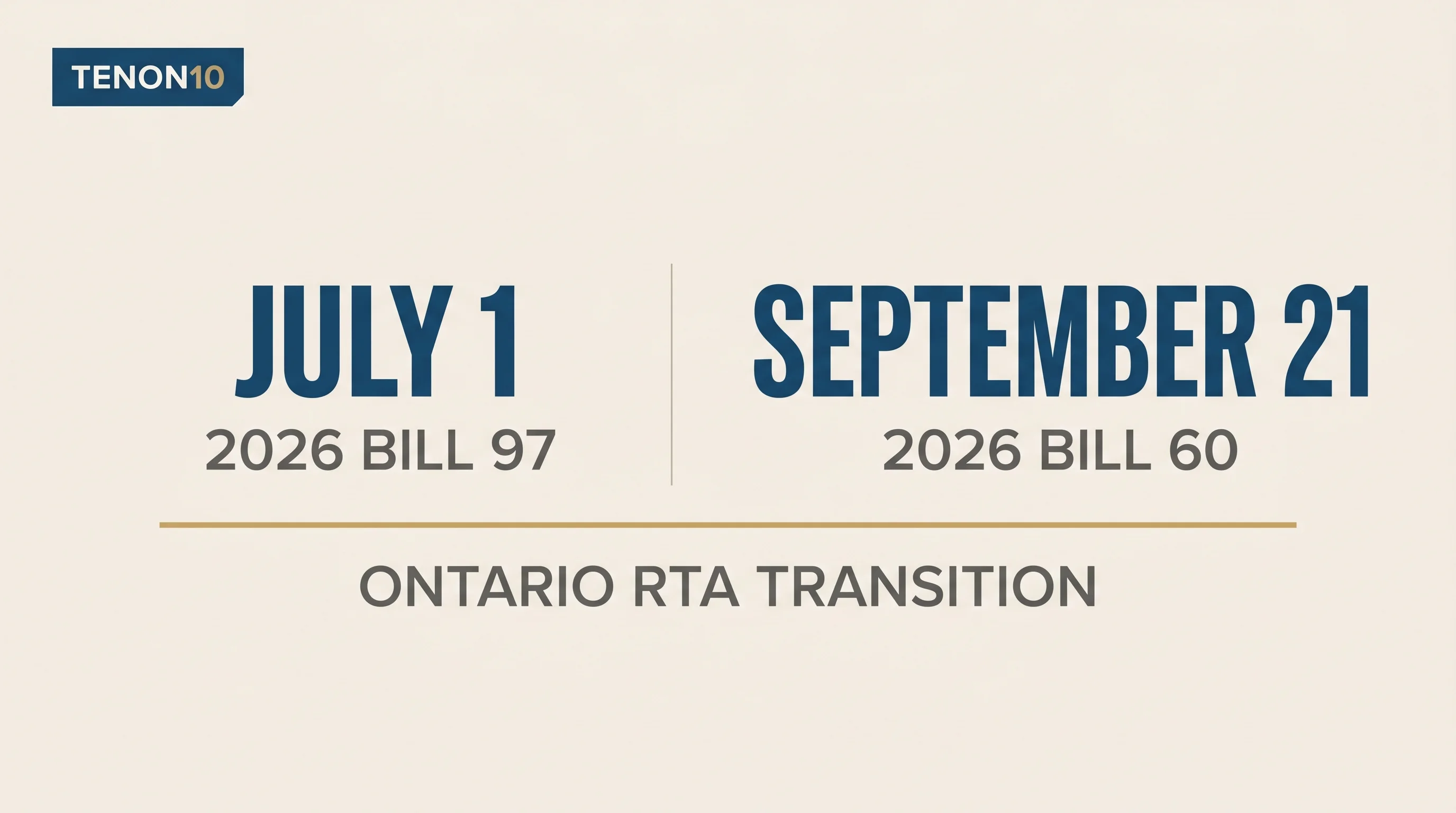
Ontario landlords face the biggest rental law changes in years. Bill 60's N4 and landlord's-own-use N12 changes are in force for notices given on or after September 21, 2026 — a 7-day N4, and no compensation on a landlord's-own-use N12 (never a purchaser's) served with at least 120 days' notice; the 15-day LTB review r
Thinking about renting out your property in Ontario? A complete 2026 guide to becoming a landlord — from your first legal obligations under the RTA to setting rent, screening tenants, collecting rent, and avoiding the mistakes that catch first-timers off guard.
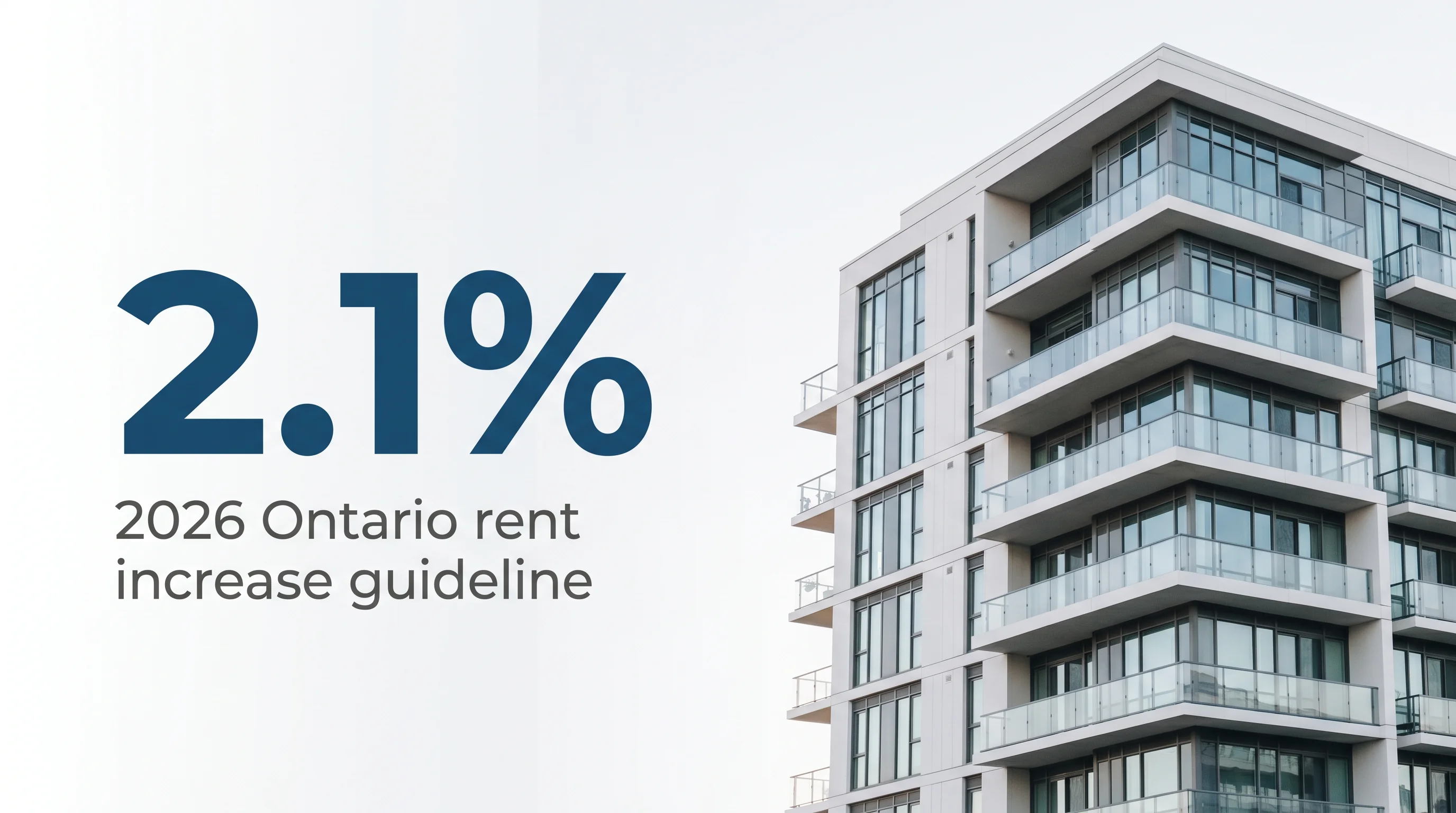
A complete 2026 guide to rent increases in Ontario. Understand the 2.1% provincial guideline, the 90-day N1 notice requirement, when rent increases apply, what voids them, and how the process works for landlords, property managers, and tenants alike.
Learn about all the ways you can pay rent through Tenon10 — free options like Interac e-Transfer and cash, plus credit card and bank transfer.
Miss this critical 60-day window and your unauthorized occupant becomes a legal tenant—with full RTA protections and rent control intact. Learn how section 104(4) of the Residential Tenancies Act creates "deemed assignments" and what every Ontario landlord must do to protect their property.
Renting in Ontario? You have rights. The Residential Tenancies Act (RTA) protects you from unfair landlord practices — but many tenants don't know what's actually illegal. Here are 5 things your landlord absolutely cannot do.
Step-by-step instructions for Ontario landlords on filling out, serving, and following up on the N4 Notice to End a Tenancy for Non-Payment of Rent.